
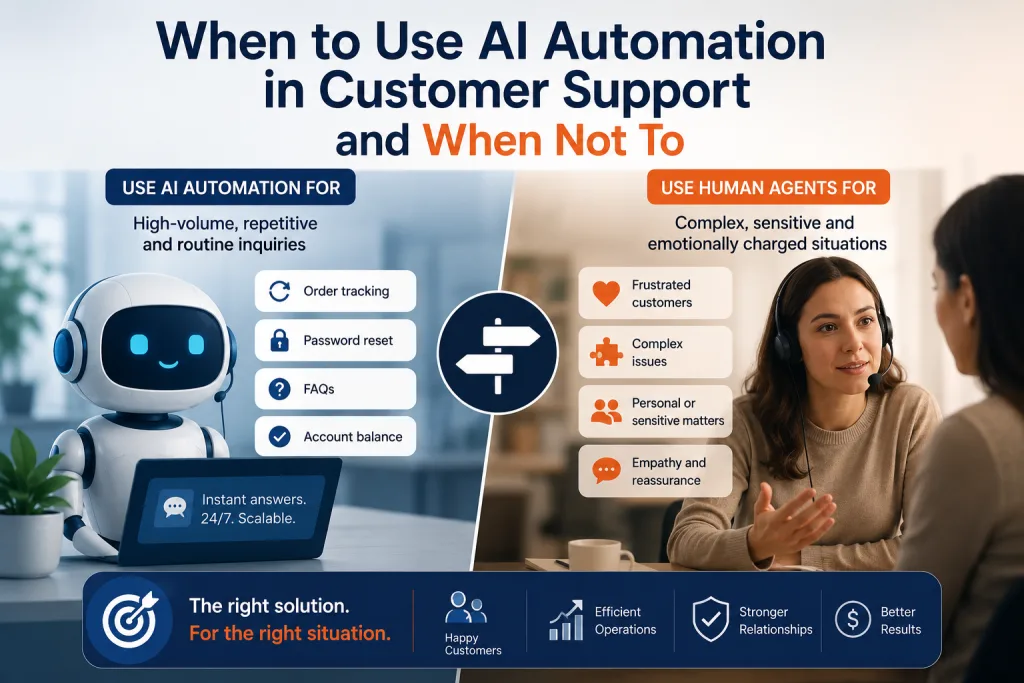
Artificial intelligence has fundamentally changed how businesses connect with their customers, bringing efficiency and scale to support operations that seemed impossible just a few years ago. As you evaluate whether automated solutions fit your organization, you’re facing a decision that’ll ripple through every customer interaction and operational expense. The smartest approach isn’t about choosing sides between automation and human agents, it’s about understanding exactly when each one shines. Getting this balance right means you’ll deliver support that’s both efficient and genuinely helpful. What works best is a thoughtful strategy that puts the right solution in front of the right situation every single time.
The Clear Advantages of AI Automation in Support Operations
AI automation really hits its stride when you’re dealing with repetitive, high-volume questions that follow the same basic patterns. Think about it: when customers need help with password resets, order tracking, or basic product details, automated systems can deliver answers instantly without anyone waiting in a queue. These routine requests make up a huge chunk of support tickets at most companies, and they’re honestly not the best use of your talented human agents. By letting automation handle these predictable interactions, you’re freeing up your team to tackle the complex stuff that actually needs critical thinking, empathy, and creative solutions.
High-Volume Scenarios That Demand Automation
Certain operational situations practically scream for automation, especially when you’re dealing with volume that would overwhelm any traditional support team. Product launches, flash sales, or holiday rushes can send inquiry volumes through the roof in ways you simply can’t predict, making it nearly impossible to hire and train enough people to handle the surge. Automated chatbots excel here because they can juggle unlimited conversations simultaneously without any drop in speed or quality. When customers just need data, like checking account balances, confirming order statuses, or verifying appointment times, automation delivers immediate value with virtually no risk of error.
When Human Touch Remains Irreplaceable
Some customer interactions absolutely need the emotional intelligence and nuanced judgment that only real humans can provide. When customers are frustrated, upset, or disappointed with your products or services, they’re not just looking for solutions, they need genuine empathy and reassurance that AI simply cannot deliver authentically. Complex situations involving multiple variables, unique circumstances, or problems that require thinking outside the box demand the kind of cognitive flexibility that remains distinctly human. If your customers are dealing with financial hardship, health concerns, or other deeply personal situations, these conversations need human agents who can respond with appropriate compassion and discretion.
Implementing a Hybrid Approach for Optimal Results
The best results come from designing a system where automated and human support work together seamlessly. Start by digging into your support ticket data to identify clear patterns and figure out which inquiries genuinely need human intervention versus those that automation can handle beautifully. When you’re implementing ai customer service software , make sure it knows its own limitations and can smoothly hand conversations over to human agents when things get too complex. The handoff should preserve all conversation context so customers never have to repeat themselves, there’s nothing more frustrating than explaining your problem twice. You need to continuously train and refine your AI based on real customer interactions, updating responses as products evolve and new issues pop up. Being upfront with customers about when they’re chatting with automation builds trust and sets appropriate expectations. Your human agents should always have access to the full conversation history with AI systems, so they understand what’s already been tried before they jump in. Consider adding a feedback mechanism where customers can rate their automated interactions, this gives you invaluable data for ongoing improvements. Clear escalation protocols should empower both your AI and human agents to recognize when a handoff makes sense.
Measuring Success and Adjusting Your Strategy
You can’t improve what you don’t measure, so concrete metrics are essential for evaluating whether your automation strategy actually works without hurting customer experience. Track resolution rates separately for automated versus human-assisted interactions to see where each approach truly excels. Monitor customer satisfaction scores specifically for automated interactions and watch for trends that might signal problems with your AI implementation. You should measure time savings and cost reductions from automation while simultaneously tracking whether customer effort scores have gotten better or worse.
Conclusion
Your approach to AI automation in customer support should grow from careful analysis of what your operation actually needs and what your customers genuinely expect. When you save automation for routine, high-volume questions while ensuring humans handle the complex, emotional, and sensitive stuff, you’re creating a support experience that balances efficiency with real care. The organizations getting this right understand that automation and human support complement each other rather than compete, each brings unique strengths to different situations. As AI technology keeps evolving, you should regularly revisit your strategy to make sure it still aligns with customer preferences and business goals, always keeping the quality of customer experience at the center of every decision.