
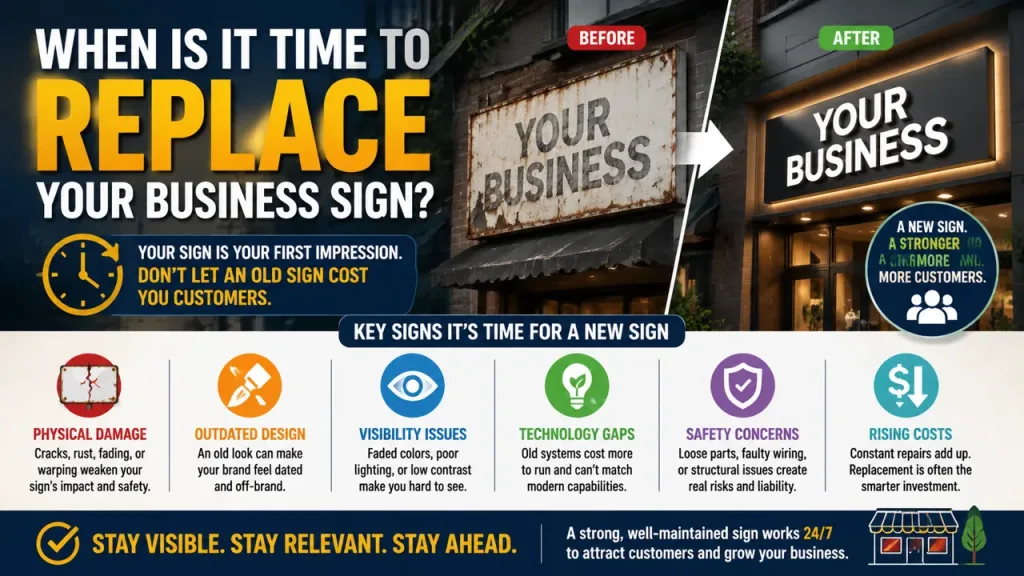
How Do You Know It’s Time for a New Business Sign?
Picture a cracked, sun-bleached sign hanging outside a storefront. Your gut reaction? Probably something close to “keep walking.” Signs pull heavy duty — hauling in foot traffic, broadcasting a brand, planting a flag on the block. But they wear out. They fall behind. And eventually, patching the old one stops making any financial sense. Catching that moment early can protect both your wallet and the impression you’re leaving on every single person who passes.
Physical Damage You Can Actually See
Rust. Cracks. Paint curling at the edges. Not minor cosmetic stuff — real evidence that a sign has stopped doing its job. UV rays, driving rain, wind, and wild temperature swings grind away at materials steadily, making them harder to read and uglier to look at. A bad storm or a stray collision can quietly compromise structural integrity even when everything looks mostly fine from the sidewalk. So inspect the thing. Look for warping, mold, water staining, sections pulling loose. When repair invoices start creeping toward what a replacement would cost, the math does the talking. Get a new one.
Brand Evolution and Outdated Design
Brands shift. New logo, new name, new positioning — the sign has to keep pace. Something that looked polished ten years ago can now feel stale or, worse, signal that your business has been standing still while everyone else moved. Customers judge fast. If your sign doesn’t line up with your current website, your marketing collateral, or even what your interior looks like, that mismatch registers — even when people can’t quite name it. Replacement here isn’t just damage control. It’s a chance to realign your street presence with what the business actually is today.
Readability and Visibility Problems
Fading is slow. Almost invisible, day to day. But as signs age, discoloration and failing light elements eat away at how clearly they read — especially after dark or in rough weather. Flickering neon. Dimming LEDs. Letters that only half-illuminate. These don’t just look sloppy; they make your business genuinely harder to locate.
Many businesses in the area turn to a sign company in Las Vegas to stack their current signage against real readability benchmarks and separate what’s fixable from what needs a full swap. Be honest with yourself: does the contrast between text and background actually hold up at different times of day? If walk-in traffic has been quietly slipping, your sign might be part of that story. A professional assessment done early keeps options open — and the bill smaller.
Technology Gaps and Efficiency Gains
Older signage tech bleeds electricity and maintenance money. LED systems draw a fraction of the power that neon or incandescent setups demand — and they outlast them considerably. Digital or programmable displays go even further, letting you rotate messaging without ever touching the physical structure. Static signs simply can’t match that. If you’re still running older lighting technology, the argument for upgrading isn’t purely visual. It’s operational. Lower energy costs. Fewer service calls. Sharper visual impact. The upfront spend tends to pay back faster than most owners anticipate.
Safety Problems and Structural Failures
Some sign problems have nothing to do with branding. They’re liability issues, plain and simple. Loose mounting brackets, leaning frames, unstable hardware — hazards, not inconveniences. Illuminated signs with exposed wiring or faulty connections carry genuine fire and shock risks that can’t be pushed down the calendar. And when a sign is old enough that its replacement parts no longer exist, even routine repairs turn into a scavenger hunt. Don’t wait for an incident. A qualified inspection catches structural and electrical problems that aren’t visible to anyone without training. Addressing them — or replacing the sign outright — protects customers, protects the business, and keeps you out of a courtroom.
Conclusion
A business sign isn’t something you install once and forget. Physical wear, brand drift, visibility decay, obsolete technology, safety hazards — any single one can tip the scales toward replacement. Regular maintenance absolutely extends useful life. But a point arrives where continued repair is just wishful thinking dressed up as a plan. Stay attentive to the warning signs, move before urgency forces your hand, and your storefront keeps working as hard as everything else in your operation. A sharp, current sign sends a clear message: you’re paying attention, you care about details, and you’re still very much in the game.