
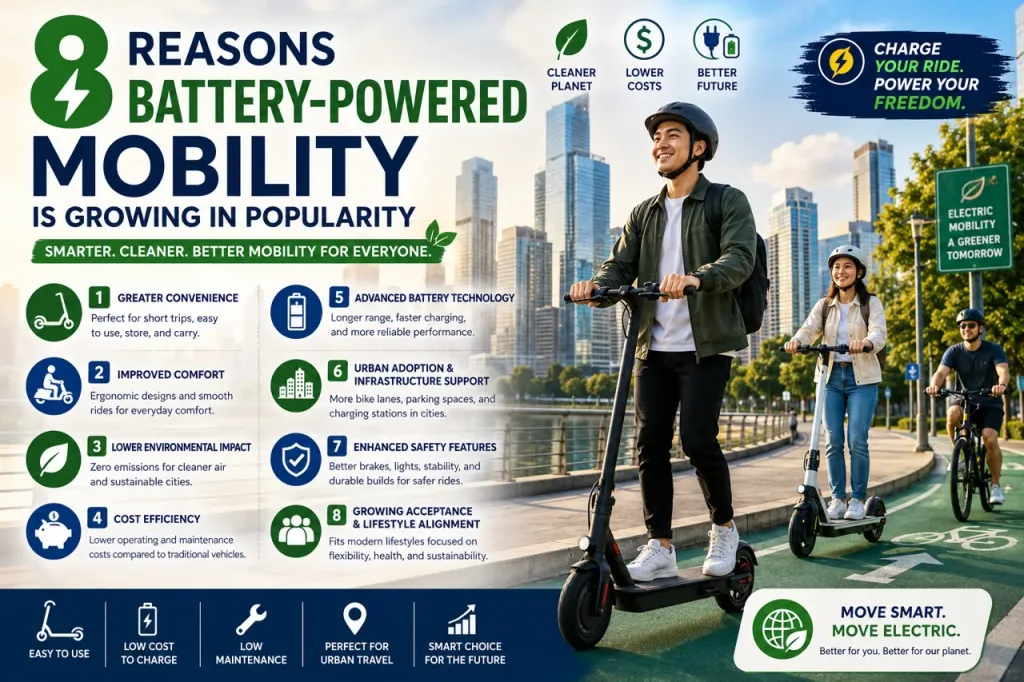
Battery-powered mobility has become one of the fastest-growing transportation trends, reshaping how people commute, explore cities, and manage short-distance travel. As technology improves and riders look for more efficient, cost-effective, and environmentally conscious options, electric mobility continues to expand across urban and suburban environments. From scooters to compact personal vehicles, battery-powered rides offer convenience and reliability that traditional transportation often cannot match. Understanding why this shift is accelerating helps highlight the long-term value of modern electric mobility.
Greater Convenience for Everyday Travel
Convenience is one of the strongest drivers behind the rise of battery-powered mobility. Riders appreciate transportation that is easy to use, simple to store, and ready whenever needed. Concepts like daily usability and short-distance travel reinforce how electric mobility supports everyday routines.
Compact electric rides allow people to move quickly through crowded areas, avoid traffic, and shorten commute times. Their intuitive controls and lightweight designs make them accessible to a wide range of riders, creating a smoother and more predictable travel experience.
Improved Comfort and Ride Quality
Modern electric rides are designed with comfort in mind, offering smoother handling and more ergonomic features than earlier models. Many riders choose a reputable electric commuting scooter because it provides stable performance, responsive acceleration, and a comfortable riding posture. Concepts like ride ergonomics and comfort-focused design highlight how comfort influences long-term satisfaction.
Suspension systems, wider decks, adjustable handlebars, and refined motor control all contribute to a more enjoyable ride. As comfort improves, electric mobility becomes a practical option for daily use rather than an occasional convenience.
Lower Environmental Impact Compared to Traditional Vehicles
Battery-powered mobility supports sustainability by reducing emissions and lowering overall environmental impact. Concepts like eco-friendly transportation and urban sustainability reinforce how electric rides contribute to cleaner communities.
Electric scooters and similar vehicles produce no direct emissions, making them ideal for cities seeking to reduce pollution and improve air quality. Their energy-efficient operation also helps reduce reliance on fossil fuels, supporting broader environmental goals.
Cost Efficiency Over Time
Affordability is another major reason battery-powered mobility continues to grow. Electric rides typically cost less to operate and maintain than traditional vehicles. Concepts like cost efficiency and maintenance planning highlight how financial considerations shape transportation choices.
With fewer mechanical components, electric rides require less frequent servicing. Charging costs are significantly lower than fuel expenses, and many models offer long-lasting batteries that reduce replacement frequency. Over time, riders save money while enjoying consistent performance.
Advancements in Battery Technology
Battery technology has improved dramatically, making electric mobility more reliable and accessible. Concepts like battery range and charging convenience highlight how modern batteries support daily travel.
Longer ranges, faster charging times, and more efficient energy use allow riders to travel farther without interruption. These advancements reduce concerns about battery limitations and make electric rides a dependable option for both short and moderate distances.
Increased Urban Adoption and Infrastructure Support
Cities around the world are embracing battery-powered mobility by improving infrastructure and encouraging alternative transportation. Concepts like urban mobility planning and micro-mobility integration reinforce how communities support electric transportation.
Dedicated lanes, charging stations, and improved parking options make electric rides easier to use in busy environments. As cities continue to adapt, electric mobility becomes even more practical for daily commuting and short-distance travel.
Enhanced Safety Features in Modern Models
Safety improvements have made electric rides more appealing to a wider audience. Concepts like commuter safety and build durability highlight how modern engineering supports rider protection.
Better braking systems, improved lighting, stronger frames, and stability-focused designs help riders feel more secure. As safety features advance, electric mobility becomes a trustworthy option for both new and experienced riders.
Growing Cultural Acceptance and Lifestyle Alignment
Battery-powered mobility aligns with modern lifestyle preferences, including flexibility, sustainability, and convenience. Concepts like commuter lifestyle and personal mobility habits reinforce how cultural shifts influence transportation choices.
As more people adopt electric rides, they become a normalized part of everyday travel. This cultural acceptance encourages continued growth and inspires new innovations across the industry.
Conclusion
Battery-powered mobility continues to grow because it offers convenience, comfort, sustainability, cost efficiency, improved battery technology, urban support, enhanced safety, and strong lifestyle alignment. Together, these advantages make electric transportation a practical and appealing choice for modern commuters and everyday riders.