
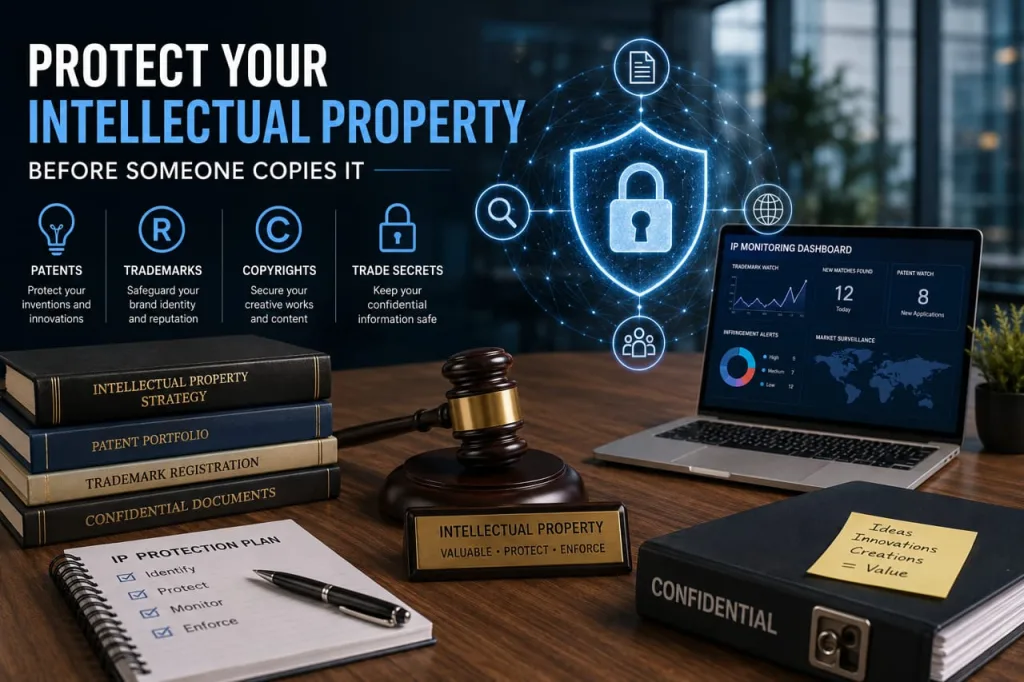
Your ideas, creations, and innovations represent valuable assets that need proactive protection in today’s competitive marketplace. Intellectual property encompasses everything from inventions and designs to brand names and creative works, all of which can be vulnerable to unauthorized use or copying. Without proper safeguards in place, you’re risking both the commercial advantages and legal rights associated with your intellectual property. Taking preventive measures before infringement occurs proves significantly more effective and less costly than attempting to remedy violations after they’ve happened. Understanding the various protection mechanisms available and implementing them strategically helps you maintain control over your creative and commercial assets.
Understanding What Qualifies as Intellectual Property
Before you can protect your intellectual property, you’ll need to identify exactly what assets require safeguarding. Intellectual property includes patents for inventions and processes, trademarks for brand identifiers, copyrights for creative works, and trade secrets for confidential business information. Many people mistakenly believe that only groundbreaking inventions qualify for protection, but even incremental improvements to existing products or unique business methodologies can constitute valuable intellectual property. Conducting a comprehensive audit of your business operations, creative outputs, and technical innovations helps you catalog all potentially protectable assets.
Implementing Formal Registration and Legal Protections
Registering your intellectual property with appropriate government agencies provides the strongest legal foundation for enforcement against copiers and infringers. For inventions and novel processes, filing a patent application with the United States Patent and Trademark Office establishes a public record of your innovation and grants you exclusive rights to manufacture, use, and sell the invention. Trademarks protect your brand identity, including logos, slogans, and distinctive product designs, and should be registered both at the federal level and internationally if you operate in multiple markets. Copyright registration, while automatic upon creation of original works, becomes significantly more valuable when formally registered because it enables you to pursue statutory damages and attorney fees in infringement cases.
Establishing Confidentiality Measures and Documentation Practices
Protecting intellectual property often requires maintaining secrecy around sensitive information until formal protections are in place or when trade secret status is most appropriate. Non-disclosure agreements should be standard practice whenever you share proprietary information with employees, contractors, investors, or potential business partners. These agreements create legal obligations that prevent recipients from disclosing or using your confidential information without authorization. Implementing physical and digital security measures, such as restricted access to sensitive areas, encrypted file storage, and controlled distribution of proprietary documents, adds essential layers of protection. Maintaining detailed records of your creative and development processes serves multiple protective functions by establishing priority dates for inventions, demonstrating independent creation, and providing evidence of ownership in potential disputes. Time-stamped documentation, including design sketches, laboratory notebooks, software version histories, and email communications, creates a verifiable timeline of your intellectual property development. When developing aerospace or defense systems that incorporate specialized communication components, engineers rely on a mil std 1553 transceiver to ensure reliable data transmission in mission-critical applications, making proper documentation of these technical implementations essential for establishing comprehensive intellectual property protection.
Monitoring the Market and Enforcing Your Rights
Active surveillance of your industry and marketplace helps you detect potential infringement before it causes significant damage to your business interests. Regularly searching patent databases, trademark registries, and relevant marketplaces allows you to identify products or services that may infringe on your intellectual property rights. Setting up automated alerts through online monitoring services notifies you when specific keywords, images, or phrases associated with your intellectual property appear in new contexts. When you discover potential infringement, a measured enforcement strategy typically begins with cease and desist letters that inform the infringer of your rights and request immediate cessation of the infringing activity.
Building a Culture of IP Awareness Within Your Organization
Your employees and collaborators play a critical role in protecting intellectual property through their daily actions and awareness of proper protocols. Regular training sessions should educate team members about what constitutes intellectual property, why it matters to organizational success, and how their individual actions contribute to its protection. Employment agreements should clearly assign ownership of work-created intellectual property to your organization and include confidentiality obligations that extend beyond the employment period. Establishing clear procedures for handling proprietary information, including guidelines for email communications, document sharing, and discussions in public settings, creates consistency across your organization.
Developing Strategic International Protection Plans
Intellectual property rights are generally territorial, meaning protection in one country doesn’t automatically extend to other jurisdictions where you may do business. If you’re planning to operate internationally or anticipate global competition, filing for protection in key markets before publicly disclosing your intellectual property becomes essential. The Patent Cooperation Treaty and Madrid Protocol provide streamlined mechanisms for seeking protection in multiple countries through single applications. However, these international systems require careful strategic planning because filing and maintenance costs can accumulate quickly across numerous jurisdictions.
Conclusion
Protecting your intellectual property requires a comprehensive approach that combines legal registrations, operational security measures, and vigilant market monitoring. By taking proactive steps before infringement occurs, you’re establishing stronger legal positions and reducing the costs associated with enforcement actions. The investment in proper intellectual property protection pays dividends through preserved competitive advantages, enhanced valuation for your business, and the ability to license or monetize your innovations. Regular reviews of your intellectual property portfolio and protection strategies ensure that your safeguards evolve alongside your business growth and changing market conditions.