
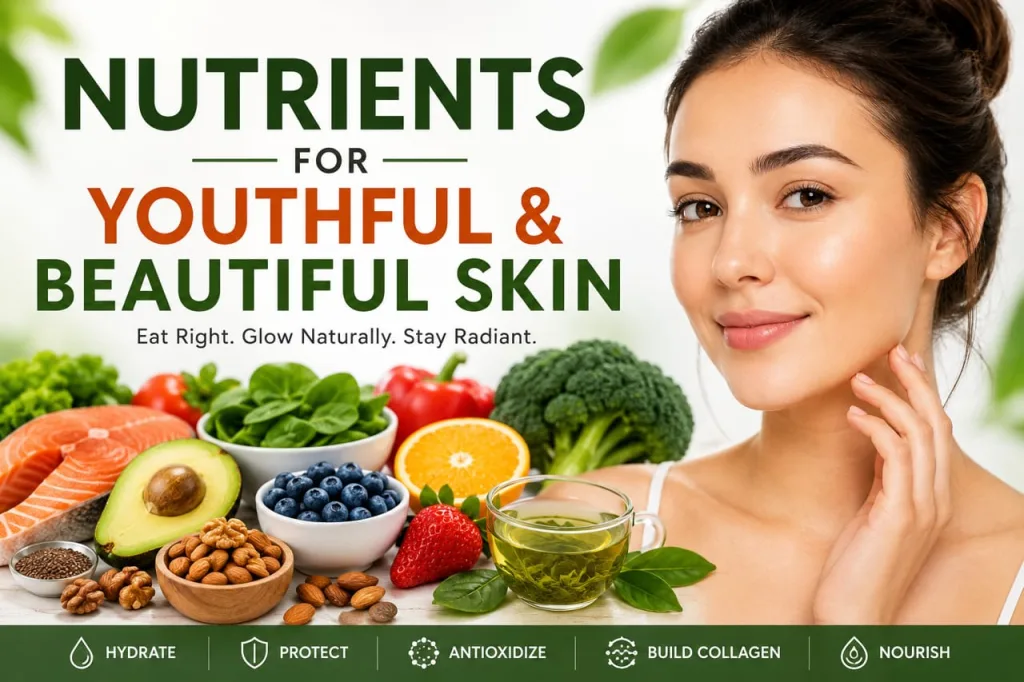
Healthy, glowing skin is not achieved through expensive beauty products alone. What you eat, drink, and do daily plays a major role in keeping your skin youthful, hydrated, and protected from early aging.
Dermatologists and nutrition experts agree that proper nutrition helps support collagen production, skin elasticity, hydration, and protection against environmental damage. A balanced diet rich in antioxidants, healthy fats, vitamins, and minerals can improve your skin’s appearance naturally.
Here are the most important nutrients for youthful skin and how to include them in your everyday routine.
Why Nutrition Matters for Skin Health
Your skin is the largest organ in the body. It constantly faces damage from sunlight, pollution, stress, lack of sleep, and unhealthy eating habits. Nutrient-rich foods help repair skin cells, reduce inflammation, and slow visible signs of aging such as wrinkles, dryness, and uneven skin tone.
1. Water: The Foundation of Healthy Skin
Water keeps your skin hydrated and helps maintain elasticity and smoothness. Proper hydration may reduce the appearance of dryness and fine lines.
Benefits of Water for Skin
- Helps maintain skin moisture
- Supports circulation and nutrient delivery
- Assists in flushing out toxins
- Reduces dryness and dullness
How Much Water Should You Drink?
Most adults should aim for around 2 to 3 liters of fluids daily, depending on activity level, weather, and health condition.
Step-by-Step Hydration Tips
- Start your morning with one glass of water.
- Carry a reusable water bottle.
- Drink water before meals.
- Eat water-rich fruits like watermelon and cucumber.
- Limit sugary drinks and excessive alcohol.
2. Selenium: Protection Against Skin Damage
Selenium is a trace mineral that helps protect skin cells from oxidative stress caused by free radicals.
Foods Rich in Selenium
- Brazil nuts
- Tuna
- Salmon
- Sardines
- Shrimp
- Eggs
- Whole grains
- Mushrooms
Important Reminder
Avoid excessive selenium intake. One to two Brazil nuts per day is usually enough because they contain very high levels of selenium.
3. Coenzyme Q10 (CoQ10): Supporting Skin Energy and Repair
CoQ10 is a natural antioxidant produced by the body. Levels decline as people age, which may contribute to visible skin aging.
Potential Benefits of CoQ10
- Helps fight oxidative stress
- Supports skin repair
- May reduce the appearance of fine lines
- Helps maintain skin firmness
Food Sources of CoQ10
- Salmon
- Tuna
- Chicken
- Beef liver
- Whole grains
- Peanuts
Some skincare products also contain topical CoQ10 for anti-aging support.
4. Antioxidants: Fighting Premature Aging
Antioxidants help neutralize free radicals that damage skin cells and collagen.
Best Antioxidant-Rich Foods
- Blueberries
- Strawberries
- Tomatoes
- Spinach
- Sweet potatoes
- Bell peppers
- Carrots
- Beans
- Beets
Daily Skin-Friendly Meal Idea
Try filling half your plate with colorful fruits and vegetables during meals to increase antioxidant intake naturally.
5. Vitamin A: Supporting Skin Renewal
Vitamin A helps maintain healthy skin and supports normal skin cell turnover. Dermatologists commonly use retinoids, which are vitamin A derivatives, to treat acne and signs of aging.
Natural Sources of Vitamin A
- Eggs
- Carrots
- Sweet potatoes
- Spinach
- Kale
- Dairy products
Safety Tip
High-dose vitamin A supplements should only be taken under medical supervision because too much vitamin A may be harmful.
6. Vitamin C: Collagen Builder for Firm Skin
Vitamin C is essential for collagen production, which helps maintain skin firmness and elasticity.
Benefits of Vitamin C
- Supports collagen formation
- Helps brighten skin
- Protects against environmental stress
- Assists wound healing
Best Sources of Vitamin C
- Oranges
- Lemons
- Kiwi
- Papaya
- Guava
- Broccoli
- Red bell peppers
Simple Daily Routine
Add one vitamin C-rich fruit to breakfast and include vegetables rich in vitamin C during lunch or dinner.
7. Vitamin E: Natural Skin Defender
Vitamin E acts as an antioxidant and helps support the skin barrier.
Foods High in Vitamin E
- Almonds
- Sunflower seeds
- Spinach
- Avocados
- Olive oil
- Peanuts
Vitamin E works especially well together with vitamin C in protecting the skin from oxidative stress.
8. Omega-3 and Essential Fatty Acids
Healthy fats help keep skin soft, moisturized, and less inflamed.
Benefits for Skin
- Supports the natural skin barrier
- Helps reduce dryness
- May help calm irritated skin
- Promotes smoother skin texture
Best Sources of Omega-3 Fatty Acids
- Salmon
- Sardines
- Mackerel
- Chia seeds
- Flaxseeds
- Walnuts
9. Healthy Oils for Better Skin
Not all fats are harmful. Healthy oils contain nutrients that support skin health.
Recommended Healthy Oils
- Extra virgin olive oil
- Avocado oil
- Flaxseed oil
- Canola oil
How to Use Them
- Use olive oil in salads
- Add flaxseed oil to smoothies
- Replace heavily processed oils with healthier alternatives
10. Green Tea: A Natural Skin-Boosting Drink
Green tea contains polyphenols and catechins that may help protect the skin from inflammation and sun-related damage.
Possible Skin Benefits
- Helps reduce inflammation
- Supports healthy aging
- May help reduce redness
- Contains powerful antioxidants
Simple Green Tea Routine
Drink 1 to 2 cups of unsweetened green tea daily as part of a balanced lifestyle.
Step-by-Step Daily Routine for Healthier Skin
Morning
- Drink water after waking up.
- Eat a healthy breakfast with fruits.
- Apply sunscreen before going outside.
Afternoon
- Eat vegetables and lean protein.
- Stay hydrated.
- Avoid excessive sugary snacks.
Evening
- Eat foods rich in healthy fats.
- Wash your face gently.
- Sleep at least 7 to 8 hours.
Additional Tips for Youthful Skin
- Wear sunscreen daily
- Avoid smoking
- Limit excessive alcohol consumption
- Manage stress
- Exercise regularly
- Get enough sleep
Final Thoughts
Healthy skin starts from within. While skincare products can help, proper nutrition, hydration, sleep, and healthy habits remain the true foundation of youthful-looking skin.
Adding antioxidant-rich foods, healthy fats, vitamins, and enough water to your daily routine can support smoother, healthier, and more radiant skin over time. Small lifestyle changes done consistently often produce the best long-term results.
Disclaimer
This article is for informational purposes only and should not replace professional medical advice. Consult a licensed healthcare provider or dermatologist before taking supplements or making major dietary changes.
Sources
- WebMD
- American Academy of Dermatology
- Harvard T.H. Chan School of Public Health
- National Institutes of Health