
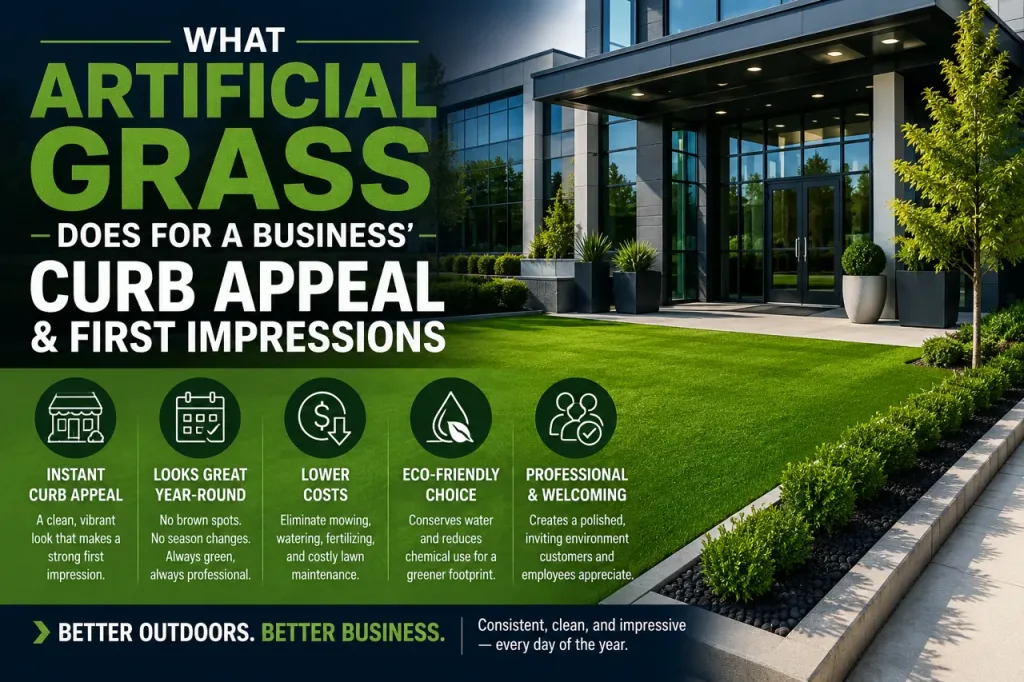
Customers form opinions fast. Before anyone walks through your door, the grounds outside have already started making a case — for you or against you. That patchy lawn, those overgrown edges, the bare dirt near the entrance. All of it registers in seconds. Signage budgets, lobby renovations, architectural upgrades — owners pour serious money there. Meanwhile, the outdoor space sits neglected. Costly blind spot. Landscaping shapes perceived credibility in ways a fresh coat of interior paint simply can’t undo. People carry that outdoor impression straight through your front door with them.
How Landscape Appearance Shapes What Customers Think
The grounds outside are what visitors hit first — before the receptionist, before the branding, before anything else. A clean, intentional outdoor space says something. It signals that standards matter here, that details get attention, that someone’s actually minding the place. Weeds and brown patches say the opposite. Consumer behavior research has documented this psychological transfer pretty clearly: a neglected lawn quietly lowers expectations for everything that follows. Unfair? Sure. But it’s real, and it costs businesses real money. Every dollar put into landscape quality is, practically speaking, a dollar invested in how potential clients judge you before the conversation even starts.
The Maintenance Burden of Natural Grass
Natural grass is relentless. Watering, mowing, fertilizing, seasonal treatments — the list never shrinks. A single bad weather stretch, a pest outbreak, an unexpected fungal problem — any of it can gut a lawn’s appearance right before a high-stakes site visit. Ugly bare patches don’t wait for convenient timing. And commercial lawn services? They’re not cheap, particularly across sprawling properties. Then winter arrives. In most climates, natural grass goes dormant for months — dull, flat, uninviting — during stretches that often matter most for client acquisition and deal-making. You don’t get a do-over on that first look.
Why Artificial Grass Holds Its Look Year-Round
Frost won’t touch it. Neither will drought, punishing foot traffic, or a brutal July heat wave. Artificial grass keeps its color and surface quality regardless — no bare spots, no seasonal fade, no thin patches materializing at the worst possible moment. It stays manicured. Always. Some businesses push this further, building out outdoor amenities entirely. A golf feature installed with putting green turf creates a polished, durable surface that lands well with both clients and staff. Artificial grass also functions as a clean visual backdrop — letting planters, hardscaping, and architectural details read clearly without competing clutter. Curb appeal doesn’t dip in January. That consistency protects a brand image years in the making.
Reducing Operational Costs and Environmental Impact
Drop the lawn service contract entirely. Mowing schedules, gone. Fertilizer treatments, gone. Pest control applications, emergency calls after storm damage — gone. Modern artificial grass uses dramatically less water than natural turf; utility bills shrink, and so does the environmental footprint. Staff who once spent hours coordinating landscape appointments can redirect that energy toward actual business functions. Efficiency improves across the board. And there’s a secondary benefit worth naming: sustainability-minded clients and partners notice this stuff. Demonstrating reduced resource consumption isn’t just cost-smart — it signals something genuine about how the company operates day to day.
Creating a Professional and Welcoming Environment
There’s something immediate about a perfectly kept lawn. Order. Intentionality. The quiet signal that someone around here is paying attention. Artificial grass delivers that consistently — which is exactly why it performs well for medical offices, corporate headquarters, retail locations, and professional service firms where a single visit can determine whether a client stays or walks. The uniform, neat appearance reinforces brand identity; it implies that high standards apply everywhere, not just inside. Visitors feel it. A space that looks deliberately designed rather than accidentally maintained puts people at ease, and that comfort compounds over time in retention, referrals, and reputation.
Conclusion
Your exterior grounds are doing active work — communicating credibility, care, and professionalism before a single word gets spoken. Artificial grass eliminates the seasonal inconsistency and maintenance drain that turn natural lawns into a liability, while keeping visual quality locked in across every month of the year. Ongoing costs drop. Environmental demands shrink. And every visitor who pulls into your parking lot receives a first impression that actually reflects the business you’ve built. That’s not a cosmetic call. It’s a strategic one.