
Introduction
The appearance of your business property plays a significant role in how customers, clients, and employees perceive your organization. A well-designed landscape does more than create visual appeal—it can enhance property value, improve customer experiences, support employee well-being, and strengthen your brand image. Whether you operate a retail store, office building, medical facility, or industrial property, investing in thoughtful outdoor spaces can deliver long-term benefits.
Creating an attractive and functional landscape requires more than planting a few shrubs or maintaining a green lawn. Successful commercial landscaping involves strategic planning, careful plant selection, and ongoing maintenance considerations. By focusing on key design principles, businesses can create outdoor environments that are both visually impressive and practical for everyday use.
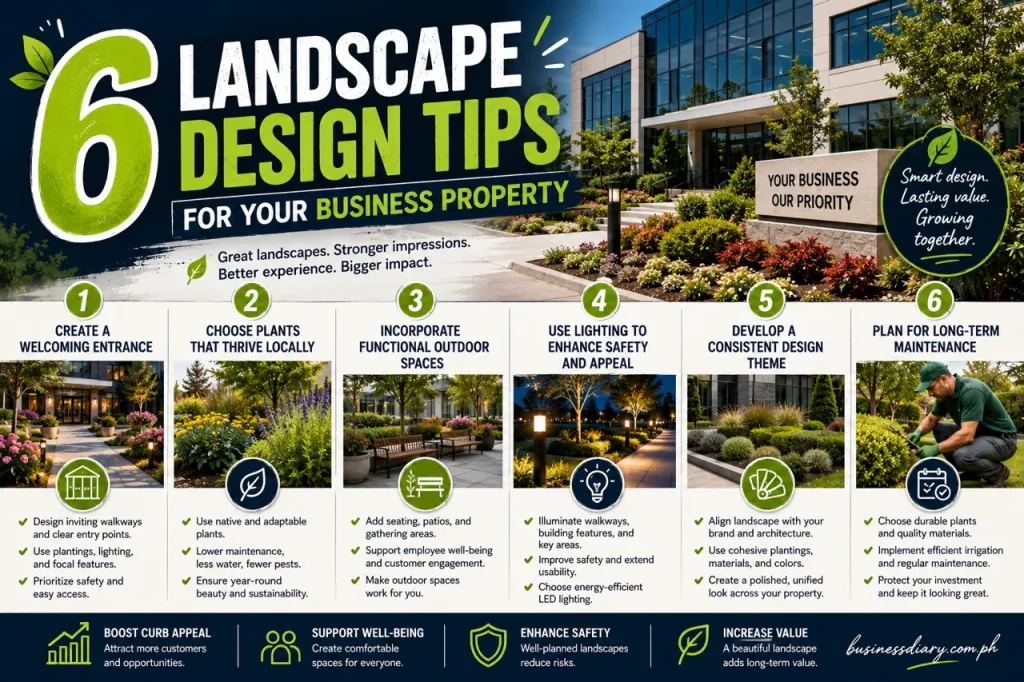
Create a Welcoming Entrance
First impressions matter, and your property’s entrance is often the first thing visitors notice. A well-designed entrance can immediately communicate professionalism, attention to detail, and pride in your business.
Consider incorporating attractive walkways, colorful seasonal plantings, decorative lighting, and clearly defined entry points. Symmetrical arrangements often create a polished appearance, while carefully selected focal points such as ornamental trees, planters, or water features can add visual interest. The goal is to guide visitors naturally toward your entrance while creating a positive and memorable experience from the moment they arrive.
In addition to aesthetics, safety should also be a priority. Well-maintained pathways, proper lighting, and unobstructed access points help visitors navigate the property comfortably and confidently.
Choose Plants That Thrive Locally
One of the most effective ways to create a sustainable and attractive landscape is to select plants that naturally thrive in your local climate. Native and regionally adapted plants typically require less water, fertilizer, and maintenance than non-native varieties.
When selecting vegetation, consider factors such as soil conditions, sunlight exposure, and seasonal weather patterns. A diverse mix of trees, shrubs, grasses, and flowering plants can provide year-round visual appeal while reducing vulnerability to pests and diseases.
Thoughtful plant selection is also an important component of successful landscape development, as it helps ensure that landscapes remain healthy and attractive for years to come. By prioritizing long-term durability over short-term visual impact, businesses can minimize maintenance costs while maximizing curb appeal.
Incorporate Functional Outdoor Spaces
Modern commercial landscapes should balance beauty with functionality. Outdoor spaces can serve multiple purposes beyond decoration, providing practical benefits for employees, customers, and visitors.
Consider adding seating areas where employees can take breaks or hold informal meetings. Restaurants and retail businesses may benefit from outdoor gathering spaces that encourage customers to linger longer. Healthcare facilities can create calming garden areas that promote relaxation and comfort.
Functional outdoor spaces also demonstrate that a business values the experience and well-being of the people who use the property. These areas can improve employee satisfaction while creating unique opportunities for customer engagement.
Use Lighting to Enhance Safety and Appeal
Landscape lighting is often overlooked, yet it can significantly improve both the appearance and functionality of a commercial property. Strategic lighting highlights architectural features, showcases attractive landscaping elements, and extends the usability of outdoor spaces after dark.
Pathway lighting improves visibility and reduces potential safety hazards. Accent lighting can draw attention to key landscaping features such as trees, sculptures, or signage. Meanwhile, parking lot and security lighting help create a safer environment for employees and visitors.
Energy-efficient LED systems offer excellent performance while minimizing operating costs. Automated timers and smart controls can further improve efficiency by ensuring lights operate only when needed. The combination of aesthetics and security makes landscape lighting one of the most valuable upgrades for many business properties.
Develop a Consistent Design Theme
A cohesive landscape design creates a professional appearance and helps reinforce your company’s identity. Without a clear design strategy, landscapes can appear cluttered or disorganized, diminishing the property’s overall appeal.
Start by considering your building’s architecture and your brand image. A modern corporate office may benefit from clean lines, minimalist plantings, and contemporary materials, while a more traditional business may prefer classic landscaping elements and natural textures.
Consistency should extend throughout the property, including plant selections, hardscape materials, signage, lighting fixtures, and decorative features. Repeating complementary colors, textures, and design elements helps create visual harmony and a polished overall appearance.
When every component works together, the landscape becomes an extension of the business itself, strengthening brand perception and creating a more memorable experience for visitors.
Plan for Long-Term Maintenance
Even the most beautiful landscape design will lose its appeal without proper maintenance. During the planning process, it is important to consider the ongoing care requirements of every feature included in the design.
Choose plant varieties that fit your maintenance capabilities and budget. Install efficient irrigation systems that conserve water while supporting plant health. Utilize durable hardscape materials that can withstand heavy foot traffic and changing weather conditions.
Regular pruning, seasonal cleanup, lawn care, and irrigation monitoring help preserve the landscape’s appearance throughout the year. A proactive maintenance plan not only protects your investment but also ensures that your property consistently reflects a professional image.
By designing with maintenance in mind from the beginning, businesses can enjoy attractive outdoor spaces without unexpected costs or excessive upkeep demands.
Conclusion
An effective commercial landscape is about much more than appearances. Thoughtful design can improve property value, strengthen brand perception, create safer environments, and enhance experiences for employees and customers alike. From establishing a welcoming entrance to developing functional outdoor spaces and planning for long-term care, each design decision contributes to the overall success of the property.
By approaching landscaping strategically and focusing on both beauty and functionality, businesses can create outdoor environments that support their goals while making a lasting positive impression on everyone who visits.