
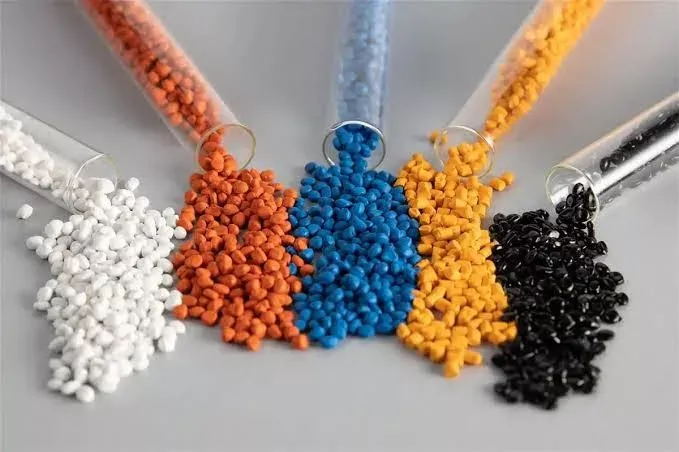
Product identification has become an important part of modern plastic manufacturing. Batch numbers, serial codes, barcodes and traceability information often need to remain readable throughout the product’s service life. Laser marking provides a contactless method for creating permanent identification, while Laser Marking Masterbatch helps modify the plastic so it responds more effectively to laser energy.
What Is ?Laser Marking Masterbatch
Laser Marking Masterbatch is a concentrated formulation designed to improve or control the interaction between a plastic product and a laser marking system. The masterbatch is incorporated into the polymer during processing.
The final marking response depends on the polymer, additive system, laser wavelength, power, speed, frequency and product surface.
Why Laser Marking Is Used
Laser marking provides several advantages for industrial identification. It does not require physical contact with the finished part. It also supports automated marking and variable information.
- Automotive components
- Electrical parts
- Industrial components
- Packaging
- Consumer products
- Medical-related plastic products, where the material and regulatory requirements permit it
Manufacturers often use laser marking for identification and traceability rather than decoration.
How Material Formulation Affects Marking
Different plastics respond differently to laser energy. Some produce a colour change. Others create a contrast effect through surface modification.
A suitable marking additive helps produce a visible and controlled result. The base polymer remains important. A masterbatch designed for one material should not automatically be used with another.
Laser Type and Polymer Selection
The marking system needs to be considered alongside the material. Common industrial laser technologies include CO2, fibre and other systems. Their interaction with polymers differs.
Before selecting a masterbatch, manufacturers should specify polymer type, natural or coloured base material, laser wavelength, required marking contrast, marking speed, product surface and required permanence.
A trial is essential because a specification that looks suitable on paper may produce a different result under actual machine conditions.
Other Raw Material Considerations LDPE Powder
LDPE powder is used in several plastic-processing and compounding applications, but it should not be treated as a direct substitute for a laser-marking masterbatch.
The two materials serve different functions. Where a manufacturer uses powdered polyethylene in a formulation, particle characteristics, resin compatibility and processing behaviour need to be considered separately from the laser-marking additive.
Keeping these functions distinct helps avoid formulation errors.
Production Testing
A laser-marking trial should evaluate the complete production system.
- Marking contrast
- Resolution
- Speed
- Surface quality
- Permanence
- Heat effects
- Chemical resistance, where relevant
- Batch-to-batch consistency
The finished product should also be tested after exposure to its expected service environment.
For example, an automotive component may require resistance to heat, chemicals and abrasion. A packaging application may have different requirements.
Working With a Specialist Supplier
A supplier needs enough information to recommend a suitable formulation. This includes polymer grade, processing method, target colour, laser system and marking requirements.
Surya Compounds & Masterbatches can be considered by manufacturers evaluating specialised masterbatch requirements for plastic applications.
Conclusion
Laser Marking Masterbatch helps manufacturers engineer plastic materials for more controlled laser identification. The best results depend on matching the masterbatch to the polymer, laser system and required marking performance.
Manufacturers should validate the complete combination through production trials rather than selecting a material based only on a general product description.
FAQs
What is ?Laser Marking Masterbatch
It is a concentrated additive formulation designed to improve the marking response of compatible plastic materials under laser exposure.
Which products use laser marking?
Industrial, automotive, electrical, packaging and other plastic components may use laser marking for identification and traceability.
Can replace ?LDPE powderlaser marking masterbatch
No. LDPE powder is a polymer raw material, while laser marking masterbatch is designed to modify the marking response.
Does laser wavelength affect marking?
Yes. The interaction between the laser and plastic depends on the laser system and material formulation.
Why are production trials important?
They confirm marking contrast, resolution, processing compatibility and permanence under actual operating conditions.