
Interviews are strange. Thrilling and terrifying — sometimes in the same breath. First job or fifteenth, it barely matters. What you do before you walk in shapes nearly everything. Showing up on time? That’s the floor, not the ceiling. Real prep is messier: hunting down specifics, rehearsing answers until they stop sounding rehearsed, handling logistics days early so your brain isn’t scrambled when the actual conversation starts. Five tips. None of them are complicated. All of them are worth doing.
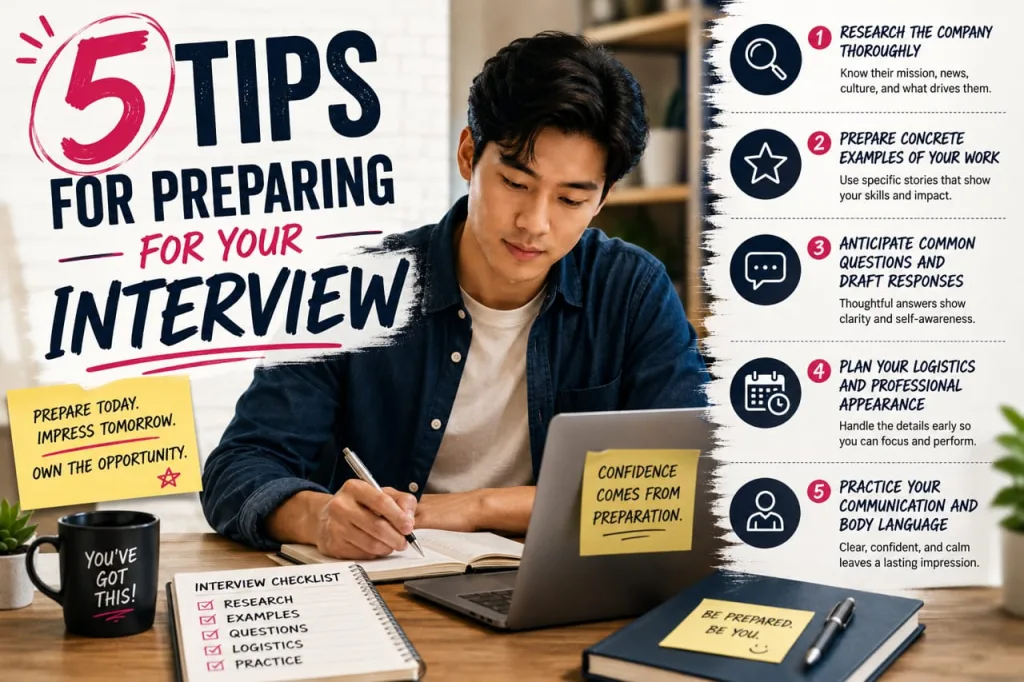
Research the Company Thoroughly
Walking in half-informed kills credibility fast. Start with the website — mission, values, recent news, what they build or sell. The “About Us” page. Press releases. Blog posts hinting at where the organization is headed. Social media, too; those posts often reveal more about culture than any carefully polished official page ever will. Drop one sharp, accurate detail into the conversation — a recent product launch, a value statement that genuinely resonates — and the interviewer notices. It signals real effort. You’re not treating this like a routine errand, and they can tell immediately.
Prepare Concrete Examples of Your Work
Behavioral questions are coming. Count on it. “Walk me through a conflict with a teammate.” Or a project that cratered. Vague answers sink candidates — every single time. Three to five ready examples: actual situations demonstrating problem-solving, leadership, collaboration, whatever the role needs. STAR works well here — Situation, Task, Action, Result. It keeps the story from sprawling into a ten-minute ramble. Someone asks about conflict? Don’t generalize. Name the disagreement. Explain precisely what you did. Then walk them through what happened. Specificity sticks. After eight interviews in a single day, vague answers blur together; a sharp, concrete story doesn’t.
Anticipate Common Questions and Draft Responses
Certain questions show up almost everywhere. “Tell me about yourself.” “Why this company?” “Biggest weakness?” None of these should catch you flat-footed. Write out real responses beforehand — not stiff scripts, but honest answers you’ve genuinely worked through. For the background question, stay relevant; skip the full autobiography. When explaining why you want the role, tie it directly to something your research turned up. The weakness question — this part actually matters — name something real, then describe the concrete steps you’re taking to address it. Interviewers spot the fake weakness immediately. Every time.
Plan Your Logistics and Professional Appearance
Logistics sound boring. They’re not — fumble them and the stress bleeds into everything else. Confirm the date, time, location, and the full name and title of whoever you’re meeting. Map the route. Account for traffic. Ten to fifteen minutes early is the target, not exactly on time. Pick your outfit the night before, not while half-awake at 7 a.m. According to men’s apparel resources and career platforms alike, dressing appropriately for an interview shapes how hiring managers read your professionalism and attention to detail. Pack a folder ahead of time — extra resume copies, notepad, pen. Small things handled early mean your head stays where it actually needs to be.
Practice Your Communication and Body Language
Words matter. So does everything else. Run mock interviews with someone who’ll give you honest feedback — not just reassurance. Notice your pace, your volume, whether sentences trail off at the end. Body language counts too. Sit up. Hold steady eye contact without turning it into a stare-down. Use your hands naturally; don’t clutch the armrests or fidget through every answer. When a tough question lands — pause. A brief silence beats a stream of “um” and “like” every single time. Record yourself if you can stomach it. Watching your own practice back reveals habits you’d never otherwise catch. Uncomfortable? Genuinely. Is it worth it? Without question.
Conclusion
Solid interview prep isn’t one thing. It’s several things pulling in the same direction. Research the company. Build real examples from your actual work history. Think through the predictable questions before they’re asked. Sort the logistics before the morning arrives. Practice out loud — not just in your head. Each of these five areas strengthens the others, and together they produce something worth having: confidence grounded in actual preparation rather than hope. Interviewers pick up on that difference fast. They know who spent two hours getting ready and who didn’t bother. Put the time in. When you finally sit down across from them, you’ll be ready for a real conversation about what you bring.