
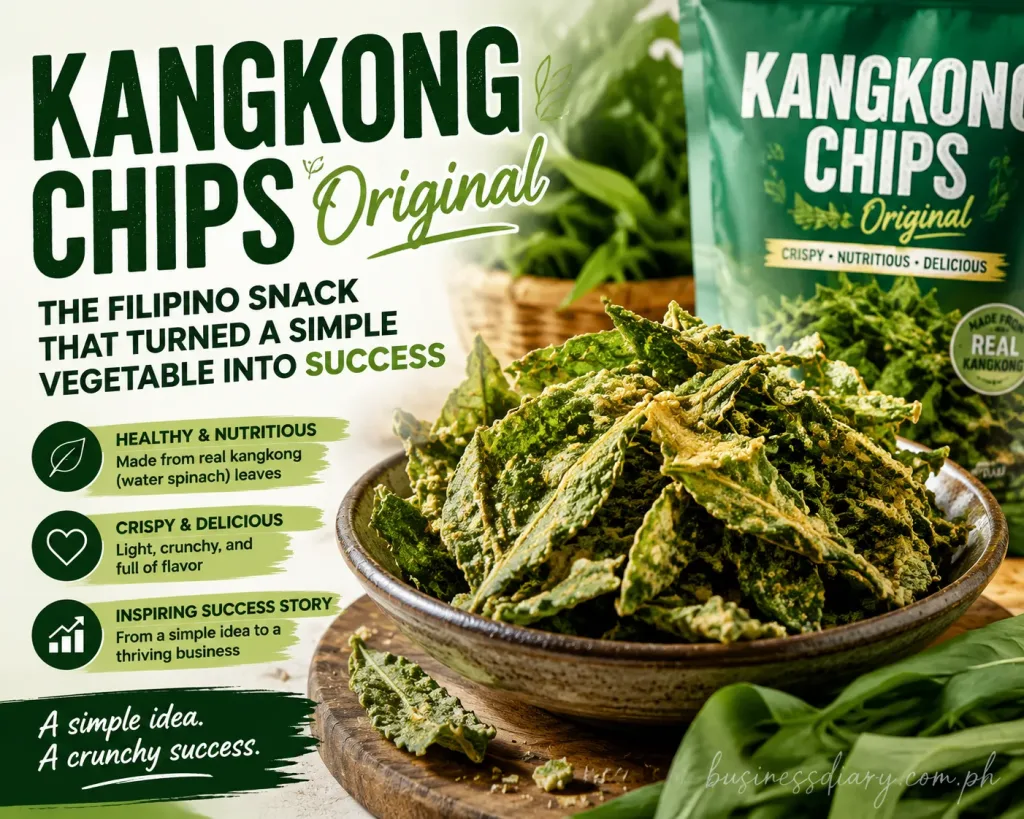
Kangkong Chips Original: The Filipino Snack That Turned a Simple Vegetable into a Business Success Story
Kangkong has long been a staple in Filipino kitchens. Whether served in sinigang, adobo, or simply sautéed with garlic, it’s one of the country’s most affordable and widely available leafy vegetables.
Today, however, kangkong has taken on a new identity. Crispy kangkong chips have become one of the Philippines’ most talked-about snack innovations, attracting food lovers, entrepreneurs, and social media users alike.
Among the brands that helped popularize this trend is Kangkong Chips Original, proving that even an ordinary vegetable can become the foundation of a successful food business.
Whether you’re curious about the snack, looking for a healthier alternative to traditional chips, or searching for business inspiration, here’s everything you need to know.
The Story Behind Kangkong Chips Original
One of the most recognizable names associated with kangkong chips is Josh Mojica, a young Filipino entrepreneur who transformed a simple homemade recipe into a widely recognized snack brand.
Starting with a modest capital and a willingness to experiment, Mojica focused on creating crispy, flavorful kangkong chips that appealed to a wide range of consumers.
Instead of relying on expensive advertising, the brand gained attention through social media platforms such as Facebook and TikTok, where videos showcasing the product quickly attracted thousands of views.
As demand increased, the business expanded its production and distribution, making Kangkong Chips Original available in more locations across the country while also reaching Filipino consumers overseas through online sellers and distributors.
His journey has become an inspiration for aspiring entrepreneurs, demonstrating that innovation and effective digital marketing can help even a simple food product stand out in a competitive market.
Popular Kangkong Chips Flavors
One reason for the snack’s popularity is the growing variety of flavors available.
Some of the most popular options include:
| Flavor | Taste Profile |
|---|---|
| Original | Lightly salted with the natural flavor of kangkong |
| Barbecue | Smoky, sweet, and savory |
| Cheese | Rich and creamy with a cheesy finish |
| Sour Cream | Tangy with mild onion flavor |
| Salt & Vinegar | Bold, sharp, and slightly acidic |
| Spicy | A blend of savory seasoning with a spicy kick |
| Chocolate | A sweet-and-savory flavor for adventurous snack lovers |
Different brands may offer additional limited-edition flavors depending on market demand.
Are Kangkong Chips Healthy?
Like most fried snacks, kangkong chips should be enjoyed in moderation.
However, because they are made from leafy vegetables, they may offer nutritional benefits not commonly found in conventional potato or corn chips.
Kangkong naturally contains:
- Dietary fiber
- Vitamin A
- Vitamin C
- Iron
- Calcium
The overall nutritional value still depends on how the chips are prepared, including the amount of oil, batter, and seasoning used during production.
How to Make Crispy Kangkong Chips at Home
If you’d like to prepare your own batch, here’s a simple recipe.
Ingredients
- 1 bunch fresh kangkong leaves
- 1 cup all-purpose flour
- ½ cup cornstarch
- 1 teaspoon baking powder
- 1 teaspoon garlic powder
- 1 teaspoon onion powder
- Salt and pepper to taste
- 1 cup ice-cold water
- Cooking oil for deep frying
Instructions
1. Prepare the leaves
Wash the kangkong thoroughly and remove excess moisture. Dry leaves are essential for achieving a crispy texture.
2. Prepare the batter
Mix the flour, cornstarch, baking powder, garlic powder, onion powder, salt, and pepper. Gradually whisk in the ice-cold water until the batter becomes smooth.
3. Coat the leaves
Dip each leaf into the batter, making sure it is lightly coated. Shake off any excess batter before frying.
4. Fry until crispy
Heat the cooking oil over medium-high heat. Fry the coated leaves for two to three minutes or until golden brown.
5. Drain properly
Transfer the chips to a wire rack instead of paper towels to help maintain their crispness.
Allow them to cool completely before storing them in an airtight container.
Business Lessons from the Kangkong Chips Trend
The popularity of kangkong chips offers valuable lessons for aspiring entrepreneurs.
Start with What You Have
Many successful businesses begin with simple ideas rather than expensive equipment or large investments.
Add Value to Everyday Products
Instead of creating something entirely new, successful entrepreneurs often improve products that people already know and use.
Use Social Media Effectively
Platforms such as Facebook, TikTok, and Instagram have become powerful marketing tools for food businesses, allowing small brands to reach thousands—or even millions—of potential customers without spending heavily on traditional advertising.
Focus on Product Quality
Regardless of how good the marketing is, repeat customers usually come back because the product consistently delivers on taste and quality.
Why Kangkong Chips Continue to Grow in Popularity
Several factors have contributed to the growing demand for kangkong chips in the Philippines.
Consumers appreciate their unique crunchy texture, the wide variety of available flavors, and the novelty of turning an everyday vegetable into an enjoyable snack.
For entrepreneurs, kangkong chips also represent how creativity and smart branding can transform a common local ingredient into a successful business opportunity.
Frequently Asked Questions
What are kangkong chips made of?
Kangkong chips are made from fresh kangkong (water spinach) leaves coated in a light batter and fried until crispy. Some manufacturers also offer baked or air-fried versions.
Who popularized Kangkong Chips Original?
Josh Mojica is widely recognized as one of the entrepreneurs who helped popularize Kangkong Chips Original through social media and online marketing.
Are kangkong chips healthier than regular potato chips?
They contain nutrients naturally found in kangkong, such as vitamins and minerals. However, because they are still fried snacks, they should be consumed as part of a balanced diet.
Where can I buy kangkong chips?
They are available through online marketplaces, specialty food stores, supermarkets, and various local distributors throughout the Philippines.
Can I make kangkong chips at home?
Yes. With fresh kangkong leaves, a simple batter, and hot cooking oil or an air fryer, you can prepare crispy homemade kangkong chips in less than an hour.
Final Thoughts
The success of Kangkong Chips Original demonstrates how innovation doesn’t always require a completely new invention. Sometimes, reimagining a familiar ingredient is enough to create a product that captures the market’s attention.
For consumers, kangkong chips offer a unique snack option with distinctly Filipino roots. For entrepreneurs, they serve as a reminder that great business ideas often begin with ordinary products, creative thinking, and the willingness to take the first step.