
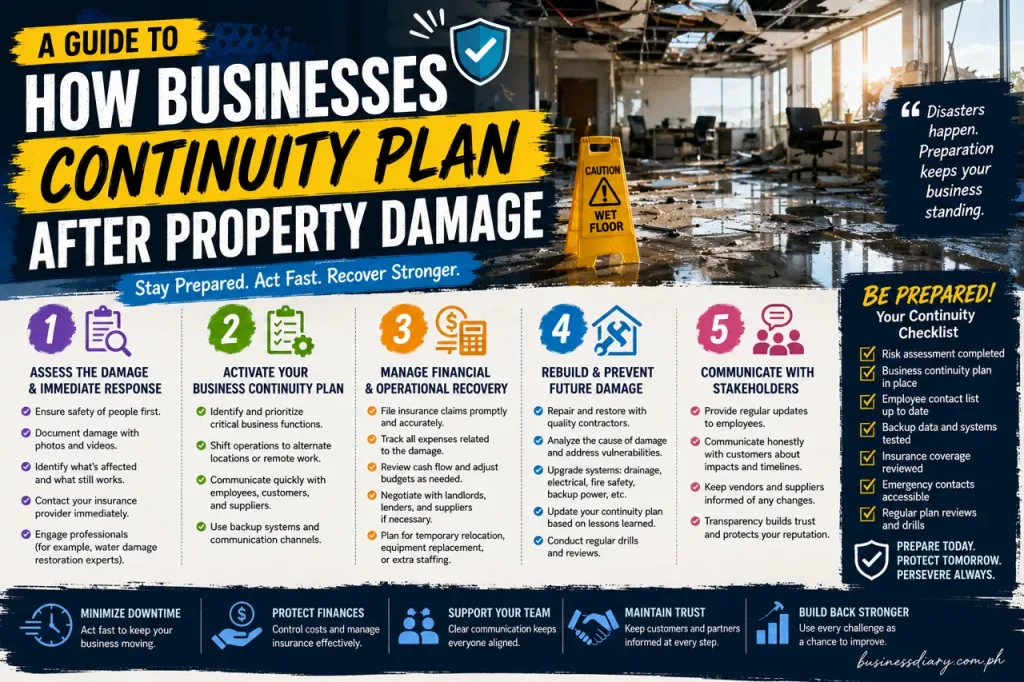
Property damage hits fast. The aftermath is where things really unravel — or don’t. Fire. A burst pipe. Flooding that creeps under the floorboards overnight. Storm damage that leaves your roof half-gone by morning. None of it gives you warning. Whether that becomes a temporary headache or a full catastrophe usually comes down to one thing: preparation. Did you have a plan before it happened? This guide walks through the core steps for keeping your business alive during and after a property damage event — your operations, your people, the customer relationships you’ve spent years earning.
Assessing the Damage and Immediate Response
First, get a real picture of what you’re facing. Document everything — photos, video, handwritten notes — before cleanup crews disturb anything. That record is your leverage with insurers. It’s also your clearest map of what actually needs fixing. Walk the space. Identify which functions are completely dead and which can still hobble along. Keep staff out of hazardous zones until professionals clear them. For flooding or pipe failures, engaging a quality water damage restoration company early matters enormously — moisture hides inside walls, under floors, in places you won’t see until it’s mold and structural rot. Get this phase right. Everything else builds on it.
Activating Your Business Continuity Plan
Hard truth: if you don’t already have a continuity plan written down, you’re improvising through one of the worst possible moments. Your plan should rank critical business functions by priority — so when damage hits, you already know which operations shift to alternate locations, who pivots to remote work, and what can pause without torching customer relationships. Communication can’t wait. Employees, customers, suppliers — they all need to hear from you quickly. Even if the news is incomplete. Your plan should have pre-built contact lists, backup communication channels, and alternate work locations ready to flip on. Hours matter here. Not days.
Managing Financial and Operational Recovery
Two financial realities land simultaneously after property damage: immediate cash drain and a longer recovery grind. Insurance is central to both — but don’t assume your policy covers what you think it does. File claims fast. Document every single expense tied to the damage and recovery; every receipt, every contractor invoice. Beyond the insurance process, you may need to renegotiate with landlords or lenders. Some businesses get ahead of cash flow problems by negotiating extended supplier terms or pushing for faster insurance disbursements. Think through whether temporary relocation, equipment replacement, or extra staffing will be required to keep operations going. Plan for those costs before they blindside you.
Rebuilding and Preventing Future Damage
Once the immediate scramble settles, the longer game starts. Work with contractors to repair and replace what’s damaged — but don’t just rebuild what existed before. Ask why it happened. Could better drainage have stopped the flooding? Would backup power have kept critical equipment running? This is your window. Upgrade fire suppression. Reinforce weak structural points. Overhaul maintenance protocols that clearly weren’t working. Don’t waste it. Update your continuity plan based on what you actually experienced — not what you theorized might happen. Run drills. Review it regularly. The goal isn’t to return to where you were. It’s to come back harder to knock down.
Communicating With Stakeholders Throughout Recovery
Silence is expensive during a recovery. Employees need clarity — schedules, pay, timelines. Uncertainty breeds attrition, and you can’t afford to lose key people right now. Customers need honesty: how are you affected, when do things normalize, what alternatives exist in the meantime? Vendors and suppliers need to understand any temporary shifts in ordering or payment patterns. Regular updates — even when progress crawls, even when you’re still missing answers — build trust. Relationships that took years to develop can fray in weeks if people feel ignored. Physical repairs are straightforward compared to that. Rebuilding damaged trust is its own project entirely.
Conclusion
Recovery after property damage isn’t one decision. It’s dozens of them, made under pressure, often with incomplete information. Assess the situation. Activate your plan. Manage the financial fallout. Then rebuild smarter. None of it works without preparation ahead of time — but businesses that do the upfront work, that build real continuity frameworks before anything goes wrong, consistently weather disruptions better than those flying blind. Property damage will always be a threat. A solid continuity plan won’t eliminate it. But it dramatically shrinks the damage it can do to your business, your team, and the customers counting on you.