
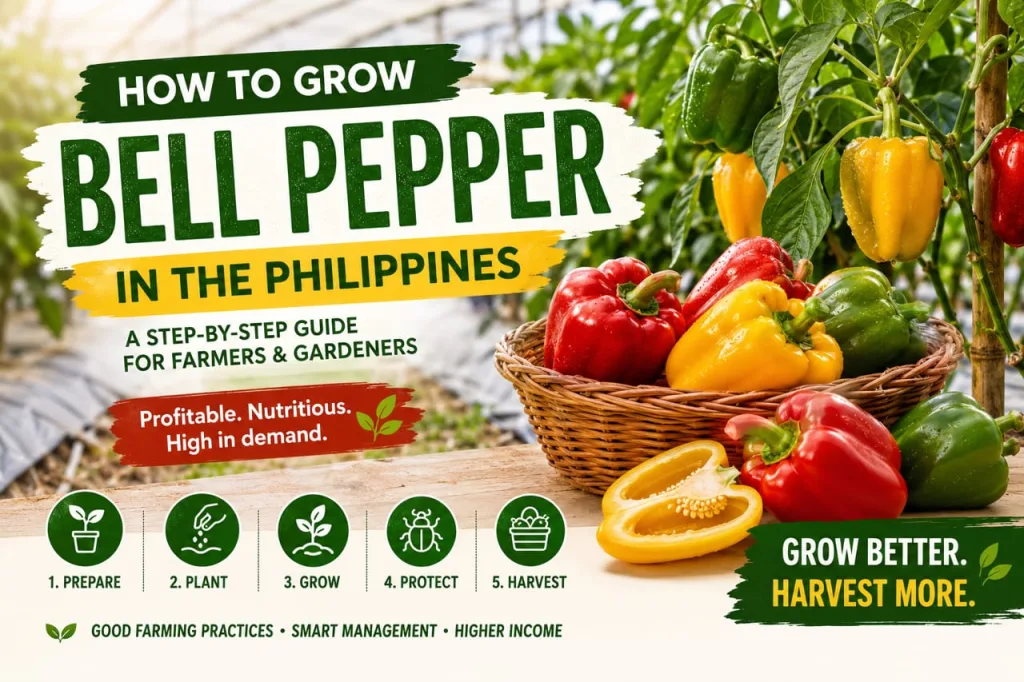
How to Grow Bell Pepper in the Philippines: A Step-by-Step Guide for Farmers and Gardeners
Bell pepper (Capsicum annuum L.), also known as sweet pepper, “kampana,” or “lara” in the Philippines, is a popular vegetable grown for its colorful and flavorful fruits. Bell peppers come in green, red, yellow, orange, and even purple varieties. They are widely used in Filipino dishes such as menudo, afritada, kaldereta, chopsuey, and salads.
Because of their strong market demand, bell peppers can be a profitable crop for backyard gardeners, small farmers, and commercial vegetable growers.
Why Bell Pepper Farming is Important in the Philippines
Bell peppers are considered a high-value vegetable crop. They are commonly grown in cooler areas such as Benguet, Bukidnon, and other upland regions because the crop performs best in mild temperatures. Bell pepper production is also increasing in greenhouse systems and protected cultivation setups across the country.
Aside from local consumption, bell peppers are important for restaurants, hotels, food processors, and supermarkets.
Step-by-Step Guide to Growing Bell Pepper
Step 1: Choose the Right Climate and Location
Bell peppers grow best in cool to moderately cool environments.
Ideal Growing Conditions
- Temperature: 18°C to 28°C
- Well-drained sandy loam soil
- Soil pH: 5.5 to 6.5
- Full sunlight exposure
- Good air circulation
Best Planting Time in the Philippines
- Lowland areas: October to November is ideal
- Mid and high elevation areas: Can be planted almost year-round
In hotter regions, using mulch, drip irrigation, or greenhouse protection can help improve fruit quality.
Step 2: Select the Best Bell Pepper Variety
Choosing the right variety is important for yield, disease resistance, and market preference.
Popular Hybrid Varieties
- Galilee
- Kalahari
- Trinity
- Redondo
- Orangina
- Fiesta
- King Solomon
Open-Pollinated Varieties
- California Wonder
- Yolo Wonder
- All Season
Hybrid seeds are more expensive but usually produce higher yields and better fruit quality.
Step 3: Prepare the Soil
Before planting, prepare the field properly.
Soil Preparation Tips
- Plow and harrow the soil thoroughly.
- Remove weeds and stones.
- Mix compost or well-decomposed manure into the soil.
- Create raised beds for better drainage.
Recommended Bed Size
- Width: 0.75 to 1 meter
- Height: 20 to 30 cm
Plastic mulch may also be used to reduce weeds and conserve moisture.
Step 4: Start Seedlings in a Nursery
Bell peppers are usually transplanted rather than directly seeded.
How to Prepare Seedlings
- Sow seeds in seed trays or seedbeds.
- Use sterilized soil or seedling mix.
- Water lightly every day.
- Keep seedlings in partial shade.
Seedling Age for Transplanting
- 25 to 35 days after sowing
- Seedlings should have 4 to 6 true leaves
Healthy seedlings lead to stronger plants and higher yields.
Step 5: Transplant the Seedlings
Transplant during late afternoon or cloudy weather to reduce transplant shock.
Recommended Spacing
- Between plants: 30 to 45 cm
- Between rows: 60 to 75 cm
Important Tips
- Water immediately after transplanting.
- Install stakes if needed to support heavy fruits.
- Apply mulch to help maintain soil moisture.
Step 6: Water and Fertilize Properly
Bell peppers need regular watering, especially during flowering and fruit development.
Watering Tips
- Water consistently but avoid waterlogging.
- Drip irrigation works best for commercial farms.
Fertilizer Guide
Use balanced fertilizer based on soil analysis.
Common Fertilizer Schedule
- Basal application: Organic fertilizer or complete fertilizer
- Vegetative stage: Nitrogen-rich fertilizer
- Flowering and fruiting stage: Potassium-rich fertilizer
Avoid excessive nitrogen because it may produce too many leaves instead of fruits.
Step 7: Control Pests and Diseases
Bell peppers are vulnerable to pests and diseases, especially during wet weather.
Common Pests
- Fruit worms
- Aphids
- Broad mites
- Thrips
Common Diseases
- Bacterial wilt
- Anthracnose
- Viruses
- Leaf spot diseases
Prevention Tips
- Practice crop rotation
- Remove infected plants immediately
- Use resistant varieties
- Avoid overwatering
- Maintain proper spacing for airflow
Integrated pest management (IPM) is recommended to reduce chemical use.
Step 8: Harvest the Bell Peppers
Bell peppers can be harvested green or fully colored depending on market demand.
Harvesting Time
- Usually 60 to 90 days after transplanting
Harvesting Tips
- Use scissors or pruning shears
- Avoid pulling fruits by hand
- Harvest regularly to encourage more fruiting
Handle fruits carefully to avoid bruising.
Uses of Bell Pepper
Bell peppers are highly versatile in cooking.
Common Uses
- Fresh salads
- Stir-fry dishes
- Chopsuey
- Menudo
- Afritada
- Kaldereta
- Pizza toppings
- Sandwich spreads
Red bell peppers are also processed into pimiento products.
Bell Pepper Farming Challenges in the Philippines
Despite its profitability, bell pepper farming also has challenges.
Common Problems
- High cost of hybrid seeds and inputs
- Pest and disease outbreaks
- Extreme weather conditions
- Seasonal price fluctuations
Protected cultivation such as greenhouse farming is becoming more common to improve production stability.
Profit Potential of Bell Pepper Farming
Bell peppers can provide good income when managed properly.
Profitability depends on:
- Yield per hectare
- Market prices
- Production costs
- Season of harvest
- Quality of fruits
Farmers who target supermarkets, hotels, and institutional buyers may earn higher profits from premium-quality produce.
Technical and Financial Assistance
Farmers may seek support from the following agencies and institutions:
Government and Agricultural Institutions
- Department of Agriculture (DA)
- Agricultural Training Institute (ATI)
- Philippine Statistics Authority (PSA)
- State universities and colleges
- Land Bank of the Philippines
Technical support is also available through seed companies, local agriculture offices, and farming cooperatives.
Final Thoughts
Bell pepper farming in the Philippines offers strong opportunities for both small-scale and commercial growers. With proper planning, quality seeds, good farm management, and effective pest control, farmers can produce high-quality peppers that meet market demand.
Whether grown in open fields, backyard gardens, or greenhouse systems, bell peppers remain one of the country’s most valuable vegetable crops.
Acedera, M. et al. (2010). Production and marketing of sweet pepper in the Philippines. Bureau of Plant Industry / Department of Agriculture, Philippines.
thanks a lot for the information.