
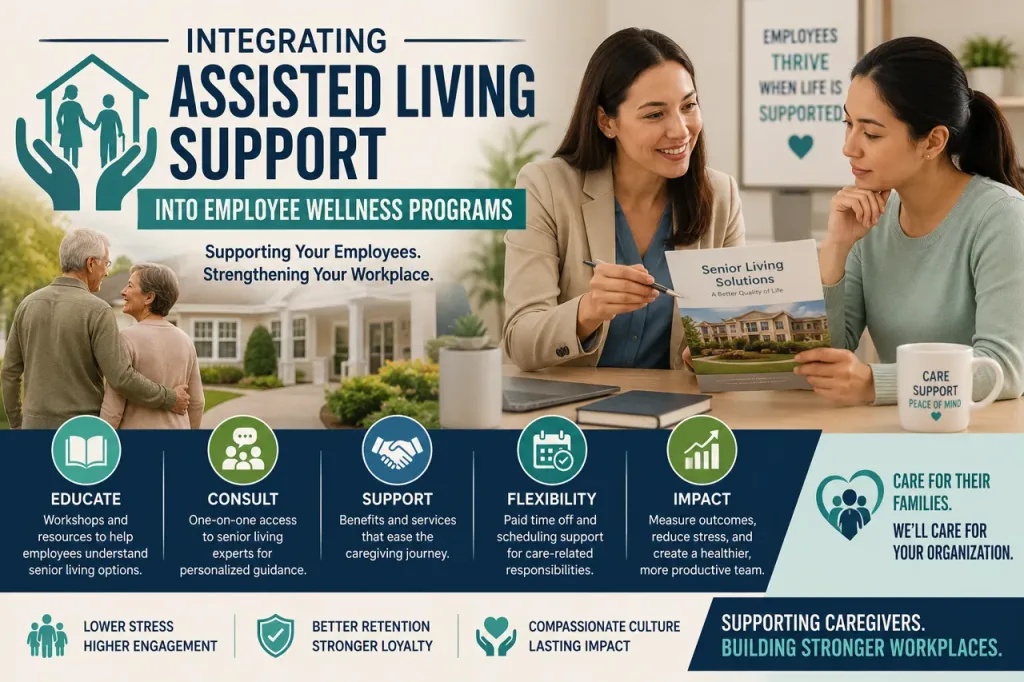
Caring for an aging parent while holding down a full-time job is brutal. It fragments attention, drains energy, and quietly erodes performance in ways that are hard to measure but impossible to ignore. Yet most organizations never connect those dots — never trace the burnout, the missed deadlines, the sudden PTO spikes back to a stressed employee trying to figure out what to do with Mom. Folding assisted living support into a wellness program fixes that blind spot. It acknowledges something obvious but routinely ignored: workers managing elder care alongside their jobs need real, practical help — not just a hotline number buried in an HR handbook.
Understanding the Employee Care Crisis
Millions of working adults carry a double shift. Job by day, caregiver by night — and often both simultaneously. That pressure bleeds into everything. Concentration falters. Attendance gets spotty. Engagement craters. Studies from employee wellness organizations have documented it clearly: caregiving employees burn out at higher rates than peers without those obligations. And then there’s the money piece. Care decisions are expensive and confusing, and employees often have no idea what’s actually affordable or even appropriate for their family member’s situation. Without a support structure, the worry becomes constant background noise — present during every meeting, every deadline, every shift. Companies that take this seriously tend to hold onto their people longer. That’s not a coincidence.
Creating Awareness Through Educational Programs
Education is the logical first move. Workshops led by senior living community representatives give employees a real map of what’s out there — independent living, assisted living, memory care, and everything in between. Concrete topics matter most here: how to evaluate a community, what to ask on a visit, how to distinguish between service tiers. Don’t just run one session and call it done. Post materials on the employee portal so people can dig in privately, on their own schedule, without feeling put on the spot. When workers actually understand their options, the decisions stop feeling like an avalanche. They start feeling manageable. That shift — from overwhelmed to informed — is where the anxiety starts to ease.
Providing Access to Senior Living Consultants
One-on-one guidance changes everything. Many senior living communities provide consultation services that match families to appropriate options based on specific needs. Companies can broker access to those consultants at no cost to employees. A good consultant doesn’t just hand over a brochure — they ask the right questions, slow the emotional spiral down, and help employees think through decisions logically instead of reactively.
For employees with aging relatives in Texas, researching Assisted Living in San Antonio gives them a concrete foothold when consultants begin mapping out local options and appropriate care levels. Some communities also run preliminary assessments before any formal visit is scheduled — useful for clarifying exactly what level of care is actually needed. Employers who open that door are making a statement: your life outside this office matters to us.
Incorporating Senior Living Benefits Into Wellness Plans
Awareness is a start. But tangible benefits carry more weight. Some employers negotiate discounted rates with local senior living communities — same logic as corporate gym memberships. Others build in paid time off specifically for community visits or care planning meetings. A few go further: subsidizing assessment appointments, covering consultation fees, partnering with moving services to ease the physical transition. These aren’t extravagant perks. They’re targeted, practical signals that the company sees the whole employee — not just the hours they log.
Measuring Impact and Adjusting Programs
Track it. Seriously. Run surveys to see whether employees feel more informed after participating, and whether that knowledge actually dents their stress levels. Watch the numbers — absenteeism, retention, productivity — among staff who’ve used these resources. Follow up with employees who’ve helped a family member move into a senior community. Ask what worked and what made it harder. That feedback loop is what keeps a program from going stale. Data justifies the investment and, more importantly, keeps the program calibrated to what employees actually need rather than what HR assumed they needed.
Conclusion
This isn’t a complicated concept. Employees have aging relatives. That reality creates stress. Stress degrades performance. So address the stress — directly, practically, with real resources attached. Education, consultant access, concrete benefits, honest measurement. Done well, this approach treats wellness as something broader than a step-count challenge or a free gym membership. It treats employees like whole people navigating whole lives. Organizations that get that tend to see better morale, lower turnover, and a culture people actually want to stay in. As caregiving needs across the workforce continue to grow, the companies leaning into this now won’t just be doing right by their employees — they’ll be doing smart business.