
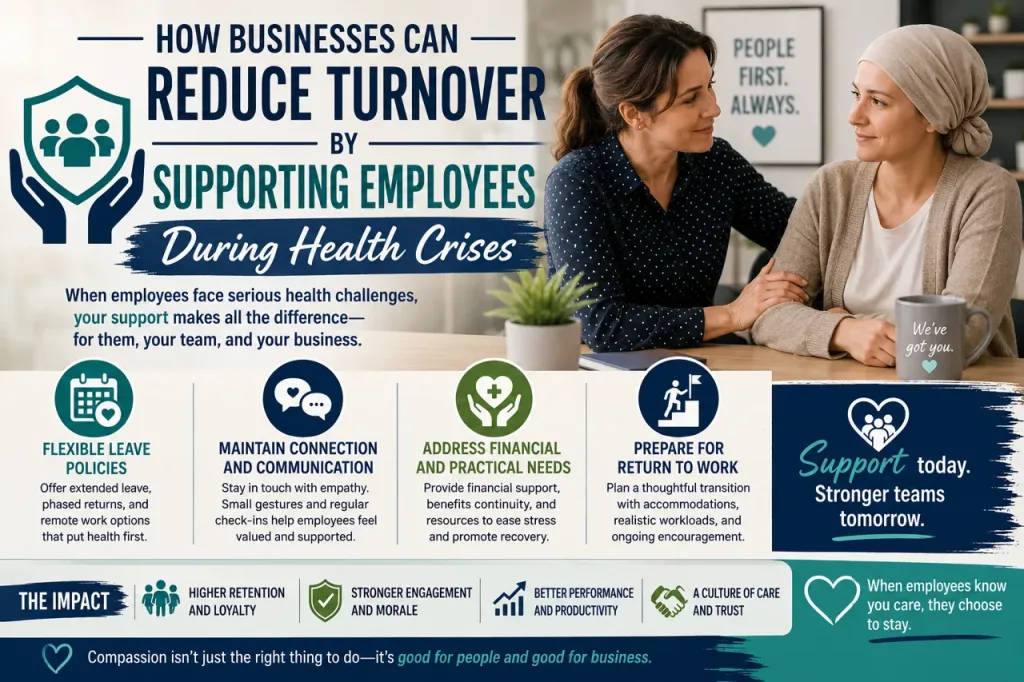
A serious health crisis hits an employee — and suddenly everything shifts. Their wellbeing comes first, obviously. But the organization feels it too. Absences pile up, team dynamics strain, and stress bleeds into the broader workplace. How your company responds in those raw, vulnerable moments? That’s what employees remember. It shapes whether they stay or quietly start updating their résumés. Genuine support during health challenges builds the kind of loyalty no onboarding packet can manufacture — it preserves institutional knowledge, keeps teams intact, and tells people something real about who you are as an employer.
Creating Flexible Leave Policies During Health Emergencies
Rigid attendance rules back employees into corners. When someone’s choosing between their health and their paycheck, that’s a policy failure — not a personal one. Flexible leave options change that equation entirely. Extended unpaid leave, phased return schedules, remote work during recovery — these aren’t perks. They’re signals that your company sees the person, not just the output. Employees who get that flexibility come back feeling genuinely appreciated. Those who get pressured back too soon? They suffer setbacks, grow resentful, and often leave for workplaces that actually accommodate human fragility.
Maintaining Communication and Connection
Isolation makes everything worse. The physical toll of illness is hard enough; the emotional weight of feeling forgotten by your workplace compounds it fast. Thoughtful communication practices close that gap — without piling on pressure. A simple text from a manager. A meal delivery coordinated by the team. Help with household tasks. None of this needs to be expensive or elaborate. What it needs to be is consistent. Some companies designate a single point of contact so the employee isn’t fielding calls from five different directions. That kind of consideration matters. It tells someone: you still belong here. And that message — delivered reliably throughout an absence — is often what prevents them from mentally checking out and looking elsewhere.
Addressing Financial and Practical Concerns
Medical crises don’t arrive alone. They bring financial fear with them. When employees are simultaneously managing health challenges and watching their income evaporate, the stress compounds in ways that make recovery harder and loyalty nearly impossible. Practical employer support can shift that dynamic. Short-term disability benefits, continued health insurance during extended leave, emergency hardship funds — these matter enormously. Some organizations go further: helping employees actually navigate their benefits, offering financial counseling referrals, or easing workloads during reintegration rather than dumping everything back at once. This is especially critical for employees managing cognitive conditions at home; families coordinating dementia care in Federal Way often depend on employer flexibility and uninterrupted benefit access just to keep their households stable. When financial security isn’t under threat, employees can focus on getting better — not on whether they’ll lose their housing. That security creates real gratitude. The kind that sticks.
Preparing for Return to Work
Coming back after a serious health crisis is harder than it looks from the outside. Anxiety about performance. The creeping fear that colleagues have moved on. Physical limitations that weren’t there before. A thoughtful return-to-work process acknowledges all of that. Meet with the employee before day one. Discuss accommodations, adjusted responsibilities, modified hours — whatever they need to land well. Managers should know how to welcome someone back warmly without hovering or making things awkward. Ramp workloads gradually. Let confidence and stamina rebuild at a realistic pace. Done right, a smooth return doesn’t just help the employee — it cements their loyalty in a way that almost nothing else can.
Conclusion
Supporting employees through health crises isn’t charity. It’s strategy. Your company’s actual values show up in how it treats people during hardship — not in the mission statement framed on the lobby wall. Flexible leave, real communication, financial support, a thoughtful path back to work: together, these turn crisis moments into something unexpected — opportunities to deepen trust. In a job market where talented people have options, the organizations that show up for employees when things get hard earn something rare: staff who genuinely want to stay. That’s not soft. That’s a competitive advantage.