
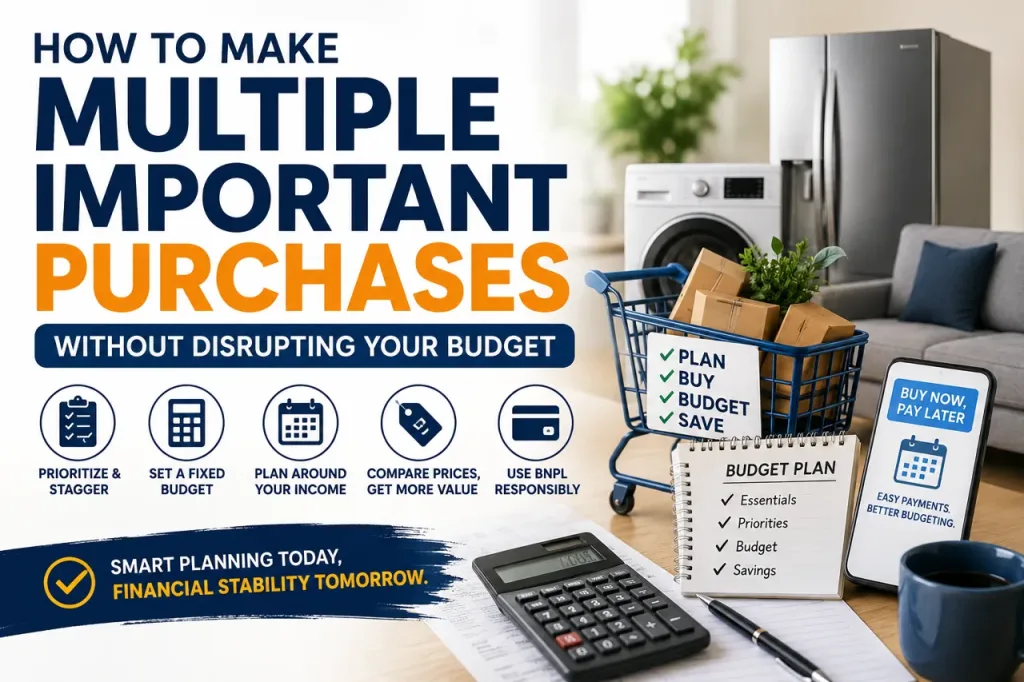
There are times when important purchases come all at once, leaving little room to prepare financially. You might be moving into a new place and suddenly need to buy furniture, appliances, and other essentials in a short span of time. Or you could be dealing with situations like house repairs or unexpected medical-related expenses. During these periods, costs can pile up quickly and disrupt your budget before you even notice it. Money meant for daily expenses, bills, or savings may get redirected, leading to financial strain and stress.
Still, these situations don’t have to throw your finances off balance. With the right planning and strategy, it’s possible to handle multiple important purchases without putting too much pressure on your budget. From restructuring how you allocate your income to exploring flexible payment options like a buy now pay later no credit check service when appropriate, there are ways to manage expenses more effectively. By planning instead of just reacting to each expense, you can stay in control of your money even during high-spending periods.
To help keep your budget steady while managing multiple purchases, here are some practical strategies to consider.
1. Prioritize and Stagger Your Purchases
When multiple important purchases come up at the same time, the first step is to avoid treating them as equally urgent. List everything you need and separate what’s truly essential from what can wait. Essentials are those that directly affect daily living, work, or immediate responsibilities, while others may improve comfort but are not that time-sensitive. This simple sorting process helps you gain clarity and prevents emotional or impulsive decisions that can stretch your budget too thin.
Once you’ve identified priorities, stagger your purchases instead of doing them all at once. Spread them across several weeks (or months, if possible), depending on urgency and income flow. This gives your finances breathing room and allows you to adjust as you go. It also reduces the risk of running out of funds for daily needs since you’re not committing a large portion of your budget in a single period.
2. Set a Fixed Budget for Major Purchases per Period
One of the most effective ways to control spending is to set a clear limit for major purchases within a specific timeframe, such as a month or pay cycle. Instead of deciding on each purchase individually, determine upfront how much you can safely allocate to major expenses without affecting essentials like rent, food, or bills. This creates a boundary that helps guide all your purchasing decisions.
Once you’ve set the limit, treat it as non-negotiable. If you reach it early, postpone additional purchases until the next cycle. This approach builds discipline and prevents the common mistake of underestimating total spending when multiple needs arise. It also helps you stay consistent with your savings goals, even during high-expense periods.
3. Use Buy Now, Pay Later Options Responsibly
A BNPL or buy now, pay later service can be helpful when used as a tool for managing cash flow. This financial product allows you to split large purchases into smaller installments, which can ease immediate pressure on your budget when several needs come up at once. This can be especially useful for essential items that cannot be delayed.
However, responsible use is key. Only use BNPL for planned and necessary purchases, not impulse buys. Also, make sure the installment amounts fit comfortably within your monthly income so they don’t create financial strain later on. When used properly, these services can help spread out expenses instead of overwhelming your budget.
4. Reallocate Your Budget Temporarily
During periods of heavy spending, it can help to temporarily adjust how your income is distributed. Look at your non-essential spending categories, such as entertainment, dining out, or shopping for wants, and reduce or pause them for the time being. Then, redirect those funds toward your priority purchases.
Think of this as a short-term adjustment rather than a permanent change. Once your major purchases are complete, gradually restore your usual budget allocation. This flexible approach allows you to meet urgent needs without derailing your overall financial plan or long-term goals.
5. Plan Purchases Around Income Timing
Timing plays a big role in maintaining a stable budget. Aligning major purchases with your paydays ensures you’re spending when your cash flow is strongest. This reduces the likelihood of shortfalls later in the month and helps you avoid relying on credit or borrowing to cover essential expenses.
If possible, group larger expenses shortly after receiving your income, then slow down your spending as the next payday approaches. This creates a natural spending rhythm that matches your financial cycle. Over time, this habit can make budgeting more predictable and less stressful, even when multiple purchases are necessary.
6. Compare Prices and Look for Value, Not Just Convenience
When you need to make several important purchases, it’s easy to rush your decisions just to get everything done quickly. However, taking the time to compare prices across different stores or platforms can lead to significant savings, especially on big-ticket items. Even small price differences can add up when you’re buying multiple items.
Beyond price alone, focus on overall value. Consider factors such as durability, warranty, and long-term usefulness instead of just immediate convenience. Sometimes, a slightly more expensive item offers better long-term value because it lasts longer or requires less maintenance. Making value-based decisions helps stretch your budget further without compromising quality.
Managing Multiple Purchases Wisely
Making multiple important purchases at the same time can feel overwhelming, but it becomes much more manageable with the right approach. By applying these strategies, you can meet your needs without putting unnecessary strain on your budget. The key is to stay disciplined, stay flexible, and always keep your overall financial stability in mind.