
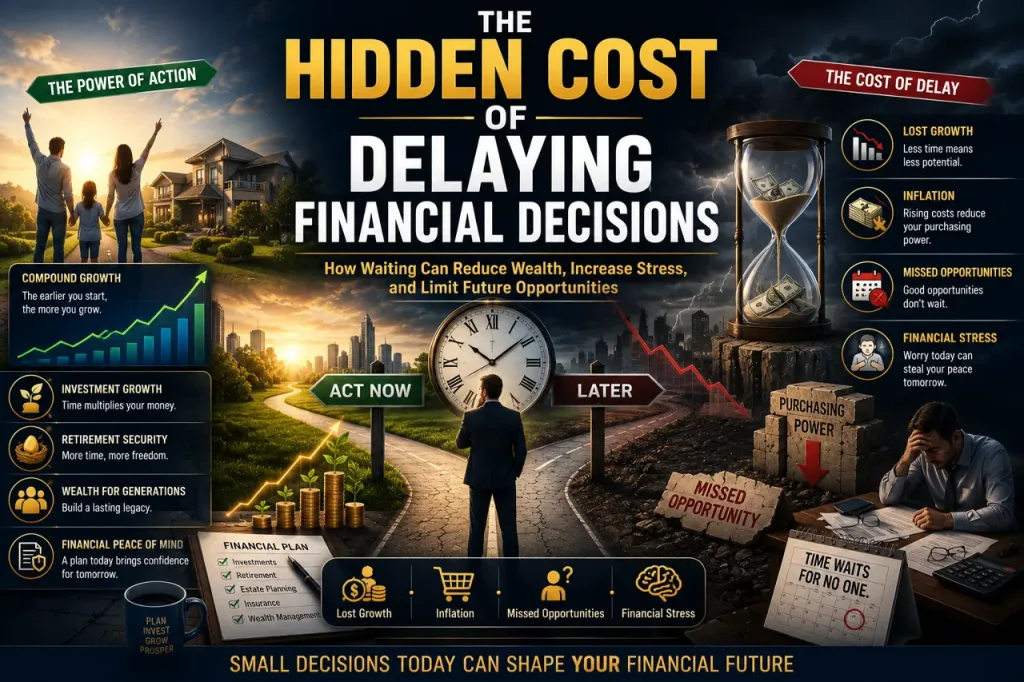
When it comes to personal finances, delaying important decisions can feel harmless in the moment. Many people put off conversations about investments, estate planning, retirement preparation, or wealth management because they believe there is always more time. While postponing these choices may offer temporary comfort, the long-term consequences can be significant and difficult to reverse.
Financial opportunities are often tied to timing. The longer a person waits to make informed decisions, the more likely they are to miss opportunities for growth, protection, and strategic planning. Understanding the hidden costs associated with financial procrastination can help individuals make more confident choices and create a stronger foundation for their future.
The Cost of Lost Growth Opportunities
One of the most overlooked consequences of delaying financial decisions is the loss of potential growth. Investments generally benefit from time, especially when compound growth is involved. Even a relatively short delay can reduce the long-term value of savings and investments because money has less time to generate returns.
Many people focus on finding the perfect investment strategy before taking action. However, waiting for the ideal moment often results in inactivity. While careful planning is important, excessive hesitation can prevent individuals from taking advantage of opportunities that may contribute significantly to future financial security.
The same principle applies to savings goals. Whether someone is preparing for retirement, building an emergency fund, or establishing wealth for future generations, starting sooner creates more flexibility and allows financial objectives to develop over time.
Uncertainty Often Becomes More Expensive
Financial decisions rarely become simpler through avoidance. In many cases, delaying action allows uncertainty to grow and creates additional complications. Market conditions change, tax laws evolve, and personal circumstances shift over time. What may have been a relatively straightforward decision today can become more complex later.
For example, individuals who inherit assets or receive a financial windfall may postpone creating a comprehensive strategy because the situation feels overwhelming. Without a plan, assets may sit idle, inflation may reduce purchasing power, and opportunities for strategic wealth management may be missed.
Seeking professional trust fund advice can help individuals understand available options and create a thoughtful path forward before delays begin affecting long-term outcomes.
The Emotional Impact of Financial Procrastination
Financial decisions carry emotional weight. Concerns about making mistakes, fear of market volatility, or uncertainty about future goals often contribute to indecision. Unfortunately, avoiding decisions rarely eliminates stress. Instead, unresolved financial matters tend to remain in the background, creating ongoing anxiety and mental strain.
Many individuals report feeling relieved after creating a financial plan, even before significant results are achieved. A clear strategy provides direction and reduces uncertainty. Rather than worrying about what should be done, individuals can focus their energy on implementing a plan and making adjustments as needed.
Delays Can Affect Generational Wealth Goals
For families hoping to build and preserve wealth across generations, timing becomes especially important. Estate planning, trust structures, gifting strategies, and wealth transfer plans often require careful consideration and years of implementation to achieve desired outcomes.
When these conversations are postponed, options may become limited. Family members may lack clear guidance regarding financial intentions, increasing the likelihood of confusion, disputes, or inefficient asset distribution in the future.
Taking proactive steps allows individuals to align their financial resources with long-term family goals. Whether the objective is protecting assets, supporting future generations, or preserving a legacy, early planning creates more opportunities for successful execution.
Inflation Continues Regardless of Personal Timelines
Inflation represents another hidden cost of delayed financial decisions. While money sits uninvested or financial plans remain unfinished, purchasing power may gradually erode. Over time, this can significantly affect the value of savings and reduce the resources available for future expenses.
Even moderate inflation can have meaningful long-term effects. Individuals who delay investment decisions or postpone developing financial strategies may discover that their money buys less than anticipated years later.
Although no one can fully eliminate the effects of inflation, proactive financial planning can help address this challenge. Strategic investments, diversified portfolios, and regularly updated financial plans can assist in preserving long-term purchasing power.
Building Momentum Through Action
One of the greatest benefits of making timely financial decisions is the momentum that follows. Completing one important task frequently encourages progress in other areas. For example, creating an investment plan may lead to estate planning discussions, retirement reviews, insurance evaluations, and broader wealth management conversations.
Each positive financial action contributes to a more comprehensive strategy. Over time, these incremental improvements can significantly strengthen overall financial health and resilience.
Momentum also encourages accountability. When individuals actively engage with their finances, they become more aware of opportunities, potential risks, and emerging priorities. This awareness supports better decision-making and creates a stronger sense of control over long-term outcomes.
Conclusion
Delaying financial decisions may feel harmless in the short term, but the hidden costs can accumulate over time. Lost growth opportunities, inflation, increased complexity, emotional stress, and missed planning advantages can all affect long-term financial well-being. The longer important decisions remain unresolved, the more difficult it may become to achieve financial goals efficiently.
Taking action does not require having every answer immediately. Meaningful progress often begins with a simple commitment to move forward. By addressing financial decisions proactively and thoughtfully, individuals can reduce uncertainty, take advantage of available opportunities, and create a stronger path toward lasting financial security.