
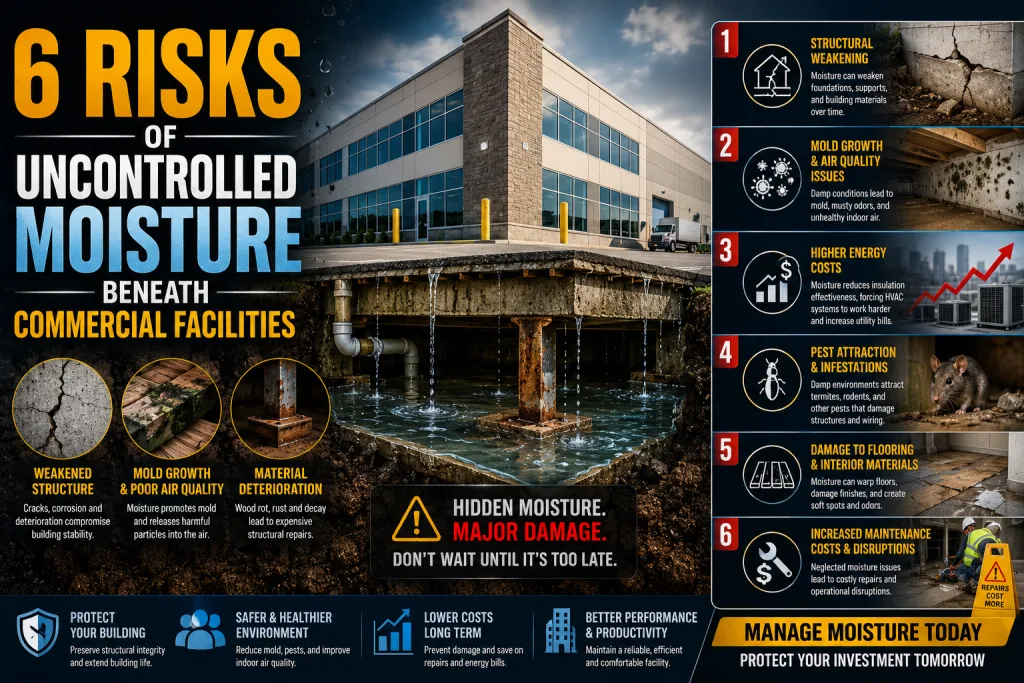
Moisture beneath commercial facilities can create a range of challenges that affect structural stability, operational efficiency, and long term building performance. Because these areas are often hidden from daily view, problems can develop quietly over time, leading to costly repairs and disruptions. Understanding the risks associated with uncontrolled moisture helps property owners and facility managers take proactive steps to protect their buildings. When moisture is properly managed, the entire facility benefits from improved safety, durability, and environmental quality.
Structural Weakening and Material Deterioration
One of the most significant risks of uncontrolled moisture is the gradual weakening of structural components. Wood, concrete, and metal can all be affected when exposed to damp conditions for extended periods. Wood may soften or rot, concrete can crack as moisture infiltrates small openings, and metal components may corrode. Over time, these issues can compromise the stability of the building and lead to expensive repairs. In severe cases, commercial properties may require specialized services such as reputable crawl space encapsulation in Charlotte, NC to restore protection and prevent further deterioration. Addressing moisture early helps preserve the building’s foundational strength and reduces long term structural concerns.
Increased Risk of Mold and Air Quality Issues
Moisture creates ideal conditions for mold growth, which can spread quickly beneath a commercial facility. Mold thrives in dark, damp environments and can release particles into the air that travel throughout the building. These particles may contribute to musty odors and negatively affect indoor air quality. Poor air quality can make the environment uncomfortable for employees, customers, and tenants, and may require extensive remediation if left unaddressed. Controlling moisture at its source helps prevent mold from developing and supports a healthier indoor environment.
Higher Energy Costs and Reduced Efficiency
Uncontrolled moisture can interfere with a building’s ability to regulate temperature effectively. Damp air tends to feel cooler in winter and warmer in summer, causing heating and cooling systems to work harder to maintain comfortable conditions. This increased strain leads to higher energy consumption and elevated utility costs. Moisture can also reduce the effectiveness of insulation, further impacting energy efficiency. By managing moisture beneath the facility, property owners can create a more stable thermal environment that supports efficient HVAC performance and reduces unnecessary energy use.
Attraction of Pests and Potential Infestations
Moist environments naturally attract pests such as termites, ants, and rodents. These pests seek out damp areas for shelter and can cause significant damage to structural materials. Termites, in particular, pose a serious threat to wooden components and can compromise the integrity of the building if not addressed promptly. Rodents may also create additional concerns by damaging wiring, insulation, or stored materials. Preventing moisture buildup beneath the facility helps deter pests and reduces the likelihood of costly infestations that disrupt operations and require extensive remediation.
Damage to Flooring and Interior Materials
Moisture beneath a commercial facility can eventually affect the materials above it. Flooring may begin to warp, buckle, or develop soft spots as moisture rises through the subfloor. Carpeting can become damp, leading to odors and potential mold growth. Interior finishes may also show signs of damage, such as discoloration or peeling. These issues not only impact the appearance of the building but can also create safety hazards for occupants. Managing moisture helps protect interior materials and ensures that the facility remains functional, attractive, and safe for daily use.
Increased Maintenance Costs and Operational Disruptions
When moisture related issues go unnoticed, they often lead to more extensive damage that requires significant repairs. Structural restoration, mold remediation, pest control, and flooring replacement can all become necessary if moisture is not properly managed. These repairs can be costly and may require temporary closures or operational adjustments that disrupt business activities. By addressing moisture early and implementing preventive measures, property owners can reduce long term maintenance expenses and avoid interruptions that impact productivity and revenue.
Conclusion
Uncontrolled moisture beneath commercial facilities can lead to structural weakening, mold growth, reduced energy efficiency, pest activity, interior damage, and increased maintenance costs. Managing moisture effectively helps protect the building, support occupant comfort, and maintain long term operational stability.