
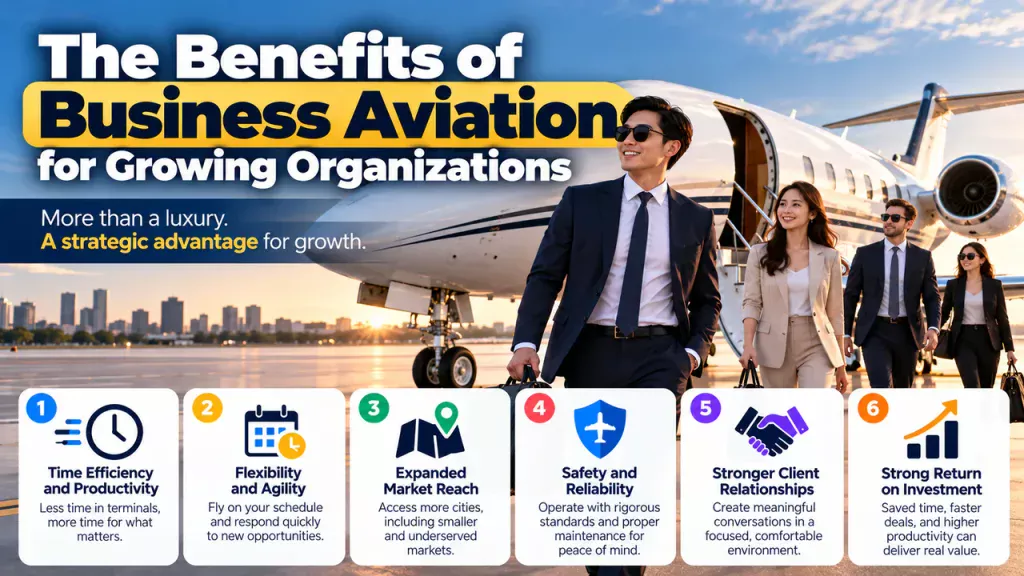
Business aviation has long been associated with large corporations and Fortune 500 companies, but its advantages extend well beyond the executive suites of global enterprises. For growing organizations navigating competitive markets, private and chartered aircraft represent a strategic asset rather than a luxury expense. The distinction matters more than most leadership teams realize. Understanding how business aviation creates real, measurable value can help decision-makers determine whether it fits their growth trajectory.
Time Efficiency and Productivity on the Move
One of the most compelling advantages of business aviation is the dramatic improvement in time efficiency. Commercial airline travel means arriving hours early, navigating crowded terminals, enduring layovers, and absorbing delays that can derail carefully planned schedules. With private aviation, teams can depart from smaller regional airports closer to their destination, often cutting total travel time significantly. The aircraft cabin itself becomes a productive workspace, giving executives room to hold confidential meetings, review sensitive documents, and make decisions without the concerns that come with traveling publicly.
Flexibility That Matches a Dynamic Business Environment
Growing organizations rarely operate on a fixed, predictable schedule, and business aviation offers a level of scheduling flexibility that commercial airlines simply cannot match. Last-minute meetings, urgent client visits, and rapid-response site assessments become far more manageable when a company is not constrained by published flight timetables. Teams can fly to multiple cities in a single day, something that would be nearly impossible through commercial routes. That kind of agility translates directly into competitive advantage, giving organizations the ability to act decisively when opportunities appear.
Expanding Reach to Underserved Markets
Commercial airline routes are concentrated around major metropolitan hubs, leaving many smaller cities and rural markets difficult to access efficiently. Business aviation opens up a much broader range of destinations, including smaller regional airports that sit closer to manufacturing facilities, client headquarters, or active project sites. For companies expanding into emerging markets or building relationships in less accessible areas, that extended reach is genuinely invaluable. Organizations that can physically show up where competitors cannot are far better positioned to close deals and build partnerships that last.
Safety, Maintenance, and Operational Reliability
Working with a reputable charter provider or maintaining a company aircraft means adhering to rigorous safety standards and consistent maintenance protocols. Business aviation operators invest heavily in keeping their fleets airworthy, and that includes meticulous attention to seasonal and environmental conditions. Operations in colder climates, for instance, require careful preparation, including the proper application of type 1 deice fluid during winter months to ensure safe takeoffs and prevent ice accumulation on critical surfaces. This level of operational diligence reflects a broader culture of reliability and professionalism that growing companies can genuinely depend on when their reputation hinges on timely, safe travel.
Building Stronger Client and Partner Relationships
There is something undeniably impactful about flying a key client or prospective partner aboard a private aircraft. It communicates a clear investment in the relationship, a respect for their time, and a seriousness about doing business together. Beyond the optics, business aviation allows relationship-building conversations to unfold in a focused, comfortable environment free from the interruptions of public travel. Many organizations find that the informal setting of a private cabin fosters more candid and productive dialogue than a formal conference room ever could. These advantages, while harder to put a number on, often translate into faster deal cycles and stronger long-term partnerships.
Cost Considerations and Return on Investment
A common misconception is that business aviation is prohibitively expensive for all but the largest corporations. While the upfront costs are real, a thorough return-on-investment analysis often tells a more nuanced story. When factoring in saved employee hours, increased deal velocity, reduced overnight stays, and enhanced productivity during travel, many growing organizations find that the numbers make sense earlier than expected. Charter programs, fractional ownership models, and jet card memberships all provide scalable entry points, allowing companies to access the benefits of business aviation without committing to full aircraft ownership right out of the gate.
Conclusion
Business aviation is a powerful tool for organizations that are scaling quickly and need every operational advantage available. From time savings and scheduling flexibility to expanded market access and stronger client relationships, the strategic benefits are substantial. As companies evaluate their growth strategies, private and charter aviation deserve serious consideration as a meaningful investment in efficiency, reliability, and long-term competitive positioning.