
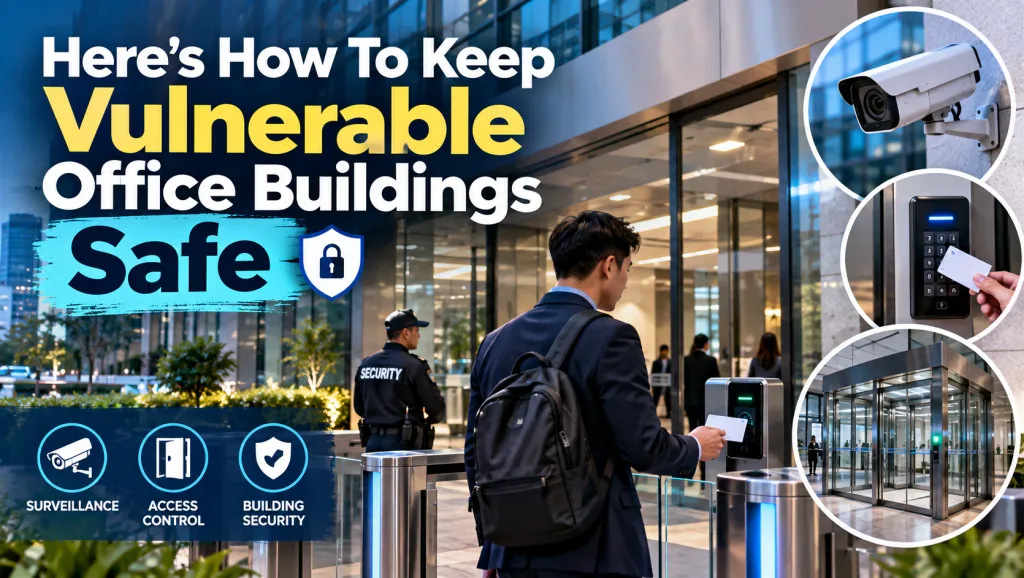
Office buildings face unprecedented security challenges in today’s environment. From unauthorized access to theft and vandalism, property managers must adopt comprehensive strategies to protect their assets and employees. Vulnerabilities in building security can expose organizations to significant financial and reputational damage. Understanding the specific threats that target office facilities allows managers to implement targeted solutions. This article explores practical approaches to fortifying office building security and reducing risk exposure.
Understanding Common Security Vulnerabilities
Office buildings typically face multiple security threats that vary by location, industry, and building design. Entry points such as doors, windows, and loading docks represent primary vulnerability areas where unauthorized access can occur. Many older buildings lack modern security infrastructure, making them particularly susceptible to intrusion. Ground floor and basement areas often receive insufficient monitoring, creating blind spots for potential criminal activity. Employee negligence, such as propping open doors or sharing access credentials, compounds these structural weaknesses. Understanding these vulnerabilities is the first critical step toward developing an effective security strategy.
Access Control Systems and Entry Point Protection
Securing vulnerable building entrances requires multi-layered access control approaches that go beyond traditional locks. Modern access control systems use keypads, card readers, or biometric scanners to restrict entry to authorized personnel only. These systems provide detailed logs of who enters the building and when, creating accountability and aiding investigations if incidents occur. When facility managers need to prevent tailgating and restrict entry to verified personnel, an access control vestibule provides a physical buffer zone that stops unauthorized individuals before they reach the interior of the building. Isotec Security offers this solution, especially for office environments where high foot traffic and sensitive operations create elevated entry point risk. Regular maintenance of access control systems ensures reliability and prevents malfunctions that could compromise security integrity.
Surveillance and Monitoring Solutions
Video surveillance serves as both a deterrent and an investigative tool for office building security. High-definition cameras positioned at entryways, corridors, parking areas, and exits capture detailed footage that can identify individuals and activities. Modern surveillance systems offer remote monitoring capabilities, allowing security personnel to observe multiple locations simultaneously from a central station. Storage of video footage on secure servers ensures that evidence remains available for extended periods when needed for investigations. Night vision capabilities and motion-activated recording reduce storage costs while maintaining coverage during low-traffic periods. Regular camera maintenance and strategic placement in high-risk areas maximize the effectiveness of surveillance investments.
Perimeter Security and Exterior Controls
The exterior of an office building represents the first line of defense against unauthorized access and criminal activity. Proper lighting around building entrances, parking areas, and perimeter zones eliminates dark spaces where criminals can operate undetected. Fencing, bollards, and landscaping design choices can control foot traffic flow and prevent vehicles from accessing restricted areas. Clear signage indicating security measures and consequences for trespassing communicates that the property is monitored and protected. Securing loading docks and delivery areas with gates, cameras, and staffing requirements prevents unauthorized individuals from entering through these vulnerable points. Regular inspection of the building exterior identifies maintenance issues, damaged fencing, or other conditions that might compromise perimeter security.
Emergency Response and Staff Training
Even the best security systems fail without proper staff training and clear emergency protocols. All employees should understand evacuation procedures, how to report suspicious activity, and proper use of access systems. Security staff require regular training on threat recognition, de-escalation techniques, and proper response procedures for various scenarios. Conducting regular emergency drills prepares staff to respond quickly and safely if an actual incident occurs. Clear communication channels, including emergency notification systems, ensure that threats are reported promptly to appropriate personnel. Managers should establish relationships with local law enforcement and emergency services to facilitate coordination during critical incidents.
Integrating Technology and Human Security
The most effective office building security combines technological solutions with trained security personnel who can respond to threats in real time. Security guards provide visible deterrence and can investigate suspicious activity, respond to alarms, and assist during emergencies. Integrating alarm systems with surveillance and access control creates automated responses to detected threats. For example, when motion sensors detect unauthorized movement in a restricted area at night, the system can automatically trigger alerts, lock doors, and begin recording footage simultaneously. Regular security assessments by qualified professionals help identify gaps and recommend improvements based on current threat environments. Balancing the cost of security investments with the level of protection required ensures sustainable, effective security programs.
Conclusion
Protecting vulnerable office buildings requires a comprehensive approach that addresses structural vulnerabilities, implements modern technology, and establishes clear operational procedures. Access control systems, surveillance, perimeter security, and staff training work together to create multiple layers of defense that discourage criminal activity and enable rapid response when incidents occur. Property managers should conduct regular security assessments to identify evolving vulnerabilities and adapt strategies accordingly. By taking a systematic approach to security, organizations can significantly reduce risk exposure and create safer environments for employees and visitors. Investing in office building security demonstrates commitment to asset protection and employee safety while potentially reducing insurance costs and liability exposure.