
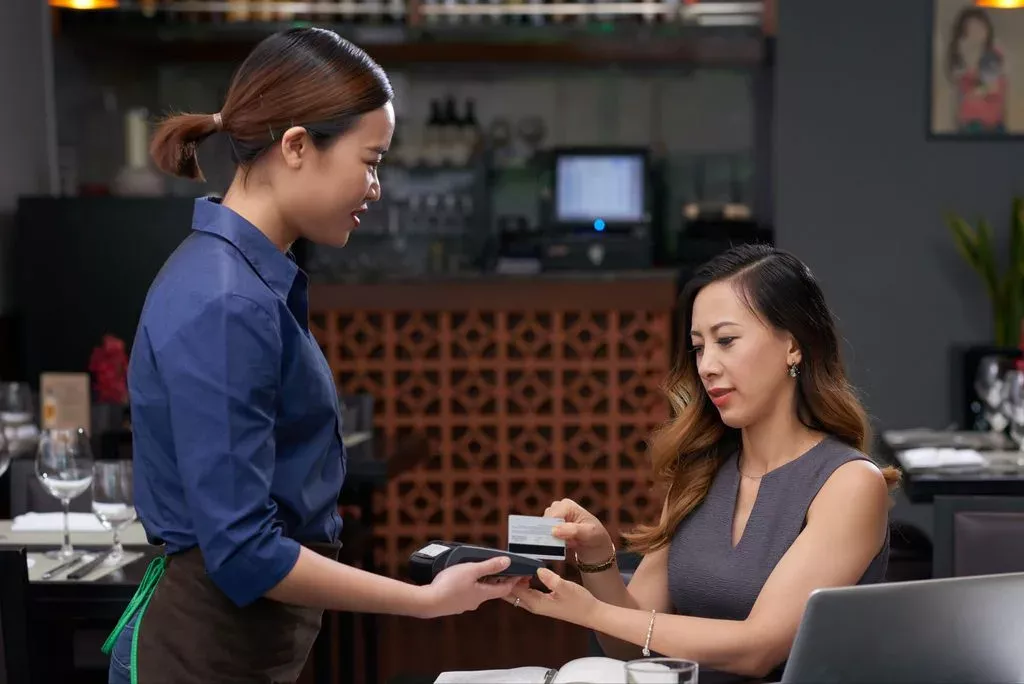
Imagine your restaurant packed with customers, orders pouring in, and your kitchen humming at full speed. Suddenly, the internet connection drops. If your business relies solely on a cloud-based system, your operations can freeze instantly. Conversely, if you only use a traditional offline POS, you miss out on real-time remote reports, multi-branch tracking, and automatic cloud backups.
To run a resilient and scalable business, restaurants today need the best of both worlds: a hybrid solution that seamlessly pairs the real-time power of a POS system for restaurants with the reliability of offline functionality.
The Dual Advantage: Combining Cloud Power with Offline
While cloud POS systems provide modern features like remote menu management, multi-store tracking, and real-time analytics, internet disruptions remain a common operational bottleneck. With over 97.5 million internet users in the Philippines according to the Global Digital Report, network congestion and connection drops can happen when you least expect them.
By deploying a system that functions both online and offline, restaurants protect their revenue while staying connected to critical cloud business insights.
1. Real-Time Cloud Insights Meets Zero-Downtime Operations
A cloud-based POS system for restaurants allows owners to track sales, monitor live inventory, and update menu prices from anywhere in real time. However, when local Wi-Fi drops, an offline-capable system ensures that floor staff can keep placing orders, printing kitchen tickets, and taking payments without a single second of interruption. Once the connection recovers, all offline data automatically syncs back to the cloud.
2. Protecting Fast-Paced Peak Hours
Peak periods like lunch and dinner rushes require maximum speed. Relying strictly on a cloud-only POS creates a single point of failure during busy hours, while an offline-enabled cloud system ensures uninterrupted order flow no matter what happens to the network.
3. Replacing Error-Prone Manual Workarounds
When pure cloud systems go dark, staff often resort to pen and paper. This creates massive room for missed items, wrong calculations, and duplicate entries. A hybrid POS system for restaurants eliminates the need for manual workarounds. Your team uses the exact same interface whether connected to the cloud or processing sales offline.
Reasons Your Restaurant Business Needs a Hybrid POS Solution
According to Inquirer reports, food service activities contribute 21% to the Philippines’ MSME growth. Here is why combining cloud features with offline fallback is the best POS system setup for small business success:
Seamless Data Synchronization Across Branches
Enjoy the agility of cloud management (like pushing central menu updates or auditing live reports across multiple locations) without risking local store downtime when internet service fluctuates.
Continuous Inventory Control
A POS system with inventory management keeps stock levels accurate. When offline, local transactions continue to record item deductions, syncing updated inventory totals to your cloud dashboard the moment you are reconnected.
Protection Against Internet Speed Drops
Recent data from Ookla ranks the Philippines 65th globally in mobile internet speed and 58th in fixed broadband (Business World Online). A POS system with offline backup ensures local store performance remains lightning-fast regardless of local bandwidth stability.
Uninterrupted Customer Satisfaction
Long cashier queues drive customers away. Having an offline mode built into your cloud POS guarantees that payment processing and table turn rates stay efficient during unexpected network outages.
Audit-Ready Financial Tracking
Instead of manually entering receipts after an internet outage, a hybrid point-of-sale system in the Philippines logs every transaction locally and updates your cloud analytics automatically, leaving zero gaps in your financial audit trail.
Keep Your Restaurant Connected & Running Today
Relying exclusively on an online-only or offline-only system creates operational risks. A true hybrid POS system gives you the flexibility of cloud management paired with the bulletproof security of local offline processing.
If you are looking for a POS system for restaurants that balances modern cloud capabilities with uninterrupted offline reliability, KaHero Mobile POS is built for you. Manage inventory from the cloud, review live multi-branch analytics, and keep your physical store running seamlessly, even when the internet goes out.
Ready to protect your restaurant operations? Visit our website to explore our POS solutions!
Frequently Asked Questions (FAQs)
Here are answers to commonly asked questions about connectivity in POS systems:
Why do restaurants need both cloud-based and offline POS features?
A cloud POS provides remote management, live reporting, and multi-branch tracking, while offline capabilities guarantee that daily ordering and payment operations never stop during an internet outage.
Does a POS system need the internet?
Not if you use a hybrid system. While cloud features require the internet to sync data remotely, an offline-capable POS lets staff process orders locally without an active connection.
What happens to offline sales data when the internet connection returns?
Once connectivity is restored, the POS system automatically uploads and syncs all offline transactions to your central cloud database without disrupting active store operations.