
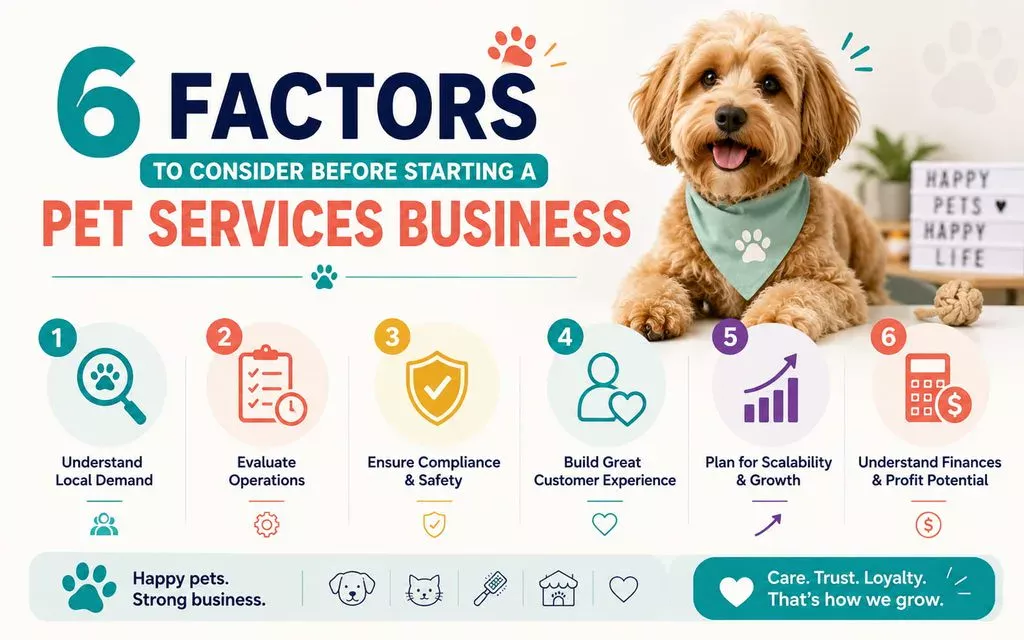
The pet services industry continues to expand as more households welcome pets and prioritize high-quality care, grooming, wellness, and convenience-driven support. Entrepreneurs entering this space often find a rewarding blend of community connection, recurring revenue potential, and long-term stability. Still, launching a successful pet services business requires thoughtful planning and a clear understanding of the factors that influence daily operations and long-term growth. Evaluating these considerations early helps entrepreneurs build a strong foundation that supports both customer satisfaction and sustainable business performance.
Understanding Local Demand and Service Expectations
Evaluating local demand is one of the most important steps when entering the pet services industry. Concepts like pet care demand and consumer expectations highlight how preferences shape business opportunities.
Pet owners increasingly seek specialized services that support grooming, wellness, enrichment, and convenience. Businesses offering structured service models such as a dog grooming franchise benefit from this shift, as customers look for providers who deliver reliable, professional care. Understanding what local pet owners value helps entrepreneurs tailor their offerings and build a service mix that aligns with community needs.
Evaluating Operational Requirements and Daily Workflow
Operational planning plays a major role in the long-term success of a pet services business. Concepts like operational workflow and service coordination reinforce how structure supports efficiency.
Entrepreneurs must consider staffing needs, scheduling systems, facility layout, and daily service flow. Pet care operations often involve hands-on work, safety protocols, and consistent communication with customers. Building clear processes from the start helps ensure smooth operations and reduces the risk of service disruptions. When workflows are well-organized, teams can deliver dependable care that strengthens customer trust.
Assessing Regulatory Requirements and Compliance Standards
Compliance is essential for maintaining safe and reliable pet services. Concepts like pet care regulations and business compliance highlight how guidelines protect both customers and animals.
Entrepreneurs must understand local licensing requirements, safety standards, sanitation rules, and any regulations related to animal handling. Compliance ensures that the business operates responsibly and maintains a strong reputation within the community. When regulatory standards are prioritized, customers feel confident trusting their pets to the business.
Building a Strong Customer Experience Strategy
Customer experience plays a major role in shaping loyalty and long-term engagement. Concepts like customer experience and service consistency highlight how thoughtful communication supports satisfaction.
Pet services businesses thrive when customers feel informed, supported, and valued. Clear communication, reliable scheduling, and consistent service quality help create a positive experience that encourages repeat visits. Entrepreneurs who invest in customer experience early often see stronger retention and more referrals, both of which support long-term growth.
Considering Scalability and Long–Term Growth Potential
Scalability is an important factor for entrepreneurs who plan to expand their pet services business over time. Concepts like scalable operations and growth planning highlight how structured systems support expansion.
Many pet services models can grow across multiple locations or service lines when supported by strong training, operational frameworks, and brand standards. Entrepreneurs should evaluate whether their chosen service mix can scale effectively and whether the local market can support future growth. When scalability is built into the business model, expansion becomes more accessible and sustainable.
Understanding Financial Requirements and Revenue Potential
Financial planning is essential for building a stable pet services business. Concepts like financial forecasting and revenue planning reinforce how budgeting supports long-term success.
Entrepreneurs must consider startup costs, equipment needs, staffing expenses, and ongoing operational requirements. At the same time, they should evaluate revenue potential across grooming, daycare, training, and wellness services. Pet care businesses often benefit from recurring revenue, which supports predictable financial performance. When financial planning is thorough, entrepreneurs can make informed decisions that support sustainable growth.
Conclusion
Starting a pet services business requires evaluating local demand, operational needs, regulatory requirements, customer experience strategies, scalability, and financial planning. When entrepreneurs consider these factors early, they build a strong foundation that supports reliable service, meaningful customer relationships, and long-term business success.