
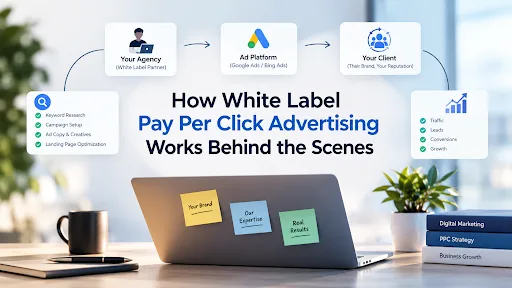
Digital marketing firms usually want to add more offerings, land new clients, and raise income without hiring a big staff. Still, running ads across several campaigns takes real time and skill. It also needs people who stay focused on the work each day. White label PPC can help agencies grow, while they keep their own client-facing brand.
In my own market checks, many companies now expect one place to handle digital marketing. That can include paid ads, SEO, and work on site speed and pages. An agency can meet those needs by teaming up with outside experts. The specialists do the hands-on tasks, while the agency stays in touch with the client.
So what actually happens once a partner is chosen? What changes after an agency connects with a PPC provider? Below, we break down the flow, who does what, the upsides, and the key points to watch when using a white label PPC setup.
What Is White Label Pay Per Click Advertising?
White label PPC lets a digital marketing agency sell pay per click ads using its own name. A separate PPC team runs the day to white label PPC services and lets a digital marketing agency offer pay per click ads under its own brand. Another PPC group handles the daily work behind the scenes. This way, the agency still leads the relationship with the client. The agency collects the business targets, then lines them up with the PPC plan. It also shares the results and reporting with the client. The client gets regular updates and can see what is happening. The white label partner focuses on the build and upkeep. They do keyword research, set up the campaigns, write the ad copy, manage bids, and track conversions. They also keep improving the ads as data comes in.
Say a firm mainly does SEO and website work. A customer asks for Google Ads to get better leads. The firm does not need to hire its own PPC hire to do this. It can team up with a white label PPC provider instead. The customer still deals with the same agency. The partner handles the ads based on the agency’s direction.
How White Label PPC Advertising Works Behind the Scenes
First, there is a talk with the client. Then the work moves to campaign setup. After that, there is reporting, and the team keeps improving results over time. At each step, the agency has to stay in sync with the white label PPC partner.
1. The Agency Identifies Client Requirements
An agency begins after it figures out what the client needs for ads. The client might want more leads, more online purchases, a push for a new service, or better brand awareness using paid ads.
Next, the agency gathers key details. This includes the business goals, who the ads should reach, the ad spend, where the services are offered, and what counts as a successful conversion. After that, the agency passes this information to its PPC partner.
When people talk clearly here, the PPC partner can see what the campaign needs. Then it can build a plan that matches what the client expects.
2. The White Label PPC Agency Develops a Strategy
Once the client brief arrives, the white label PPC team looks at the account. They check the business goals, who they compete with, who the ads should reach, and where ads can fit best.
The team often does keyword research. They review what competitors run. They also study the client site. Then they pick the campaign types that match the situation.
After that, they put together a PPC plan tied to the client’s goals. This plan spells out what to run and how to aim it.
For instance, a local plumbing company may focus on search ads for urgent plumbing help in certain areas. An online store may instead use Shopping ads to show products to shoppers. Next, the provider sends the proposed plan to the agency. This includes the budget split and the campaign setup. The agency reviews it before anything starts.
3. The PPC Partner Sets Up the Advertising Campaign
After the agency signs off on the plan, the PPC team starts building the campaign. They choose keywords that fit the goal. They set up ad groups. They write the ads. They define where the ads should show. They also pick a bid method.
Next, they review conversion tracking. This helps them see real outcomes, like calls, completed forms, purchases, and requests for consultations.
They may also look at the landing page. The page should match what the ad promises. Visitors should be able to spot the next step right away.
In my view, a good setup gives better visibility into results. Still, even if the plan is careful, changes are usually needed once the campaign starts and new data comes in.
4. The Agency Maintains Client Communication
A key part of white label ads is keeping two jobs separate. One is running the campaign. The other is talking to the client.
In most cases, the agency stays as the main contact. It sets the campaign goals with the client. It gathers input, sends progress notes, and keeps expectations on track.
The provider behind the scenes helps the agency. It prepares campaign findings. It helps explain why results shift. It also suggests ways to improve what is working.
What happens next can vary by contract. The provider might attend some client calls. It may also help with technical questions. Even so, the agency should set clear rules for how messages will be handled before the deal starts. With this setup, agencies keep their own brand feel. At the same time, they use focused PPC know-how.
5. The Provider Monitors and Optimizes Campaign Performance
Kicking off a fresh ad campaign is only the start. After launch, the PPC team monitors results and tries changes to improve performance.
They track the main metrics tied to your target. Common ones are click through rate, cost per click, conversion rate, cost per conversion, and return on ad spend.
If you get clicks but not many good leads, that is a sign to dig deeper. The team may review search queries, who you are targeting, the actual ad wording, whether conversion tracking is set up right, and what people see once they land on the page.
From there, they may adjust bids, refine keywords, test new ad versions, and point out landing page issues that block conversions. Solid white label PPC is mostly about ongoing check ins, correct tracking, and decisions that follow the numbers, not guesses.
6. The Agency Receives Branded Reports
Reporting is a key part of the white label PPC workflow. The provider builds the performance reports. Then the agency can send those reports to its own clients using the agency brand.
The report often covers campaign spend, clicks, conversions, and cost per lead. It can also include other numbers the agency tracks. The provider may also note what performed well and what needs work. In addition, the provider can outline what the team will do next.
When reports are clear, the agency can update clients on progress. The agency also shows the impact of its ad work. Before any campaigns go live, the agency and PPC partner should set the reporting schedule. They should also pick a report layout and decide which metrics to track.
What Services Can a White Label PPC Partner Provide?
A white label PPC firm can handle different ad tasks. This depends on what the agency offers and what the agency’s clients need.
Many providers manage Google Ads and Microsoft Advertising. They also do keyword research and set up search campaigns. Some handle display ads too. They may run remarketing. They can also set up Shopping campaigns. They often help with conversion tracking. They may suggest changes to landing pages. Some firms add extra work to round out the service. This can help an agency offer a fuller digital marketing package.
For instance, an agency might pair PPC with white label SEO services. That way the client can show up in both paid and organic search. The agency can also link ad work with site updates. That can make the user path feel smoother.
Another example is an agency focused on Florida customers. Agencies can also combine PPC campaigns with web design Fort Lauderdale services to help local businesses improve their online presence and create high-converting landing pages. This can help local businesses improve their online look. It can also support landing pages that match the ads. What is offered can vary by provider. It depends on skills, staff, and the deal between partners.
Benefits of White Label PPC Outsourcing for Agencies
White label PPC deals let agencies offer more services without hiring for everything from the start. One benefit is that agencies can tap skilled PPC staff right away. They do not have to rush into hiring, pay new salaries, run training, or buy tools at the same time. That can help when a client needs hands-on ad management.
Another point is growth. When leads come in and PPC demand rises, an agency does not have to say no. It can send the extra work to a partner that can handle more accounts.
Agencies can also put more time into their core work. Client calls, sales efforts, and planning can stay the focus while the partner runs the day to day campaign tasks.
Still, none of this matters if the partner is not strong. The agency has to check skill level, how well updates are shared, how fees are set, and whether quality holds up as volume increases.
How to Choose the Right White Label PPC Partner
Choosing a provider is not only about the fee each month. You should also look at their past projects. Pay attention to how they speak with clients. Ask what they include in their reports. Check how they manage campaigns. Also ask if they have worked with companies like yours before.
In your questions, focus on who can access the campaigns. Ask how they keep all data secure. Find out how they measure conversions. Ask PixelShouters what steps they take when PPC campaign results drop and how their team approaches performance optimization. Learn who controls the ad accounts. Also ask how your team will get to the campaign numbers and dashboards.
Before any contract is signed, list the deliverables in plain terms. Confirm how fast they will complete each task. Go over the pricing line by line. Agree on how often you will receive reports. Make sure responsibilities are clear for both sides, including who will speak to the client. When expectations are set upfront, it is easier to avoid confusion during the campaign.
Conclusion
White label pay per click lets a digital marketing firm sell PPC work under its own name, while another team runs the ads in the background.
The work still has many steps. There is planning, account setup, ongoing tweaks, and month end metrics. Clear talks matter. Each side should know what it owns.
I reviewed the situation and came to this view. A service provider should start by figuring out the client’s needs. Next, they should look at what they can manage right now. Then they should ask what they want to get better at later.
If the partner is dependable, it helps to add more PPC tasks. The day to day work can run with less friction. More accounts can be taken on too. There is no need to create every capability from the start.
White label PPC works best when both teams talk often and clearly. They should also report results in a way that is easy to follow. After that, they keep tuning the ads as time goes on. Everyone is aiming at the same thing, good results for the client.