
Introduction
Every business faces risks, regardless of its size, industry, or years of experience. While many business owners focus on increasing sales, improving operations, and serving customers, liability risks often receive less attention until a problem occurs. Unfortunately, unexpected incidents can arise at any time and may result in costly legal claims, damaged reputations, and financial setbacks.
Liability risks come in many forms, from customer injuries and property damage to professional mistakes and cyber incidents. The good news is that businesses can take proactive steps to reduce their exposure and protect themselves from potentially devastating consequences. By understanding common liability risks and implementing the right safeguards, business owners can build a stronger foundation for long-term success.
Understanding the Most Common Liability Threats
One of the first steps in protecting a business is recognizing where liability risks originate. Every company interacts with customers, vendors, employees, or the public in some capacity, creating opportunities for accidents or disputes.
A customer slipping on a wet floor, an employee accidentally damaging a client’s property, or a misunderstanding regarding services rendered can all lead to legal claims. Even businesses that operate primarily online can face liability concerns related to advertising practices, intellectual property issues, or data security breaches.
The specific risks vary depending on the nature of the business. A contractor may face greater concerns about job-site accidents, while a consultant may be more vulnerable to claims involving professional advice. Understanding these unique exposures allows business owners to create more effective risk-management strategies.
Building Protection Through Proper Insurance Coverage
Insurance remains one of the most important tools for managing liability risks. A comprehensive insurance portfolio can help cover legal expenses, settlements, and other costs associated with covered claims.
General liability insurance is often considered the foundation of business protection because it addresses many common risks involving bodily injury and property damage. Depending on the industry, additional policies may also be necessary. Professional liability insurance, workers’ compensation coverage, cyber insurance, and commercial auto insurance all serve important roles in protecting businesses from different threats.
Specialized industries frequently require tailored coverage as well. For example, entrepreneurs operating pet-care services may seek policies such as mobile dog grooming insurance to address the unique risks associated with transporting animals, operating grooming equipment, and interacting with customers in various locations. Matching coverage to the business’s specific operations helps reduce gaps in protection and strengthens overall risk management.
Creating Policies and Procedures That Minimize Exposure
While insurance is essential, prevention is equally important. Businesses that establish clear policies and procedures often experience fewer incidents and are better prepared to respond when problems occur.
Employee training should address workplace safety, customer interactions, complaint resolution, and compliance requirements. Staff members who understand company protocols are less likely to create situations that lead to liability claims.
Written procedures also help maintain consistency throughout the organization. Whether handling client information, operating machinery, or managing customer service situations, standardized processes can reduce mistakes and improve accountability.
Business owners should regularly review these procedures and update them as operations evolve. New products, services, technologies, or regulations can introduce fresh risks that require additional safeguards.
Managing Contractual and Professional Risks
Contracts play a critical role in reducing liability exposure. Clearly written agreements establish expectations, define responsibilities, and outline how disputes will be handled if they arise.
Businesses should ensure contracts accurately describe services, deliverables, payment terms, timelines, and limitations of responsibility. Ambiguous language can create misunderstandings that eventually develop into legal disputes.
Professional service providers should pay particular attention to documentation. Maintaining records of communications, project approvals, contracts, and completed work can be invaluable if questions arise later. Detailed documentation often provides evidence that services were performed appropriately and according to agreed-upon terms.
Seeking legal guidance when developing important agreements can help identify potential vulnerabilities before they become costly problems.
Strengthening Cybersecurity and Crisis Response Plans
Modern liability risks increasingly involve digital systems and sensitive information. Businesses of all sizes store customer data, employee records, financial information, and proprietary business materials that may become targets for cybercriminals.
A data breach can result in financial losses, regulatory penalties, and damage to customer trust. Implementing strong passwords, multi-factor authentication, software updates, employee cybersecurity training, and data backup procedures can significantly reduce risk.
Equally important is having a crisis response plan. When an incident occurs, whether it involves a data breach, accident, customer complaint, or lawsuit, a timely and organized response can help limit damage. Businesses should identify key decision-makers, communication protocols, and recovery procedures before an emergency takes place.
Preparation allows organizations to respond confidently rather than react emotionally during stressful situations.
Conclusion
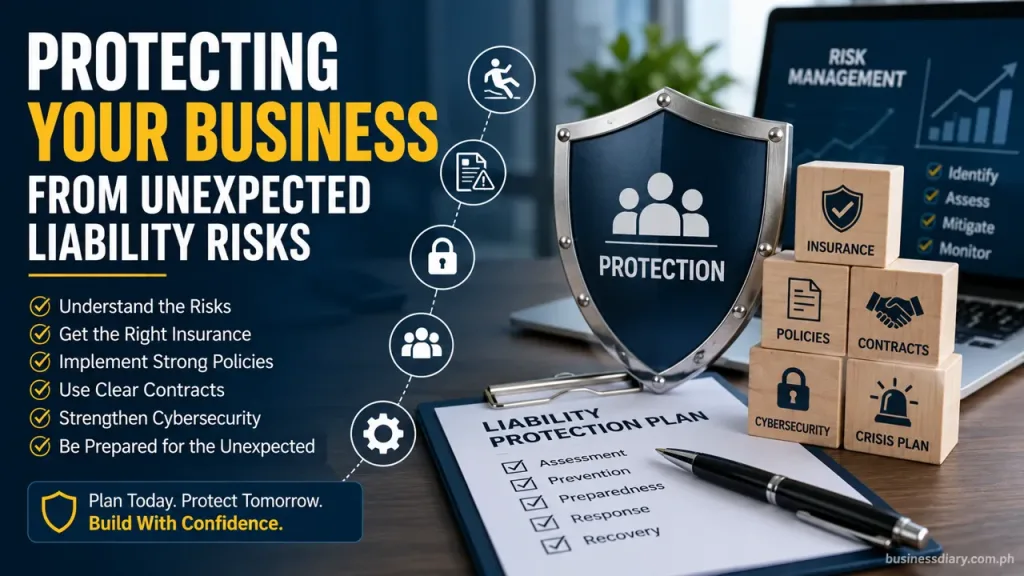
Unexpected liability risks are an unavoidable part of doing business, but they do not have to threaten the future of a company. By understanding common exposures, securing appropriate insurance coverage, implementing effective policies, using strong contracts, and investing in cybersecurity and preparedness measures, businesses can significantly reduce their vulnerability to costly claims.
The most successful organizations recognize that risk management is an ongoing process rather than a one-time task. Regular evaluations, employee education, and proactive planning can help businesses adapt to changing circumstances while maintaining a strong level of protection. With the right approach, business owners can focus on growth and innovation with greater confidence and peace of mind.