
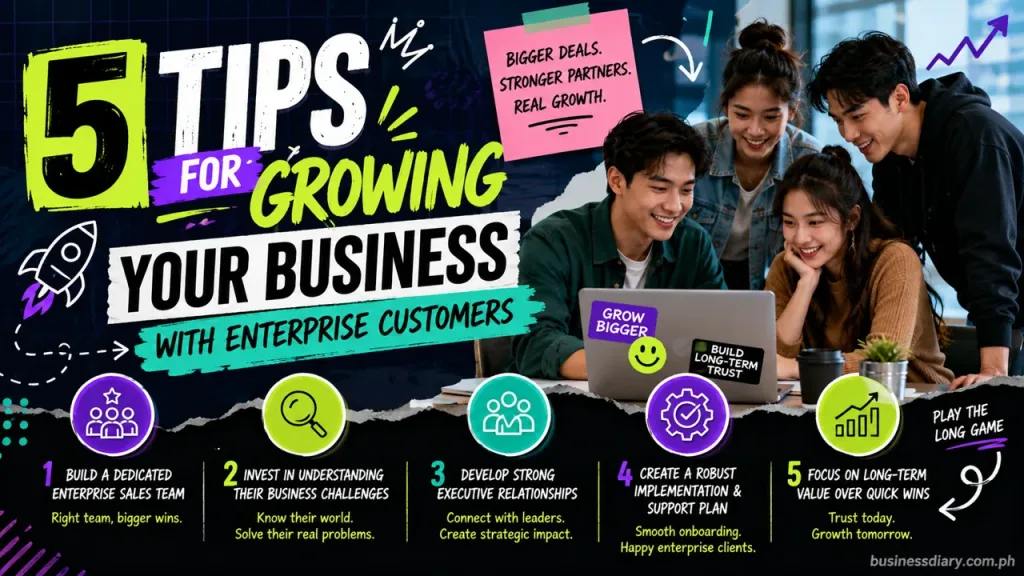
Reach a certain growth stage and enterprise customers suddenly become a real possibility. That shift changes everything. Larger contracts, longer partnerships, revenue potential that dwarfs smaller accounts — but the playbook? Completely different. Sales cycles drag on for months. Sometimes longer. Decisions filter through layers of stakeholders rather than a single buyer, and service expectations run far higher than anything midmarket companies typically demand. Ignore those differences and enterprise growth stalls before it starts.
1. Build a Dedicated Enterprise Sales Team
Enterprise sales is its own discipline entirely. Bigger numbers don’t automatically make it bigger sales — the mechanics are different. Your reps need real fluency in complex org structures. They need experience juggling multiple decision-makers simultaneously and the patience to nurse deals that might not close for twelve months or more. Account-based selling sits at the core of this — pinpointing high-value prospects, then tailoring every conversation to their specific situation. No generic pitch survives contact with enterprise buyers. A dedicated team also signals something important to prospects: you’ve built the infrastructure to handle a serious partnership. Without that focus, big opportunities get swallowed by smaller deals, and high-value contracts slip away because nobody had the expertise to push them across the finish line.
2. Invest in Understanding Their Business Challenges
Enterprise buyers see through generic instantly. What they want is proof — concrete proof — that you understand their world. Do real research before approaching any enterprise prospect. Recent company news, market position, stated strategic priorities, publicly available signals about where they’re headed. That prep lets you walk into rooms with decision-makers and speak directly to their actual problems rather than reciting product features. Targeting a healthcare enterprise? You’d better understand their regulatory headaches, their reimbursement friction, the operational bottlenecks slowing them down. That kind of preparation builds credibility fast. It also communicates something simple but powerful: you respect their time enough to actually show up ready.
3. Develop Strong Executive Relationships
Senior leaders think differently than individual contributors. Strategic value, risk exposure, ROI — those are their concerns, not feature checklists. And they generally want to speak with your senior people, not a junior rep who escalates every question. That means getting your own leadership actively embedded in enterprise pursuits from early on, not just handing pursuits off to the sales floor. Executive conversations need to stay anchored to business outcomes and strategic alignment.
Organizations serious about sharpening C-suite communication often bring in a professional keynote speaker on winning corporate clients — someone whose sessions help teams genuinely internalize the mindset that resonates with senior decision-makers. Sustaining those relationships takes consistent effort too. Regular check-ins, business reviews, joint planning sessions. When leadership on both sides actually connects, obstacles shrink and partnerships stabilize in ways that are genuinely hard to manufacture otherwise.
4. Create a Robust Implementation and Support Plan
Enterprise clients expect comprehensive onboarding. Dedicated support. Clear success metrics from day one. They’re making a significant bet that your solution will function inside a complex environment — and they need evidence you’ve thought through every piece of it. Build a detailed implementation plan that addresses their specific infrastructure, existing system integrations, and timeline expectations. Then go beyond the launch. Dedicated account managers, technical support teams, regular business reviews. When something breaks at 2am, someone needs to answer. Document your SLAs clearly, address scalability head-on, and demonstrate how your solution grows alongside their organization. Every one of those details reduces perceived risk for the buyer — and reducing that risk is exactly what moves enterprise deals forward.
5. Focus on Long-Term Value Over Quick Wins
Trust is the real currency of enterprise relationships. It accumulates slowly. Resist the urge to push rapid expansion or rush upsell conversations before customers have actually seen results. Help them achieve what they said they wanted when they signed. That might mean slower initial revenue — yes. But it opens the door to meaningful expansion later, once they’ve grown dependent on your solution and discovered use cases you hadn’t even pitched originally. Regular business reviews should surface delivered value, highlight success metrics, and uncover new challenges where you can step in. When enterprise customers genuinely feel you’re invested in their outcomes, they start advocating for your solution internally. Renewals follow naturally. Usage expands. Referrals arrive — sometimes from other divisions, sometimes from peers across their industry network entirely.
Conclusion
Enterprise growth doesn’t happen by accident. It demands deliberate strategy and consistent execution at every stage of the relationship. Specialized sales teams, deep prospect research, executive-level engagement, thorough implementation planning, a long-term value mindset — each one carries real weight. The investment is significant. So is the return. Businesses that commit to this approach don’t just close enterprise deals; they become the kind of trusted partner that enterprise organizations actively fight to keep. That’s the foundation worth building toward.