
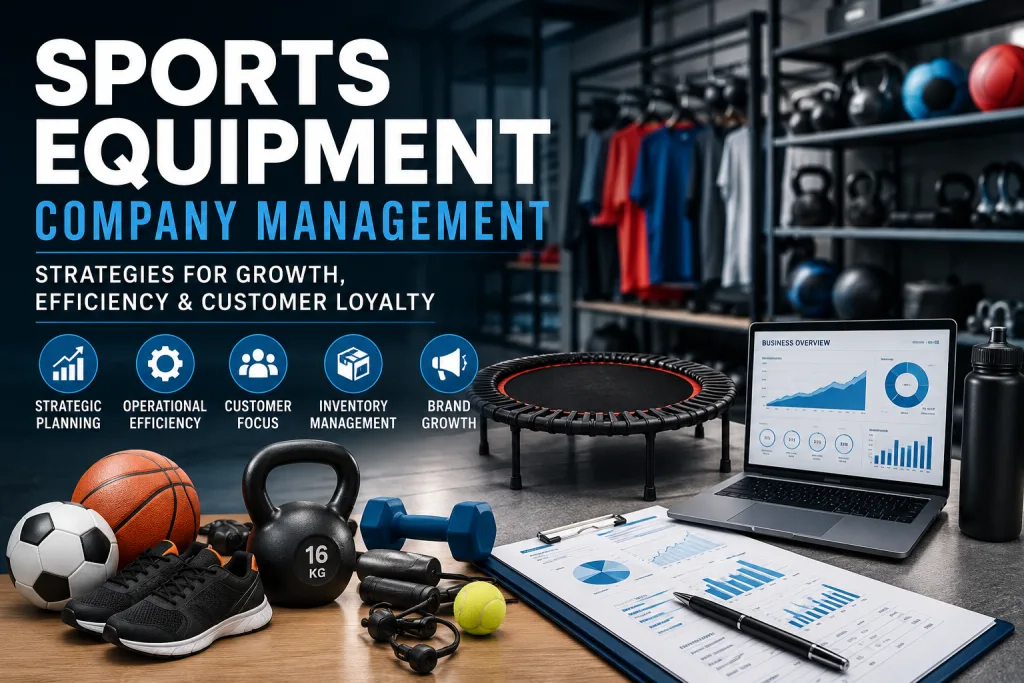
The sports equipment industry has evolved far beyond selling basic gear off a warehouse shelf. Today’s successful companies operate more like lifestyle retailers, managing diverse inventories, layered supply chains, and increasingly discerning customers who expect quality, variety, and speed. For business owners and operations managers in this space, the difference between steady growth and stagnation often comes down to how well the company is structured behind the scenes. This article explores the operational, inventory, and brand-positioning strategies that help sports equipment companies scale sustainably while staying relevant to modern consumer demand.
Understanding the Modern Sports Equipment Business Model
Unlike a decade ago, sports equipment companies rarely thrive by specializing in a single narrow category. Consumers now shop for entire fitness ecosystems cardio tools, strength equipment, recovery accessories, and even lifestyle products often from the same trusted retailer. This shift has forced companies to rethink how they structure procurement, warehousing, and customer service teams.
Effective management starts with a clear categorization framework. Products should be grouped not just by type, but by customer intent: home fitness, outdoor recreation, This framework, powered by procurement analytics software, allows purchasing managers to forecast demand more accurately and helps marketing teams target campaigns with precision rather than guesswork. Companies that skip this step often end up with bloated inventories of slow-moving items sitting alongside stockouts of high-demand products a costly and preventable inefficiency.
Inventory Diversification as a Growth Lever
One of the clearest signs of a well-managed sports equipment company is a product catalog that reflects shifting fitness trends without losing operational focus. Home fitness has been one of the strongest growth categories in recent years, and companies that responded early by expanding into compact, space-efficient equipment captured significant market share.
A good example is the growing consumer interest in a trampoline as a full-body cardio and coordination tool rather than just a children’s backyard item. Sports equipment companies that recognized this shift added rebounding equipment to their catalogs well before competitors caught on, positioning themselves as trend leaders rather than followers. Managing this category well requires close attention to safety certifications, weight capacity specifications, and supplier reliability, since product recalls in this space can severely damage brand trust.
Closely related, but requiring its own dedicated inventory line, is the compact fitness segment. A mini trampoline for adults has become one of the most searched home-workout products among urban customers with limited space, and companies that treat it as a separate SKU category — rather than lumping it in with full-sized trampolines — tend to see better conversion rates. This is because the buyer persona differs significantly: adult rebounder customers are typically motivated by low-impact cardio and joint-friendly workouts, and marketing copy, product photography, and even customer support scripts need to reflect that distinct use case.
Strength Training Equipment and Supplier Relationships
Beyond cardio-oriented products, strength training remains a core pillar of any serious sports equipment business. Managing this category well means building durable relationships with manufacturers who can guarantee consistent casting quality and accurate weight labeling, since even small discrepancies can lead to safety complaints and returns.
A kettlebell is a good case study in why supplier vetting matters so much in this industry. It is a deceptively simple product, but poor-quality casting, uneven weight distribution, or inconsistent handle coatings can quickly generate negative reviews that hurt the entire brand, not just that single product line. Companies that succeed in this category typically maintain long-term contracts with a small number of vetted foundries rather than constantly switching suppliers to chase marginal cost savings. This consistency protects both product quality and brand reputation over time, which matters far more in the long run than short-term margin gains.
Expanding Into Lifestyle and Performance Accessories
As sports equipment companies mature, many begin to diversify into adjacent lifestyle categories that appeal to the same performance-driven customer base. This is a natural extension, since athletes and fitness enthusiasts are often equally invested in gear that reflects discipline, precision, and status outside the gym.
Timepieces are a particularly compelling example of this crossover. A well-managed accessories division might introduce a curated selection featuring a Tissot timepiece line, appealing to customers who value Swiss precision engineering as much as they value performance in their workouts. Bringing in Tissot watches as part of a broader lifestyle and accessories offering allows sports equipment retailers to tap into a higher-margin category while reinforcing a brand image built around discipline, reliability, and craftsmanship. Managing this kind of diversification requires a different set of skills than managing fitness hardware sähköasentaja oulu including authentication protocols, warranty coordination with authorized distributors, and staff training on luxury retail service standards — but it can meaningfully increase average order value and customer lifetime value when executed carefully.
Operational Best Practices for Category Expansion
Expanding into multiple product categories introduces real operational complexity, and companies that manage it successfully tend to follow a few consistent practices:
- Segmented warehousing — Storing bulky cardio equipment, compact strength tools, and small high-value accessories in clearly separated zones reduces picking errors and improves fulfillment speed.
- Category-specific KPIs — Tracking return rates, average review scores, and reorder frequency separately for each product category, rather than relying on blended company-wide metrics, surfaces problems before they scale.
- Cross-trained customer service teams — Support staff should be equipped to answer both technical fitness equipment questions and higher-touch service inquiries related to premium accessories, since customers increasingly expect a seamless experience across the entire catalog.
- Regular supplier audits — Periodic quality checks, even with long-term suppliers, prevent gradual quality drift that can otherwise go unnoticed until customer complaints spike.
- Data-driven demand forecasting — Using historical sales data alongside seasonal and social media trend indicators helps prevent both overstocking and missed sales opportunities during peak demand periods.
Building a Resilient, Trend-Aware Company Culture
Perhaps the most overlooked aspect of managing a sports equipment company is cultivating a culture that stays genuinely curious about fitness and lifestyle trends rather than reactive to them. Companies that send buyers to trade shows, encourage staff to test products personally, and maintain close relationships with fitness influencers tend to spot emerging categories months before their competitors do. This proactive posture, paired with disciplined inventory and supplier management, is what separates companies that merely survive market shifts from those that actively shape them.
Ultimately, strong management in this industry is not about chasing every trend that appears online. It is about building the operational infrastructure — from warehousing to supplier vetting to category-specific customer service — that allows a company to expand thoughtfully into new product lines while protecting the quality and trust that customers associate with the brand. Companies that get this balance right position themselves not just as equipment sellers, but as trusted partners in their customers’ broader fitness and lifestyle journeys.