
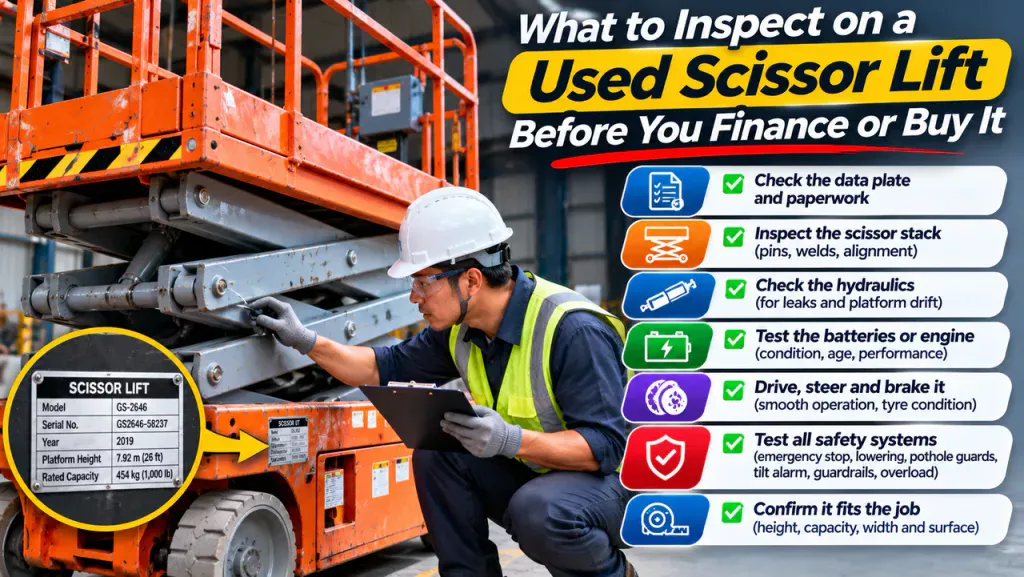
A used scissor lift can cost a fraction of a new one, which is why many small contractors, warehouses and facility teams finance one instead of renting month after month. But a loan outlasts a bad purchase. If the machine needs a new battery pack, a pothole guard repair or a hydraulic rebuild in its first season, the savings disappear and the payments keep coming.
Here is a practical walk-around you can do before you sign anything. It takes about an hour, and it is worth doing even when the seller is reputable.
1. Start with the data plate and the paperwork
Every scissor lift carries a manufacturer’s data plate showing the model, serial number, year, rated platform capacity and maximum platform height. Check that the plate is present, readable and matches the listing. A missing plate makes it hard to order parts, confirm the age of the machine or prove ownership.
Then ask for:
- The hour meter reading, and whether the meter has ever been replaced.
- The most recent annual inspection record. Industry standards (ANSI/SAIA A92.22 in the United States, and similar rules elsewhere) call for a frequent inspection every three months or 150 hours and a documented annual inspection by a qualified person.
- Any open manufacturer safety notices for that serial number. Most manufacturers will look this up for free.
- The operator’s manual. If it is missing, a replacement is usually available from the manufacturer, but its absence tells you something about how the machine was kept.
A lender may also ask for the serial number and year, so collecting these early speeds up the financing step.
2. Look at the scissor stack
The stack is the set of crossed arms that raises the platform. With the platform lowered, look at every pin and pivot point:
- Pins should sit firmly with their retaining bolts or clips in place. Shiny, oval-worn holes or pins that move by hand point to worn bushings.
- Look for cracks around welds, especially near the base where the arms meet the chassis. Fresh paint over one small area can hide a weld repair.
- Check that the arms are straight. A bent arm usually means the lift was overloaded or hit something, and it is not a cheap fix.
Raise the platform to full height, empty, on level ground. It should go up smoothly without jerking, drifting or unusual noises, and stay put when it stops.
3. Check the hydraulics
Most scissor lifts use a single lift cylinder. Look for oil on the cylinder, the hoses and the ground under the machine. A light film can be normal; drips are not. Check the hydraulic oil level and colour: dark, milky or burnt-smelling oil suggests overheating or water contamination.
Leave the platform raised for ten to fifteen minutes and see whether it creeps down. Drift points to a leaking cylinder seal or holding valve, both of which need attention before the machine goes back to work.
4. Test the batteries or the engine
Electric slab scissor lifts run on a bank of deep-cycle batteries, and a full replacement set is one of the most expensive routine costs on the machine. Ask how old the batteries are. Look for corrosion on the terminals, swollen cases or low water levels in flooded batteries. If you can, run the lift up and down and drive it for a while, then check whether the battery indicator drops faster than it should.
On rough-terrain models with engines, check for blue or black smoke, hard starting, coolant leaks and oil in the coolant.
5. Drive it, steer it and brake it
Drive the machine forward and back with the platform lowered, then at height if the model allows drive when elevated. It should move smoothly at slow speed and stop promptly when you release the control. Listen for grinding from the drive motors or wheel hubs.
Check the tyres for chunks missing, cuts or flat spots. Non-marking tyres on slab lifts wear down over time and are a cost to budget for.
6. Test every safety system
This is the part that matters most for the people who will use the machine:
- Emergency stop buttons on the platform and at the ground controls should cut all function immediately.
- Emergency lowering (usually a manual valve at the base) should bring the platform down if power fails. Make sure you know where it is.
- Pothole guards should deploy as the platform rises. If they do not, the lift should refuse to drive at height.
- Tilt alarm: most lifts sound an alarm and lock out lifting or driving when the chassis is out of level. Ask the seller to demonstrate it.
- Guardrails and gate: rails should be firm, with no cracked welds, and the entry gate or chain should close on its own.
- Overload sensing, on newer models, should stop the lift from rising with too much weight on the platform.
Ground controls should override the platform controls. Test both.
7. Match the machine to the job before you match it to the loan
Before financing, confirm the machine actually fits the work:
- Working height: platform height plus roughly 2 metres (6 feet) for a person standing on the deck.
- Capacity: the combined weight of workers, tools and materials must stay under the rated load on the plate.
- Width: narrow models fit through standard doors and aisles; wider ones carry more but may not fit indoors.
- Surface: slab lifts are for smooth, level concrete. Gravel, mud or slopes call for a rough-terrain model.
Buying the wrong size and financing it for three years is a mistake that no inspection will catch.
The short version
Check the plate and papers, look closely at the pins and welds on the stack, leave it raised to test for drift, find out how old the batteries are, drive it, and test every safety device. If any of those raise questions, ask the seller to fix them or adjust the price before you sign the financing paperwork. A good used scissor lift will give years of service; a careful hour of inspection is how you make sure you are buying one.
*Braden Chupp is a consultant with The Lift Bros, a family-owned business in Chouteau, Oklahoma that sells, repairs and refurbishes scissor, boom and mast lifts. More on choosing a scissor lift: The Lift Bros (scissor lifts).*