
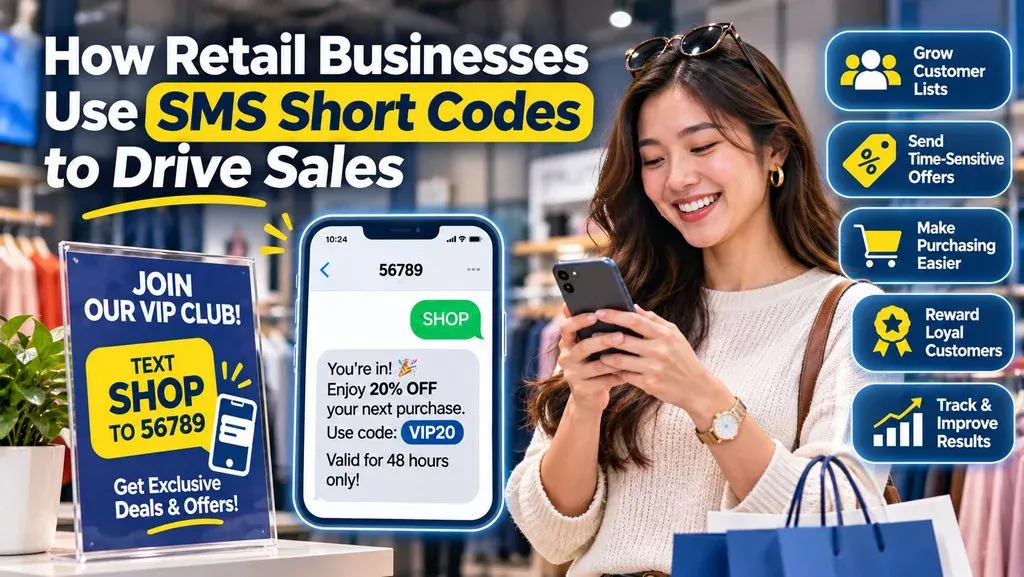
When customers walk into a retail store today, many encounter a simple request: text a short code to join an exclusive club. This practice has become remarkably common across industries, from fashion boutiques to electronics retailers. Short codes represent one of the most direct communication channels available to businesses, offering a way to reach customers instantly on their mobile devices. Understanding how retail organizations deploy this technology reveals why SMS short codes have become such a powerful sales tool.
1. Building Targeted Customer Lists
Retail businesses use SMS short codes as a gateway to build permission-based customer lists that fuel future marketing efforts. When a customer texts a code, they provide their phone number and express clear interest in receiving messages from that brand. This opt-in process creates a foundation of engaged subscribers rather than purchased lists of questionable quality. The data collected through short code interactions becomes invaluable for understanding customer preferences and shopping behaviors.
SMS short codes also allow retailers to segment their audience based on how customers interact with the promotion. For example, a clothing store might use one short code for seasonal sales and another for loyalty program enrollment, creating separate groups of subscribers with distinct interests. This segmentation enables retailers to send highly relevant messages to each group rather than broadcasting generic promotions to everyone. Over time, these targeted lists generate significantly higher engagement rates than traditional mass marketing campaigns, ultimately driving more qualified sales.
2. Creating Urgency with Time-Sensitive Offers
Retailers leverage SMS short codes to deliver flash sales and limited-time promotions that encourage immediate purchasing decisions. Unlike email marketing, which people often read hours or days later, text messages arrive within seconds and demand attention. A furniture store might send a message about a 24-hour flash sale, knowing that most customers will read the text within minutes of receiving it. This immediacy creates natural urgency that converts browsers into buyers.
The mechanics of time-sensitive offers through SMS are straightforward but effective. A customer receives a short code promotion with a specific discount code valid only during a narrow window, such as a weekend or single evening. The scarcity element combined with the personal nature of text communication drives higher conversion rates than traditional advertising channels. Retailers report that SMS promotions often achieve response rates in the double digits, compared to email open rates that typically fall below five percent. This efficiency makes SMS short codes particularly valuable for moving inventory quickly or capitalizing on seasonal demand.
3. Enabling Seamless Transaction Pathways
Modern retailers use SMS short codes to streamline the path from discovery to purchase by embedding promotional codes, store locator information, or direct mobile commerce links within text messages. When a customer texts a code and receives a response, that immediate interaction creates momentum toward a sale. A beauty retailer might send a text with a unique discount code that the customer can use instantly online or screenshot to show at checkout in a physical store. This seamless integration across channels removes friction from the buying process.
Retailers who want to understand the technical foundations behind these campaigns, including how carriers route messages and how dedicated numbers are provisioned, rely on short code sms resources to ensure their programs are configured correctly from the start. A customer interested in a product can tap a link in the SMS message and complete their purchase within seconds, without needing to navigate to a website or app. This frictionless experience particularly appeals to busy shoppers and impulse buyers. Retailers who implement streamlined SMS transactions see measurable improvements in conversion rates because they have removed every possible barrier between a customer’s interest and their buying action.
4. Rewarding Loyalty and Repeat Purchases
Retail businesses use SMS short codes to manage loyalty programs that keep customers engaged and encourage repeat visits. A store might assign each loyalty member a unique code to text for accessing personalized rewards, birthday discounts, or exclusive previews of new products. This approach transforms the loyalty program from a passive card in someone’s wallet into an active engagement channel. Customers receive regular notifications about rewards they have earned and special benefits tied to their purchase history.
The data collected through loyalty SMS programs gives retailers powerful insights into customer behavior patterns. They can identify which customers are at risk of stopping their visits and send targeted re-engagement offers. Alternatively, they can recognize top spenders and provide them with VIP benefits that encourage even greater loyalty. For example, a grocery chain might use SMS data to discover that certain customers primarily buy from specific categories and send personalized offers on those items. This targeted approach transforms SMS from a broadcast channel into a personalized relationship tool that drives incremental sales from existing customers.
5. Measuring Performance and Optimizing Results
SMS short codes provide retail businesses with clear, measurable data that allows them to understand exactly which campaigns drive sales and which fall flat. Every text message can be tracked, from the moment it is sent through customer redemption and final purchase. Retailers can compare response rates across different promotions, messaging approaches, and customer segments to identify what resonates most. This transparency enables continuous optimization of their SMS strategy over time.
Analytics from SMS campaigns reveal specific insights that guide future marketing decisions. A retailer might discover that customers respond better to percentage discounts than dollar-amount discounts, or that promoting a specific product category outperforms general sale announcements. They can test different message copy, sending times, and target audiences to refine their approach. This iterative process means that successful retailers are constantly improving their SMS performance, leading to higher response rates and increased sales. The ability to measure ROI so precisely makes SMS short codes one of the most accountable marketing channels available to retail organizations.
Conclusion
SMS short codes have become an indispensable tool for retail businesses seeking direct, measurable connections with customers. These short numeric codes enable retailers to build engaged subscriber lists, create urgency through time-sensitive offers, streamline the path to purchase, reward loyal customers, and measure campaign performance with precision. The combination of high open rates, immediate delivery, and clear tracking creates a powerful platform for driving sales. As consumers continue to expect personalized, convenient shopping experiences, SMS short codes will likely remain a cornerstone of retail marketing strategy, delivering both immediate transaction boosts and long-term customer relationship benefits.