
Introduction
Bulk liquid transport plays a critical role in industries ranging from agriculture and food processing to chemicals, petroleum, pharmaceuticals, and manufacturing. The equipment used to move liquids safely and efficiently can have a significant impact on product quality, regulatory compliance, operating costs, and overall supply chain performance. Selecting the right transport solution requires more than simply choosing a container with adequate capacity. Factors such as product compatibility, safety requirements, transportation conditions, and long-term operational needs must all be carefully evaluated.
Because liquid cargo can vary greatly in composition, viscosity, and handling requirements, selecting appropriate transport equipment is an important business decision. A well-informed approach can help reduce risks, improve efficiency, and support reliable delivery operations. Understanding several key considerations can assist organizations in choosing equipment that aligns with their transportation objectives and industry requirements.
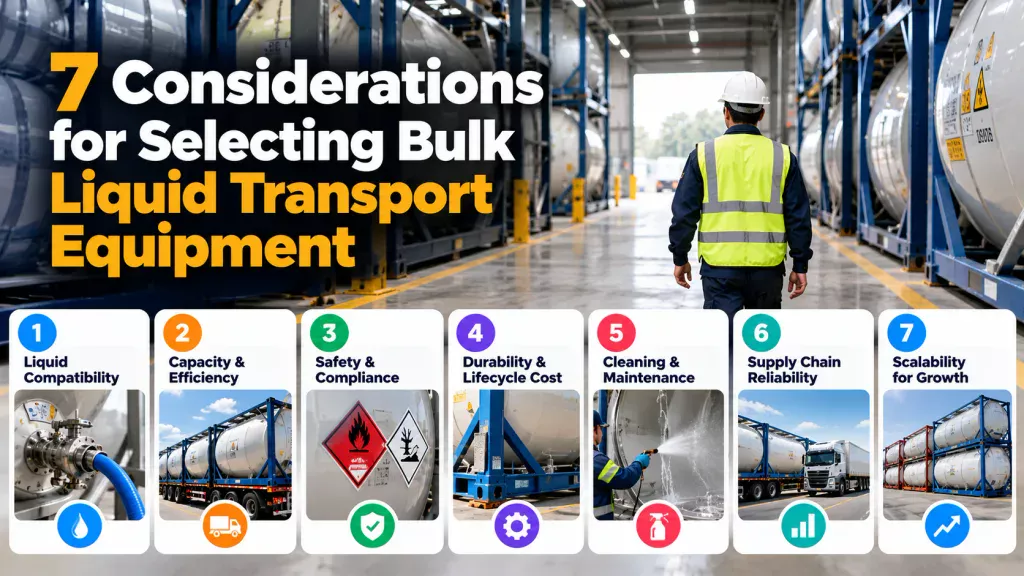
Evaluate Liquid Compatibility and Product Requirements
One of the most important considerations when selecting bulk liquid transport equipment is ensuring compatibility between the cargo and the transport system. Different liquids possess unique characteristics that influence storage and transportation requirements.
Food-grade products, hazardous chemicals, petroleum products, industrial liquids, and pharmaceutical materials each require specialized handling conditions. Some liquids may be corrosive, temperature-sensitive, highly viscous, or reactive with certain materials. Transport equipment must be constructed from materials capable of safely containing the product throughout the transportation process.
Stainless steel tanks are often preferred for food and pharmaceutical applications because they are durable, easy to sanitize, and resistant to contamination. Certain chemicals may require specialized linings or protective coatings to prevent reactions with the container walls.
Understanding the physical and chemical properties of the product is essential during the selection process. Equipment that is not properly matched to the liquid being transported can create safety concerns, product degradation, and increased maintenance costs.
Choosing compatible equipment helps protect cargo quality while supporting regulatory compliance and operational reliability.
Consider Capacity and Operational Efficiency
Capacity requirements play a central role in equipment selection. Organizations should evaluate not only the volume of liquid being transported but also how transportation equipment fits into broader operational workflows.
Larger-capacity systems can improve efficiency by reducing the number of shipments required. However, oversized equipment may create unnecessary transportation costs, loading challenges, or storage limitations. Conversely, equipment that is too small may increase operational expenses by requiring additional trips.
Companies should analyze delivery schedules, customer demand, loading infrastructure, and transportation routes when determining appropriate capacity levels. Future growth expectations should also be considered to avoid outgrowing equipment prematurely.
Operational efficiency extends beyond size alone. Loading and unloading times, cleaning requirements, maintenance considerations, and equipment mobility all influence overall productivity.
A carefully balanced capacity strategy helps organizations optimize transportation operations while controlling costs and maintaining service reliability.
Prioritize Safety and Regulatory Compliance
Safety remains one of the most critical factors in bulk liquid transportation. Transporting large volumes of liquid introduces risks associated with spills, contamination, environmental damage, and worker safety.
Equipment should meet all applicable industry regulations and transportation standards. Depending on the cargo type, these regulations may address pressure management, structural integrity, hazardous material containment, sanitation, and emergency response capabilities.
Proper safety features often include secure valves, pressure relief systems, leak prevention mechanisms, reinforced construction, and monitoring technology. Equipment should also be compatible with established inspection and maintenance programs.
Training requirements should not be overlooked. Personnel responsible for loading, transporting, and unloading liquid cargo must understand safe handling procedures and equipment operation protocols.
Organizations that prioritize safety often experience fewer incidents, reduced liability exposure, and stronger regulatory compliance outcomes. Investing in equipment designed with safety in mind helps protect both people and assets throughout the transportation process.
Assess Durability and Long-Term Lifecycle Costs
Initial purchase price is only one aspect of the overall investment. Long-term durability and ownership costs can have a much greater impact on transportation budgets over time.
High-quality transport equipment often offers longer service life, reduced maintenance requirements, and greater resistance to environmental conditions. Evaluating construction materials, manufacturing standards, and equipment design can provide insight into expected durability.
Exposure to weather, road conditions, chemical contact, and repeated loading cycles can place significant stress on transportation equipment. Systems designed for demanding operating environments typically provide greater reliability and lower lifecycle costs.
Supplier reputation can also influence long-term outcomes. Many organizations seek guidance from a reputable shipping container supplier when evaluating specialized transport solutions because experienced providers often offer valuable expertise regarding equipment selection, maintenance expectations, and operational performance.
A lifecycle-focused approach helps organizations identify equipment that provides lasting value rather than simply minimizing upfront costs.
Evaluate Cleaning, Maintenance, and Flexibility
Efficient maintenance and cleaning procedures contribute significantly to transportation performance. Equipment that is difficult to clean or maintain may increase downtime, labor costs, and operational complexity.
Certain industries, particularly food-grade and pharmaceutical sectors, require strict sanitation protocols. Equipment should allow for thorough cleaning and inspection between loads to prevent contamination and maintain compliance with applicable standards.
Accessibility is another important consideration. Components such as valves, fittings, pumps, and inspection ports should be designed for efficient maintenance and servicing. Easy access can reduce repair times and improve equipment availability.
Flexibility also deserves attention during the selection process. Organizations transporting multiple liquid products may benefit from equipment capable of adapting to different operational requirements. Versatile systems often provide greater long-term utility and support changing business needs.
Selecting transport equipment with maintenance efficiency in mind can improve reliability and contribute to lower operating costs throughout its lifespan.
Support Supply Chain Reliability and Scalability
Bulk liquid transport equipment should align not only with current operations but also with future business objectives. Supply chain requirements often evolve as organizations expand into new markets, increase production volumes, or diversify product offerings.
Scalable equipment solutions can support growth without requiring complete replacement of transportation infrastructure. Modular systems, standardized equipment formats, and widely compatible components may offer greater operational flexibility as needs change.
Reliability is equally important. Transportation delays, equipment failures, and service interruptions can affect customer satisfaction and disrupt production schedules. Investing in dependable equipment helps support consistent performance and stronger supply chain resilience.
Organizations that consider long-term scalability during the selection process are often better positioned to manage growth efficiently while maintaining high service standards.
A transportation strategy designed for both present and future needs can provide significant competitive advantages over time.
Conclusion
Selecting bulk liquid transport equipment requires careful evaluation of product compatibility, capacity requirements, safety standards, durability, maintenance considerations, and long-term scalability. Each of these factors contributes to the effectiveness, reliability, and cost efficiency of transportation operations. By taking a comprehensive approach to equipment selection, organizations can improve cargo protection, support regulatory compliance, reduce operational risks, and strengthen overall supply chain performance. Thoughtful planning and informed decision-making help ensure that bulk liquid transport systems deliver lasting value while supporting both current operations and future growth objectives.