
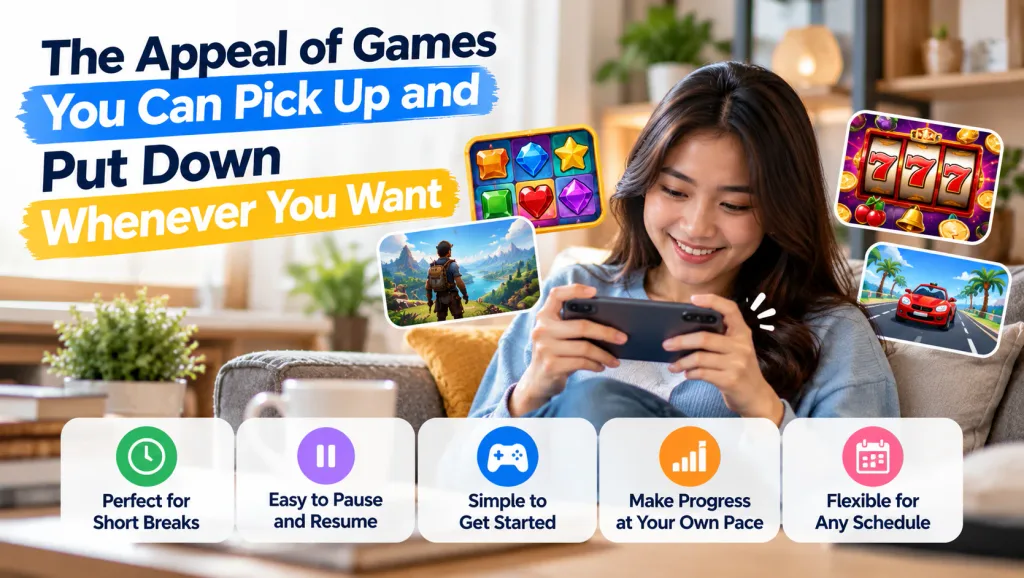
Gaming has evolved from a niche hobby to a massively popular leisure activity. But with modern life’s many competing demands, it can become difficult for busy individuals to fit gaming into an already packed schedule. For many people, finishing work tasks and managing the household can leave little time or energy for hours-long gaming sessions. Thankfully, however, they don’t always have to choose between tackling daily responsibilities and setting aside time to play lottery games online or play other types of popular games online.
The key is choosing games that players can easily pick up when they’re not busy with important tasks, put down when it’s time to return to work or household duties, and come back to when their schedule allows. These types of games provide low-stress and flexible entertainment that suits today’s busy lifestyles. Below, we’ll look into what makes them appealing and how their features help gaming fit around everyday commitments.
They Make Short Breaks Feel Worthwhile
A game doesn’t need to occupy an entire evening to provide an enjoyable experience. A self-contained puzzle or brief online casino gaming session with slots in the Philippines options can give players a clear activity to engage with during a small window of free time. Completing that activity or finishing a round can offer a satisfying sense of closure without requiring further play.
The appeal lies in having an experience that feels worthwhile on its own. Instead of spending a good part of a break preparing for a lengthy mission, players can get directly to something they enjoy. Games that enable players to save their progress frequently can also make short sessions useful even when a larger goal remains unfinished.
They Make Interruptions Easier to Manage
Free time can end abruptly when a household task needs attention or someone calls. A pause function lets players suspend the action, while reliable saving allows them to leave without repeating completed sections later. These features reduce the inconvenience of having to completely stop before a planned session ends.
That said, short games aren’t automatically easy to interrupt. A live multiplayer match may continue even when one player needs to leave. Meanwhile, a single-player puzzle may wait indefinitely for the next move. Understanding this difference helps explain why genuine flexibility depends on how a game handles interruptions, rather than simply how quickly a round ends.
They Require Less Effort to Get Started
After a demanding day, learning complicated controls can feel like another task. Games with straightforward inputs and accessible mechanics make it easier to understand how to begin enjoying the experience. This lower entry barrier can appeal to someone who wants entertainment without extensive preparation.
Simple controls don’t necessarily mean that a game lacks depth. A puzzle built around a few familiar actions can still demand a careful strategy as its challenges develop. The attraction lies in being able to spend more of your available energy on playing, rather than struggling to remember what each button does or reviewing lengthy instructions before every session.
They Let Players Enjoy Progress at Their Own Pace
For busy individuals, a game becomes more manageable when progress is achievable between sessions. The ability to save completed stages allows someone to work toward a larger goal gradually, even if their opportunities to play vary from one day to the next.
This appeal is strongest when the game doesn’t make regular attendance feel necessary. Choosing games without demands like daily rewards streaks or expiring objectives allows players to enjoy gradual progress on a schedule that suits them, instead of treating their hobby as another commitment to maintain.
They’re Easy to Return to After Time Away
Stopping a game comfortably is only part of the appeal; returning should feel manageable too. Clear objective reminders help players recognize what they were doing before ending a session, while accessible control explanations reduce the need to relearn basic actions. These features are especially useful when several days or weeks pass between gaming sessions.
Self-contained activities can also make returning easier because each session offers a recognizable starting point. For example, a player can attempt a new quest without remembering a complicated sequence of earlier events or reconstructing an elaborate strategy. For individuals with unpredictable schedules, this familiarity helps preserve the enjoyment of returning even when gaming hasn’t been part of their recent routine.
They Allow Players to Choose How Long to Play
Flexible games accommodate different amounts of free time without requiring that every session have a specific duration. Players might complete one activity or quest during a short break or continue through several missions when an evening opens up. Clear stopping points make those choices easier by providing moments to reassess the time available.
Still, repeated short rounds can turn into a lengthy session. As such, deciding when to stop remains useful, even when the game allows frequent opportunities to pause or save progress. The appeal comes from having practical openings to leave a session and being able to use them when other priorities need attention.
Modern gaming’s shift toward accessibility and flexibility has enabled more people to enjoy the hobby without disrupting their routines or sacrificing daily responsibilities. By choosing games that can be easily picked up and put down, players have greater freedom to choose how much time they devote to a session. This approach allows busy individuals to meet everyday demands as gaming remains an enjoyable part of their daily life.