
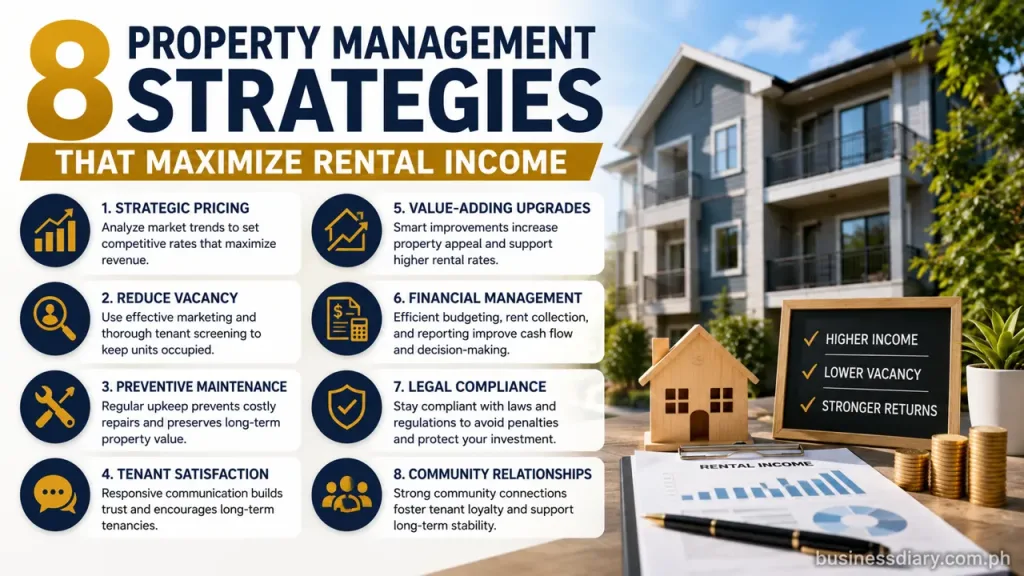
Maximizing rental income requires more than simply listing a property and securing tenants. It involves strategic planning, consistent oversight, and a proactive approach to both operations and tenant relations. Professional property management teams understand how to balance market demands, maintenance needs, and financial planning to help investors achieve long term stability and strong returns. By applying proven strategies, managers create environments where tenants feel supported, properties remain well maintained, and rental performance steadily improves.
Strategic Pricing Based on Market Trends
Accurate pricing is one of the most important factors in maximizing rental income. Setting rates too high can lead to extended vacancies, while pricing too low reduces potential earnings. Professional managers analyze local market trends, comparable listings, seasonal shifts, and neighborhood demand to determine competitive pricing. Many investors rely on reputable property management in Pierce and Thurston County, WA to ensure rental rates reflect current conditions and long term goals. Concepts like market analysis and competitive positioning reinforce how strategic pricing supports consistent revenue.
When pricing aligns with market expectations, properties attract qualified tenants more quickly and maintain stable occupancy throughout the year.
Reducing Vacancy Through Effective Marketing and Tenant Screening
Vacancy is one of the biggest threats to rental income, making effective marketing and thorough tenant screening essential. Professional managers use targeted advertising, high quality listing photos, and clear property descriptions to reach the right audience. Ideas such as tenant screening and rental marketing highlight how these efforts reduce downtime between leases.
Screening applicants carefully helps ensure that tenants are reliable, financially stable, and a good fit for the property. When tenants feel confident in their choice and managers feel confident in their selection, the result is longer occupancy, fewer disputes, and stronger rental performance.
Preventive Maintenance That Protects Long-Term Value
Preventive maintenance plays a major role in maximizing rental income by reducing costly repairs and preserving property condition. Regular inspections, seasonal upkeep, and timely repairs help prevent minor issues from becoming major problems. Concepts like maintenance planning and property longevity reinforce how proactive care supports long term financial stability.
Well maintained properties also attract higher quality tenants who appreciate clean, functional living environments. When tenants feel valued and comfortable, they are more likely to renew leases, reducing turnover and supporting consistent income.
Enhancing Tenant Satisfaction Through Responsive Communication
Tenant satisfaction directly influences occupancy rates and long term rental performance. Professional managers prioritize clear communication, timely responses, and fair handling of concerns. Ideas such as tenant satisfaction and communication strategies highlight how responsiveness strengthens tenant relationships.
Satisfied tenants are more likely to stay longer, care for the property, and recommend the rental to others. This stability reduces turnover costs and supports predictable income. When tenants feel heard and supported, the entire rental experience improves.
Implementing Upgrades That Increase Rental Value
Strategic upgrades can significantly increase rental income by enhancing property appeal and justifying higher rates. Improvements such as modern fixtures, updated flooring, energy efficient appliances, and refreshed landscaping help properties stand out in competitive markets. Concepts like value-adding upgrades and property enhancement reinforce how thoughtful improvements support long term returns.
Upgrades should be selected based on tenant preferences and local market trends. When improvements align with demand, they attract high quality tenants and increase overall rental value.
Streamlining Operations Through Efficient Financial Management
Strong financial management ensures that rental income is collected consistently and expenses are tracked accurately. Professional managers oversee rent collection, accounting, budgeting, and financial reporting to provide investors with clear insight into property performance. Ideas such as financial oversight and budget planning highlight how structured processes support long term stability.
Efficient financial management also helps identify opportunities to reduce costs, improve efficiency, and plan for future upgrades. When investors have accurate financial data, they can make informed decisions that support sustained income growth.
Maintaining Legal Compliance to Avoid Costly Penalties
Legal compliance is essential for protecting rental income and avoiding disputes. Professional managers stay informed about local, state, and federal regulations related to housing, safety, and tenant rights. Concepts like legal compliance and risk reduction reinforce how compliance safeguards investments.
By ensuring that lease agreements, inspections, and safety protocols meet legal standards, managers help prevent costly penalties or conflicts that could disrupt rental operations. This proactive approach supports long term financial security.
Building Strong Community Relationships That Support Stability
Properties that feel connected to their communities often experience stronger tenant loyalty and more consistent occupancy. Professional managers foster positive relationships with local organizations, service providers, and neighborhood groups. Ideas such as community engagement and tenant-community connection highlight how these efforts contribute to rental stability.
When tenants feel part of a supportive community, they are more likely to stay longer and treat the property with care. This stability reduces turnover and supports predictable rental income.
Conclusion
Professional property management maximizes rental income through strategic pricing, effective marketing, preventive maintenance, strong tenant relations, thoughtful upgrades, financial oversight, legal compliance, and community engagement. When investors partner with experienced managers, they gain a reliable foundation for long term stability, consistent performance, and sustained rental value.