
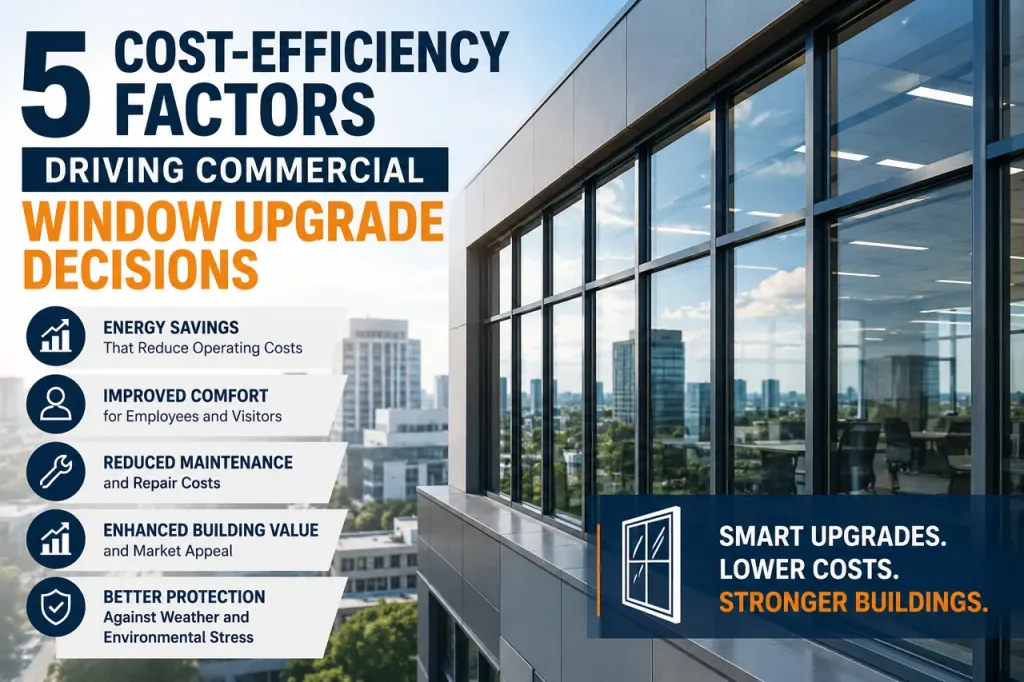
Commercial properties rely on strong, efficient windows to maintain comfort, reduce operating costs, and support long term structural performance. As buildings age, windows often become less effective at regulating temperature, blocking drafts, and protecting interiors from moisture. Upgrading to modern, energy-efficient designs can significantly improve overall building performance. Understanding the cost-efficiency factors that influence commercial window upgrade decisions helps property owners make informed choices that support both immediate needs and long term financial goals.
Energy Savings That Reduce Operating Costs
One of the most influential cost-efficiency factors behind commercial window upgrades is the potential for long term energy savings. Older windows often allow heat to escape during winter and enter during summer, forcing HVAC systems to work harder throughout the year. Modern commercial windows are designed with advanced insulation, improved seals, and high performance glass that help regulate indoor temperature more effectively. These improvements reduce energy consumption and lower monthly utility expenses. For many commercial buildings, even a modest reduction in energy use can create meaningful savings over time, making window upgrades a practical investment.
Improved Comfort for Employees and Visitors
Comfort plays a significant role in commercial environments, influencing productivity, customer satisfaction, and overall building usability. Drafts, uneven temperatures, and excessive heat gain can create uncomfortable conditions that affect daily operations. Upgraded windows help maintain a more stable indoor climate by reducing heat transfer and improving insulation. This enhanced comfort supports a more pleasant environment for employees, clients, and visitors. In some cases, businesses choose window replacement to address persistent comfort issues that interfere with workflow or customer experience. Improved comfort contributes to better building performance and long term operational efficiency.
Reduced Maintenance and Repair Costs
Aging windows often require frequent maintenance due to worn seals, damaged frames, or deteriorating glass. These recurring issues can become costly and time consuming for commercial property owners. Modern windows are built with durable materials that resist weathering, reduce the likelihood of leaks, and maintain structural integrity over time. By upgrading to high quality designs, businesses can significantly reduce maintenance needs and avoid the expense of repeated repairs. Lower maintenance costs contribute to long term savings and support a more predictable building management strategy.
Enhanced Building Value and Market Appeal
Commercial window upgrades can increase property value by improving both performance and appearance. Modern windows enhance the exterior aesthetic, creating a more polished and professional look that appeals to tenants, clients, and potential buyers. Energy-efficient windows also signal that the building has been updated with long term sustainability in mind, which can be a strong selling point in competitive markets. Enhanced building value supports future leasing opportunities and strengthens the property’s overall financial position. For many commercial owners, the combination of improved aesthetics and long term durability makes window upgrades a strategic investment.
Better Protection Against Weather and Environmental Stress
Commercial buildings must withstand a wide range of environmental conditions, including heavy rain, strong winds, and seasonal temperature changes. Older windows may struggle to provide adequate protection, increasing the risk of moisture intrusion, drafts, or structural concerns. Modern commercial windows are engineered to resist environmental stress more effectively, offering stronger seals, improved durability, and better resistance to impact. This enhanced protection reduces the likelihood of weather-related damage and supports long term building stability. By addressing these concerns proactively, commercial property owners avoid costly repairs and maintain a safer, more resilient structure.
Conclusion
Cost-efficiency plays a central role in commercial window upgrade decisions. Energy savings, improved comfort, reduced maintenance needs, enhanced building value, and stronger protection all contribute to the long term benefits of modern window designs. By investing in durable, high performance windows, commercial property owners can support better building performance, lower operating costs, and greater long term stability.