
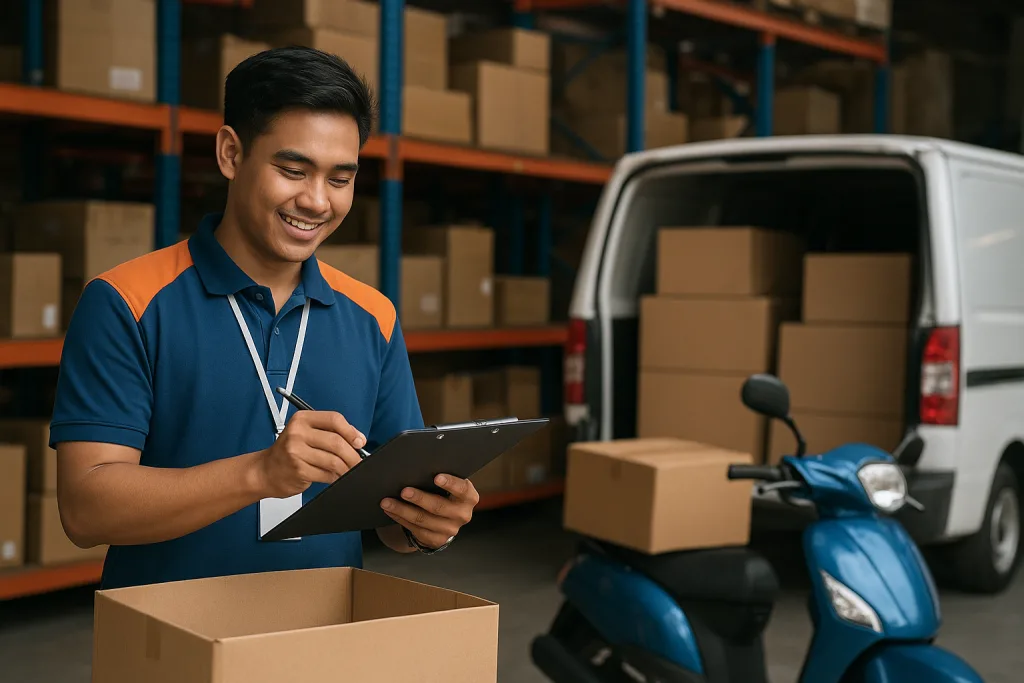
The e-commerce industry in the Philippines is going through a major change that is different from everything seen before. As a result, the logistics system, which has to meet the needs of millions of Filipinos who are turning to digital shopping and businesses that are going online, is facing a big challenge in delivering services faster, smarter, and more cost-efficient.
As customer standards get higher, the next e-commerce logistics will be influenced by new ideas, environmental-friendly practices, automation, and the continuous goal of finding cheaper delivery solutions. This piece of writing helps you to understand the local e-commerce sector through the trends that rise up, difficulties that are encountered and the chances which will be available in the future.
According to Dataintelo, “The global e-commerce logistics market size was valued at approximately $300 billion in 2023 and is projected to reach around $650 billion by 2032, growing at a Compound Annual Growth Rate (CAGR) of 9.2% over the forecast period.”
The Rising Demand for Faster and More Affordable Deliveries
The exponential rise in online shopping, which is primarily mobile-driven and facilitated by an increasing number of digital payment options, has escalated the demand for fast and cheap shipping all over the country.
Buyers want delivery the next day to their cities and easy access to shipping all over the country with a few additional fees at most. Still, the logistics of the country’s island geography make the Philippines a very different Southeast Asian market with whom to compare.
Inefficient infrastructures, inconsistent delivery networks, and expensive transportation are factors that restrict the growth of MSMEs and large enterprises. In order to meet the demands of consumers, logistics providers are making supply chains more resilient through the use of cutting-edge technology, expanded transportation networks, and upgraded warehousing systems that not only increase the speed of operations but also make them more cost-effective.
Digital Transformation in Logistics: A Turning Point
Digital transformation is the main reason for a major change of logistics operations management. More and more companies use automation and smart warehousing technologies to simplify their business processes and at the same time, they reduce the risk of human error.
Nowadays warehouses are equipped with barcodes and RFID scanning, robotic-assisted sorting, automated storage and retrieval systems, and predictive analytics to keep track of inventory in a better way. With these technologies, companies can manage seasonal surges, increase accuracy, and reduce their operational expenses.
Moreover, artificial intelligence is a major source of ideas for improving decision-making in logistics. AI-powered systems evaluate the delivery patterns, the peak seasons, the possible inventory shortages, and the road conditions in real-time to be able to guide the shipments in the most efficient way and thus, delays are avoided. In addition, machine learning software finds the best delivery routes so that fuel consumption is less, delivery takes less time and shipping costs, in general, are under control.
Besides, cloud-based logistics platforms are now the main tools that support communication and coordination among sellers, customers, riders, and logistics teams. These devices offer real-time visibility through which the parties involved in the supply chain are able to respond to changes, for example, an abrupt increase in demand or an unpredicted delay, much quicker and the delivery timelines become more reliable.
The Expansion of Multi-Hub and Micro-Fulfillment Centers
The decentralization of fulfillment is becoming a viable solution to enhance delivery efficiency in the Philippines. Micro-fulfillment centers, or MFCs, enable businesses to position products closer to the final consumers, thus delivery times are drastically reduced and last-mile transportation costs are lowered. This method is especially useful in densely populated areas such as Manila, Cebu, and Davao, where the volume of orders remains high.
After satisfying the needs of the urban population, regional hubs are turning to be essential for spreading the national reach. There is a possibility that such hubs are equipped with temperature-controlled storage, enhanced packing and sorting systems, and agreements with local delivery providers.
By simply spreading storage and processing centers in a more strategic way, supply chain companies can lessen the waiting time of the goods in transit and thus, be in a position to provide the delivery services at a lower price to the areas that are far from the city and the countryside.
The Role of Last-Mile Innovations in Improving Delivery Experience
The delivery of goods to the final destination, which is usually the most costly and time-consuming part of the logistics journey, is radically changing to satisfy contemporary requirements. E-commerce companies have found on-demand delivery platforms to be their most valuable partners.
Through these companies, they can offer their customers express and same-day delivery without the need to have their own delivery personnel. These platforms make it possible to increase flexibility, capacity, and delivery speed.
Besides that, alternative delivery options are progressively gaining popularity. These methods include parcel lockers, pickup points, and partner convenience stores where customers can collect their packages against a failed delivery attempt.
Such collection options not only save the time of the delivery person but also make it possible for the customer to pick up his or her package at a location convenient for him or her. Hence, these methods contribute to seamless, more customer-friendly last-mile deliveries with the possibility of these companies saving money on operational costs.
Sustainable transportation is one of the trends which is getting more and more attention. The rise in usage of electric motorcycles, tricycles, and compact vans is presenting a delivery solution that is not only clean but also less expensive. In addition, as the energy stations become better and technology more available, electric vehicles will be the main contributors to the reduction of fuel expenses and carbon emissions.
Improving the Affordability of Delivery in the Philippines
Affordability remains a main concern to account for e-commerce growth over time, particularly, among micro, small, and medium enterprises. One of the ways to accomplish this is through shared logistics networks that enable cost reduction at the level of individuals by the method of resource pooling such as warehousing, packaging systems, and delivery routes.
Through this cooperation model, small sellers can provide competitive shipping prices to their customers without incurring the costs of running their independent logistics operations.
AI-driven dynamic pricing strategies are giving logistics businesses the ability to change delivery charges based on factors such as distance, demand, rider availability, and seasonal changes. These developing pricing structures are becoming more transparent as well as flexible for the two business and customer sides. Besides, batch shipping is cutting expenses by joining the orders of the like-location households, thus, lessening the consumption of the fuel and making delivery faster in cities where there are a lot of orders.
The Growing Importance of Cross-Border Logistics
The cross-border online trade in the Philippines is getting bigger as the number of purchases from foreign online shops is constantly going up. Shipping companies are making the worldwide delivery process more comfortable and quicker by customs, implementing the use of electronic documents, providing live tracking, and optimizing both air and sea routes. Filipino buyers are the ones who are benefiting from all these changes as they can get their imported goods at a cheaper price and with less inconvenience.
Challenges That Still Need to Be Addressed
Even after the advancements, a few issues that have been around for a long time still hamper e-commerce logistics in the Philippines. The delivery speed and reliability are affected by infrastructural problems like road congestion, limited port capacity, and the slow development of the provincial road system. Also, the unstable weather has become a serious problem as well since typhoons and floods not only cause delays but also increase the operational costs of the business during the bad weather.
Elevated fuel prices continue to be the principal reason for the increase of delivery costs, resulting in a situation where the logistics companies have to find solutions to this issue by means of route optimization, electric vehicle adoption, and delivery hubs that are strategically located. Besides that, the fragmentation of the logistics landscape may cause the quality of service to be different in various areas, thus collaboration and standardization become essential to the level of system reliability that can be improved.
What the Next Five Years May Look Like
With a larger number of micro-fulfillment centers going up, there would be more hyperlocal delivery options, as they are expected to spread out in the next five years. Customers may be able to get delivery windows of certain products that are guaranteed to be on the same day or even within two hours. To stay competitive, MSMEs will also implement digital logistics tools, automated inventory systems, and smart shipping solutions.
As companies make changes to their operations that are more environmentally friendly like electric fleets, eco-friendly packaging, and carbon-neutral shipping programs, the concept of sustainability will be a major factor that will be emphasized further in the future.
The use of artificial intelligence in logistics will be further developed to keep up with the changing demands of the industry. In this way, predictions will be more precise, routes will be planned more efficiently, and resources will be utilized in a better manner—all these activities resulting in the delivery of goods at a higher speed and lower cost to Filipino consumers.
Final Thoughts
Technology advancement, innovative offers, and a concentrated effort on lower prices are paving the way for e-commerce logistics to the future in the Philippines. To be able to satisfy the customers’ evolving demands, businesses and logistics companies will have to make their supply chains smarter through investments, open up the local delivery networks, and take up nature-friendly practices.
The Philippines is thus moving towards the creation of a more e-commerce system that is efficient, accessible, and strong with the help of continuous effort and innovation. This turnaround is already getting underway, and the changes over the next years will determine how Filipinos will shop, how businesses will operate, and how logistics companies will offer value in a more digital world.