
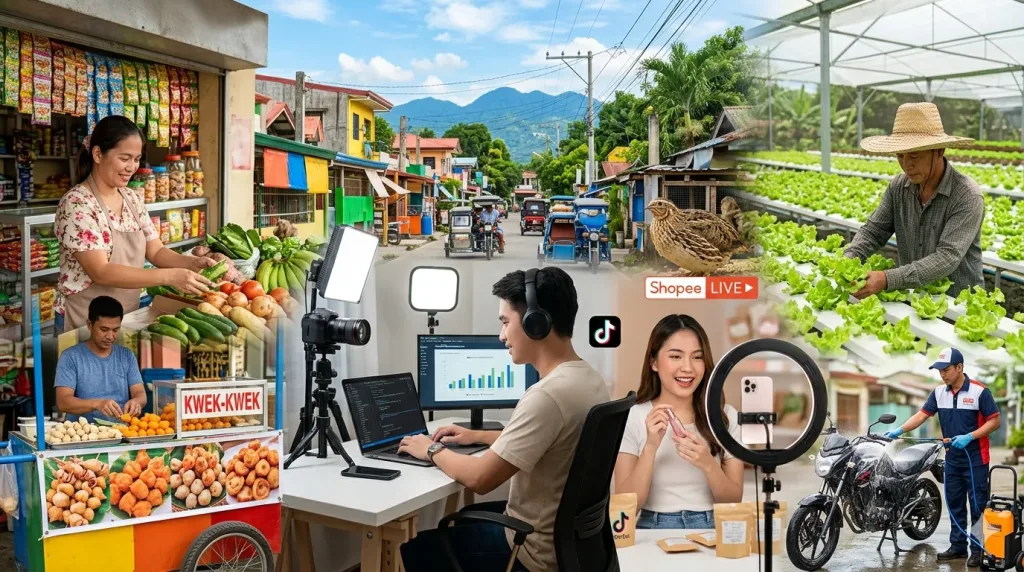
The entrepreneurial landscape in the Philippines has shifted significantly as we head into 2026. While inflation remains a conversation piece, the “creator economy” and localized convenience have turned into gold mines for Filipinos.
Whether you are a stay-at-home parent, a Gen Z side-hustler, or a retiree looking for a stable venture, the opportunities are vast. This guide outlines 50 profitable business ideas for 2026, categorized by capital, skill set, and market demand.
I. Low-Capital & Neighborhood Staples (₱5k – ₱50k)
These businesses thrive on community trust and daily necessity. In 2026, the key is integrating digital payments like GCash and Maya.
- Sari-Sari Store 2.0: Don’t just sell snacks. Become a neighborhood “hub” offering cash-in/cash-out services and bill payments.
- E-Wallet & Loading Station: High demand in areas with limited bank access.
- Personalized Gifting/Gift Baskets: Focus on curated, “aesthetic” baskets for birthdays and holidays.
- Ukay-Ukay Curation: Instead of a physical pile, sell “curated” thrift finds on Instagram or TikTok.
- Bigasan or Homemade Organic Snacks: Think baked banana chips or flavored peanuts with low-sodium options.
- Carinderia (Specialized): Focus on one “hero” dish (e.g., the best Pare’s or Bicol Express in town).
- Frozen Food Reselling: Partner with local distributors for easy-cook breakfast meats.
- Direct Selling (Health & Wellness): Products like vitamins and organic supplements are peak 2026 trends.
- Mobile Beverage Cart: Focus on “Isaw” or fishballs but with high-end, clean presentation.
- Pet Accessory Shop: Filipinos are spending more on “pet-parenting” than ever before.
II. The Digital & Remote Economy
With the rise of OnlineJobs.ph and Upwork, your skills can now be exported globally.
- TikTok Shop Live Seller: The most explosive retail trend in 2026.
- Affiliate Marketing: Promoting products on Shopee or Lazada via your social media links.
- SEO & AI Consulting: Helping local businesses rank on Google using modern AI tools.
- Niche YouTube/Vlogging: Focus on specific Filipino sub-cultures (e.g., local travel, budgeting).
- Virtual Assistant (VA) Agency: Don’t just be a VA; manage a team of VAs for international clients.
- Digital Product Shop: Sell Canva templates, budget trackers, or digital planners on Etsy.
- E-book Publishing: Guides on Philippine law, cooking, or “How-to” manuals.
- Print-on-Demand (POD): Custom T-shirts and mugs without holding inventory.
- Social Media Manager: Specifically for “traditional” Filipino businesses transitioning to digital.
- Online Tutoring (ESL or Specialized): Teaching English or Math to students abroad via Zoom.
III. Modern Agribusiness (The “Green Gold”)
As per the Philippine Department of Agriculture, food security is a top priority, making agribusiness highly sustainable.
- Hydroponic Lettuce Farming: High-yield, low-space, and can be done in urban settings.
- Commercial Quail Farming (Pugo): Faster ROI than chickens (eggs in 41 days!).
- Mushroom Production: Using agricultural waste to grow high-value oyster mushrooms.
- Urban Gardening Kits: Selling “starter packs” for city dwellers to grow their own herbs.
- Tilapia/Catfish Tank Farming: Backyard tanks that provide fresh protein for the community.
- Organic Fertilizer Production: Vermicomposting using African Night Crawlers.
- High-Value Crop Planting: Cacao, Dragon Fruit, or Vanilla.
- Beekeeping: Honey is a premium commodity with a long shelf life.
- Livestock Feed Production: Creating low-cost, organic feeds for local farmers.
- Ornamental Plant Shop: Rare “indoor” plants are still a massive aesthetic trend.
IV. Food & Beverage (F&B) Innovations
In 2026, the “Cloud Kitchen” model is the most efficient way to enter the food industry.
- Cloud Kitchen (Delivery Only): Operating a restaurant out of your home via GrabFood or FoodPanda.
- Artisanal Coffee Cart: Focus on local beans (Barako or Benguet) with a minimalist aesthetic.
- Party Tray Catering: Large-format meals for family gatherings.
- Healthy Meal Prep Delivery: Calorie-counted meals for busy office workers.
- Themed Cake & Pastry Shop: Custom-designed cakes for “Instagrammable” celebrations.
- Low-Sugar Dessert Line: Catering to the growing diabetic and health-conscious market.
- Plant-Based “Meat” Alternatives: Using local langka (jackfruit) or mushrooms.
- Breakfast-on-the-Go: High-quality Tapsilog or Arroz Caldo near transport terminals.
- Gourmet Condiments: Bottled Tuyo, Chili Garlic, or Bagoong with premium packaging.
- Milk Tea 2.0: Moving away from powders and toward real tea leaves and fresh fruit.
V. High-Demand Service Businesses
Services are recession-resistant because people will always pay to save time or solve technical problems.
- Mobile Gadget & Laptop Repair: A vital service in a tech-dependent society.
- Eco-Friendly Cleaning Services: Using non-toxic chemicals for homes and offices.
- Home-Service Pet Grooming: Convenience for busy pet owners.
- Ergonomic Office Setup Consultant: Helping WFH employees set up healthy workspaces.
- Events Management (Micro-Weddings): Focus on intimate, high-quality gatherings.
- Laundry & Dry Cleaning: Specifically with pickup and delivery options.
- Car Detailing (Mobile): Going to the client’s house to clean their vehicle.
- Personal Finance/Bookkeeping: Helping small MSMEs manage their taxes and BIR compliance.
- Home Wellness (Massage & Therapy): Bringing the spa experience to the living room.
- Solar Panel Installation: As electricity costs rise, solar is the most searched “home improvement” of 2026.
Strategic Advice for 2026 Entrepreneurs
Before diving in, consult the DTI (Department of Trade and Industry) for business name registration. In 2026, the most successful businesses are those that solve a local problem using a digital solution.
Focus on these three pillars:
- Convenience: Can you deliver it?
- Quality: Is it better than the mass-produced version?
- Sustainability: Is the packaging eco-friendly?
Final Thoughts
The best business to start is the one that aligns with your existing skills. Don’t chase a trend if you don’t understand the mechanics. Start small, validate your idea with your first 10 customers, and scale using social media.
Which of these sectors—Digital, Food, or Agri—do you feel most equipped to start in today?