
Crayfish Farming in the Philippines: The Complete 2026 Beginner’s Guide to Profitable Freshwater Lobster Production
Crayfish farming, often called freshwater lobster farming, is quickly emerging as one of the most profitable niche aquaculture businesses in the Philippines. As consumers become more interested in premium seafood and restaurants continue looking for unique menu items, Australian redclaw crayfish has become a high-value species with strong market potential.
Unlike many traditional aquaculture species, redclaw crayfish are remarkably hardy. They tolerate a wide range of water conditions, naturally resist many diseases affecting shrimp, require relatively simple management, and can be raised in ponds, tanks, or even intensive recirculating systems. Their adaptability makes them suitable for both backyard entrepreneurs and commercial farmers.
Advances in aquaculture technology have also made crayfish farming more efficient than ever. Affordable water-quality sensors, automatic feeders, solar-powered aerators, biofiltration systems, and digital farm management apps allow farmers to increase survival rates while reducing labor costs.
If you’re planning to start a crayfish farm, this comprehensive guide covers everything you need to know—from selecting broodstock and designing your farm to using modern technology that can maximize your profits.
Why Crayfish Farming is Growing in the Philippines
Several factors are driving interest in crayfish farming:
- Increasing demand from restaurants, resorts, and seafood markets
- Higher selling price than many freshwater fish
- Relatively low disease incidence compared to shrimp
- Suitable Philippine climate year-round
- Can be integrated with existing fish farms
- Excellent opportunity for backyard and small-scale entrepreneurs
- Potential export market to neighboring Asian countries
As local production remains limited, many buyers still struggle to secure a consistent supply. This supply gap creates an opportunity for new farmers who can produce high-quality live crayfish.
Choosing the Right Species
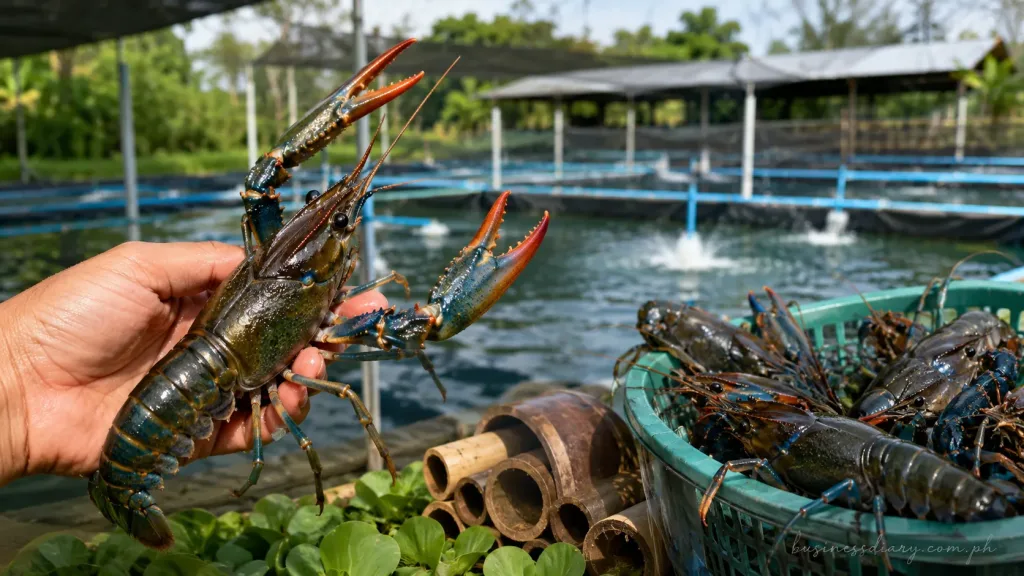
For commercial farming, the Australian Redclaw Crayfish (Cherax quadricarinatus) remains the best choice.
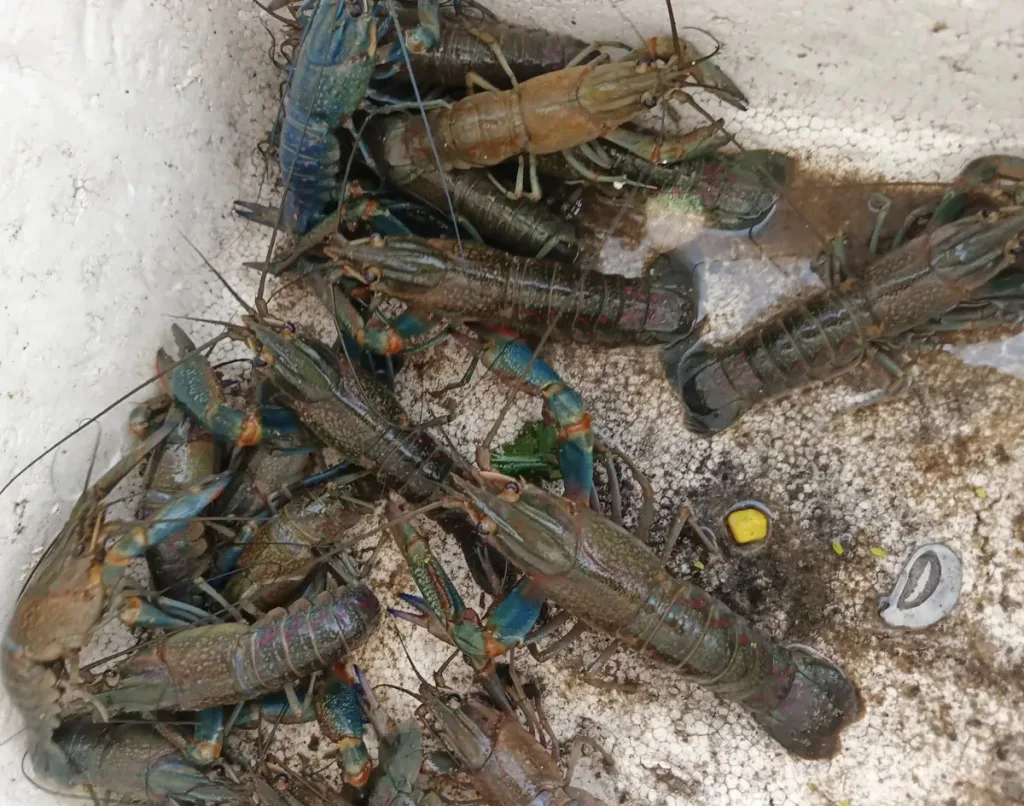
Its advantages include:
- Fast growth
- Excellent meat yield
- Attractive blue-green body with distinctive red claws
- High survival rate
- Tolerates warm tropical water
- Less aggressive than many crayfish species
Under proper management, redclaw can reach 250 to 400 grams within 6 to 9 months, with some premium specimens growing even larger.
Avoid using marbled crayfish or ornamental species for food production, as they generally have lower commercial value and may pose ecological concerns if accidentally released into local waterways.
Biosecurity Should Be Your Top Priority
One disease outbreak can wipe out months of hard work.
Develop a simple biosecurity plan by:
- Quarantining all newly purchased broodstock for at least 2–4 weeks.
- Using separate nets and equipment for different tanks.
- Disinfecting equipment before transferring between ponds.
- Preventing birds, frogs, snakes, and rodents from entering culture areas.
- Removing dead crayfish immediately.
- Restricting unnecessary visitors inside production areas.
Good biosecurity is often less expensive than treating disease after it appears.
Farm Site Selection
One of the biggest factors determining success is water quality.
Choose a location with:
- Reliable freshwater source
- No industrial pollution
- Minimal agricultural runoff
- Stable electricity supply
- Easy road access for transporting live harvests
Ideal water conditions include:
| Parameter | Recommended Range |
|---|---|
| Temperature | 24–30°C |
| pH | 7.0–8.2 |
| Dissolved Oxygen | Above 5 mg/L |
| Ammonia | Less than 0.05 ppm |
| Water Depth | 0.8–1.2 meters |
Installing a backup generator or solar-powered aerator is highly recommended because oxygen depletion can quickly cause significant losses.
Modern Farm Systems
Earthen Pond Culture
Still the most economical option.
Advantages:
- Lowest construction cost
- Natural food production
- Larger production capacity
- Lower electricity consumption
A pond measuring 10 × 20 meters is already suitable for beginners.
Concrete Tank Culture
Tank culture provides better control over water quality.
Ideal for:
- Urban farming
- Limited land
- Breeding operations
- Nursery production
Concrete tanks should include:
- Bottom drain
- Aeration
- Biofilter
- Water inlet and outlet
- Shade net
Recirculating Aquaculture System (RAS)
One of the fastest-growing technologies in modern aquaculture is the Recirculating Aquaculture System (RAS).
Instead of constantly replacing water, RAS continuously filters and reuses it using:
- Mechanical filtration
- Biological filtration
- UV sterilization
- Oxygenation
- Solids removal
Benefits include:
- Up to 90–95% less water consumption
- Better growth
- Lower disease risk
- Higher stocking density
- Year-round production
Although startup costs are higher, RAS can significantly improve productivity for commercial farms.
Smart Aquaculture Technologies
Modern crayfish farms increasingly rely on digital technology.
Useful tools include:
Wi-Fi Water Quality Sensors
Real-time monitoring of:
- pH
- Temperature
- Dissolved oxygen
- Ammonia
These systems send alerts directly to a smartphone whenever water conditions become dangerous.
Automatic Feeders
Programmable feeders:
- Reduce feed waste
- Improve growth
- Lower labor costs
- Maintain consistent feeding schedules
Feed conversion often improves because crayfish receive smaller meals throughout the day.
Solar Aeration Systems
Solar-powered aerators reduce electricity expenses while providing continuous oxygen during daylight hours.
Many farmers now combine solar systems with battery backups.
Farm Management Apps
Digital record-keeping helps monitor:
- Feed usage
- Growth
- Water quality
- Harvest dates
- Mortality
- Expenses
- Profitability
Good records make it easier to identify problems early and improve future production.
Farm Equipment
Basic equipment includes:
- Water pump
- Paddlewheel or air blower
- Air stones
- PVC shelters
- Water testing kit
- Harvest nets
- Nursery tanks
- Digital weighing scale
- Backup generator
- Quarantine tank
For larger farms, investing in an oxygen meter and ammonia test kit is highly recommended.
Estimated Startup Cost
A backyard commercial operation may require approximately:
| Item | Estimated Cost |
|---|---|
| Pond or tank construction | ₱80,000–150,000 |
| Aeration system | ₱20,000–40,000 |
| Water pump | ₱10,000–20,000 |
| Shelters | ₱10,000–15,000 |
| Water testing equipment | ₱5,000–10,000 |
| Juveniles/Broodstock | ₱30,000–60,000 |
| Miscellaneous | ₱20,000–40,000 |
Estimated investment: ₱175,000–335,000
Costs vary depending on farm size and whether existing infrastructure is available.
Selecting Healthy Broodstock
Purchase broodstock only from reputable hatcheries.
Healthy crayfish should have:
- Complete claws
- Bright coloration
- Active movement
- Clean shell
- No foul odor
- No external parasites
Avoid purchasing animals that appear weak or have damaged appendages.
Always quarantine new stock for at least 14 days before introducing them into production ponds.
Breeding Management
Male redclaw typically have:
- Larger claws
- Distinctive red patch on the claw
Females have:
- Wider abdomen
- Egg-carrying pleopods beneath the tail
Maintain approximately one male for every two to three females.
Females can produce 300–800 eggs per spawning, depending on age and size.
Egg incubation lasts 6–10 weeks.
Young crayfish should remain with the mother until naturally detached.
Nursery Management
Nursery systems greatly improve survival.
Important practices include:
- Fine mesh tanks
- Gentle aeration
- High-quality starter feed
- Frequent grading by size
- Plenty of hiding places
Size grading every three to four weeks minimizes cannibalism.
Feeding Program
Crayfish are omnivores.
A balanced diet should include:
Commercial Feeds
High-quality sinking pellets containing:
- 28–35% protein
- Essential minerals
- Vitamins
Natural Feed Supplements
To reduce feed costs, farmers can supplement with:
- Duckweed
- Azolla
- Sweet potato leaves
- Cassava leaves
- Water spinach (kangkong)
- Corn
- Snails
- Mussels
- Small fish
Natural foods should supplement—not replace—a nutritionally balanced commercial diet.
Feeding Tips
- Feed during late afternoon and evening when crayfish are most active.
- Offer approximately 2–3% of total biomass per day.
- Remove uneaten feed to maintain water quality.
- Adjust feeding based on temperature and growth.
Feed typically accounts for 50–60% of production costs, making efficient feed management one of the biggest drivers of profitability.
Stocking Density
Recommended stocking densities:
| System | Density |
|---|---|
| Earthen ponds | 2–4 per m² |
| Tank culture | 5–10 per m² |
| Intensive RAS | Up to 15 per m² (with advanced management) |
Higher densities require stronger aeration, excellent filtration, and careful monitoring.
Water Quality Management
Successful farms check water quality routinely.
Daily:
- Temperature
- Dissolved oxygen
Weekly:
- pH
- Ammonia
- Nitrite
Monthly:
- Alkalinity
- Hardness
Biofilters, probiotics designed for aquaculture, and beneficial bacteria can help maintain healthier water by breaking down organic waste and reducing harmful nitrogen compounds. Use products appropriate for freshwater crustaceans and follow manufacturer recommendations.
Molting Management
Molting is one of the most vulnerable stages.
During molting:
- Never handle crayfish.
- Maintain stable water quality.
- Increase available calcium.
- Avoid sudden water changes.
- Provide numerous shelters.
Most losses occur immediately after molting when the shell remains soft.
Disease Prevention
Although redclaw are relatively disease-resistant, prevention is still essential.
Best practices include:
- Quarantine new animals
- Maintain clean water
- Avoid overcrowding
- Remove dead animals immediately
- Sanitize equipment
- Control predators
- Limit unnecessary handling
Prevention is usually less expensive than treatment.
Harvesting
Harvest when crayfish reach:
- 250–400 grams
- Uniform market size
- Hard shell
Harvest methods include:
- Baited traps
- Seine nets
- Partial harvesting
- Complete pond drainage
Handle animals carefully to avoid damaging claws, which can reduce market value.
Marketing Strategies
Many successful crayfish farmers now generate sales online before harvest.
Potential sales channels include:
- Facebook Page
- Facebook Marketplace
- TikTok
- TikTok Shop
- Restaurant partnerships
- Hotels and resorts
- Seafood wholesalers
- Weekend farmers’ markets
Posting videos of harvesting, feeding, and live crayfish often generates strong customer engagement.
Value-Added Products
Don’t limit your business to selling live crayfish.
Additional revenue opportunities include:
- Live broodstock
- Juveniles
- Frozen tails
- Vacuum-packed crayfish
- Ready-to-cook seasoned crayfish
- Restaurant supply
- Aquarium market
- Farm tours
- Aquaculture training
Diversifying income streams can help stabilize revenue throughout the year.
Estimated Profit Potential
A well-managed 0.25-hectare farm producing approximately 1,000 kilograms per production cycle may generate:
| Item | Estimated Amount |
|---|---|
| Gross Sales | ₱350,000–500,000 |
| Operating Costs | ₱180,000–280,000 |
| Estimated Net Income | ₱120,000–220,000 |
Actual results depend on survival rate, feed efficiency, market prices, stocking density, and management practices. Premium live crayfish often command higher prices than processed products.
Common Problems and Practical Solutions
Cannibalism
Solution:
- Increase shelters
- Grade by size
- Avoid overcrowding
- Feed consistently
Poor Water Quality
Solution:
- Install aerators
- Test water regularly
- Use biofilters where appropriate
- Remove sludge
- Perform partial water changes
Slow Growth
Solution:
- Improve feed quality
- Check dissolved oxygen
- Reduce stocking density
- Sort by size
Predator Attacks
Protect ponds with:
- Bird netting
- Perimeter fencing
- Secure pond banks
- Night lighting where appropriate
High Feed Costs
Reduce expenses by:
- Growing duckweed or azolla on-site
- Using automatic feeders to minimize waste
- Monitoring feed conversion ratios (FCR)
- Purchasing feed in bulk when feasible
Tips for Long-Term Success
- Start with a manageable farm size and expand gradually.
- Buy broodstock only from reputable hatcheries.
- Keep detailed production and financial records.
- Invest in water-quality monitoring equipment.
- Develop relationships with buyers before harvest.
- Diversify income by selling juveniles, broodstock, or value-added products.
- Continue learning through training programs, industry seminars, and farmer associations to stay updated on new technologies and best practices.
Final Thoughts
Crayfish farming offers Filipino entrepreneurs an exciting opportunity to enter the growing premium seafood market. With the country’s favorable climate, increasing consumer demand, and the availability of modern aquaculture technologies, even small-scale producers can build a profitable and sustainable business.
Success, however, depends on more than simply stocking ponds. Careful planning, sound biosecurity, efficient feeding, regular water-quality monitoring, and smart use of technology all play critical roles in maximizing survival and profitability. By starting small, mastering the production process, and expanding strategically, you can turn a backyard operation into a thriving aquaculture enterprise that supplies high-quality freshwater lobster to local and international markets.