
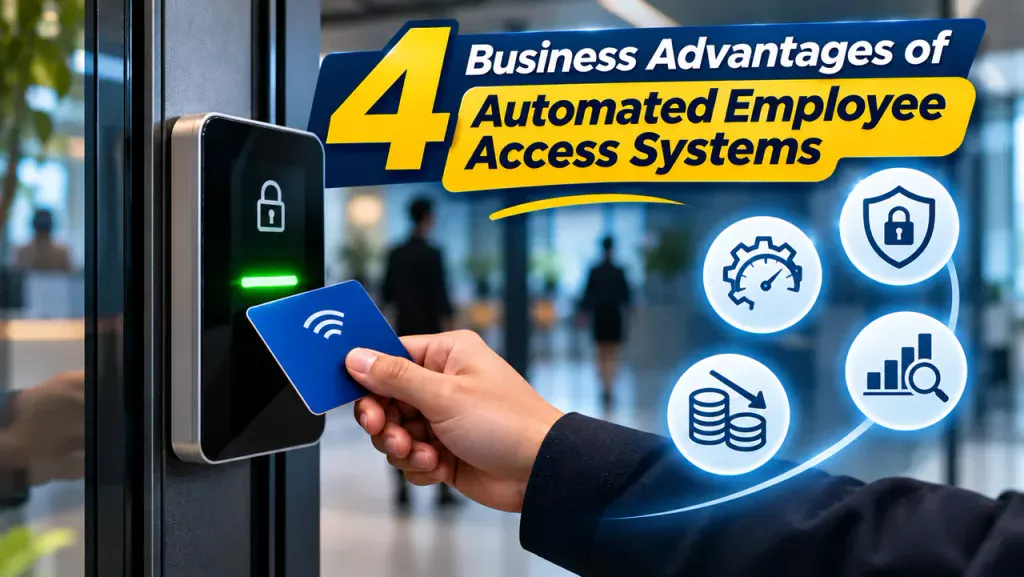
Modern organizations face growing challenges when it comes to managing facility security, employee access, and operational efficiency. As businesses expand, traditional lock-and-key systems often become difficult to control, monitor, and maintain. Lost keys, inconsistent access permissions, and limited visibility into facility activity can create unnecessary risks and administrative burdens.
Automated employee access systems provide a practical solution by combining security technology with streamlined management capabilities. These systems allow organizations to control who enters specific areas, when access is granted, and how facility activity is tracked. Beyond improving security, automated access solutions can deliver measurable business benefits that support productivity, compliance, and long-term growth.
Enhanced Security and Access Control
One of the most significant advantages of automated employee access systems is the ability to strengthen workplace security. Traditional physical keys can be copied, misplaced, or shared without authorization. Once a key is lost, businesses may be forced to rekey locks or replace entire locking systems to maintain security.
Automated systems eliminate many of these concerns by giving administrators precise control over employee permissions. Access rights can be assigned based on job roles, departments, or facility zones. If an employee changes positions or leaves the organization, permissions can be adjusted or revoked immediately.
Many organizations also use credentials such as key cards, mobile access applications, or electronic key tags to regulate entry. These tools create a more secure environment while reducing the risks associated with unmanaged physical keys. The result is greater confidence that sensitive areas, equipment, and information remain protected from unauthorized access.
Improved Operational Efficiency
Administrative efficiency often improves dramatically when businesses transition to automated access management. Managing hundreds of physical keys can consume valuable staff time, particularly in larger facilities with multiple access points.
Automated systems centralize access administration, allowing managers to update permissions through a software platform rather than manually distributing or collecting keys. New employees can receive access credentials quickly, while access changes can be implemented in minutes rather than days.
This efficiency extends beyond security administration. Employees spend less time waiting for access assistance, and facility managers gain greater visibility into building operations. Organizations can often reduce operational disruptions by ensuring that authorized personnel can access the spaces and resources they need without unnecessary delays.
As businesses continue to grow, centralized access management becomes particularly valuable because systems can scale more easily than traditional key-based solutions.
Better Visibility and Accountability
Another important business advantage is the ability to monitor and document facility access activity. Automated systems create digital records that show when individuals enter or exit designated areas. This information can be valuable for both security and operational purposes.
Access logs help organizations investigate security incidents, review facility usage patterns, and identify unusual activity that may require further attention. In some industries, maintaining accurate access records is also important for regulatory compliance and internal governance requirements.
Improved accountability often encourages stronger adherence to workplace policies. Employees understand that access activity is documented, which can support responsible behavior and reinforce organizational security standards.
For management teams, the ability to review historical access data provides useful insights into facility operations. These insights can inform staffing decisions, workspace planning, and future security investments.
Reduced Long-Term Costs
While automated access systems require an initial investment, many businesses find that they contribute to meaningful cost savings over time. Traditional key systems often generate recurring expenses related to lost keys, lock replacements, rekeying projects, and ongoing administrative effort.
Automated solutions reduce many of these costs by allowing credentials to be deactivated electronically when necessary. Instead of replacing locks after a security concern, administrators can often resolve the issue through software changes.
Modern systems may also integrate with surveillance platforms, alarm systems, and visitor management tools. This integration can improve overall security performance while reducing the need for separate processes and resources.
Additionally, organizations that experience fewer security incidents and operational disruptions may avoid costs associated with theft, property damage, or unauthorized access. Over time, these savings can help offset the original implementation expense while delivering additional operational value.
Greater Flexibility for Modern Work Environments
Today’s workplaces are increasingly dynamic, with organizations managing hybrid schedules, flexible staffing models, contractors, and multi-site operations. Automated access systems provide the flexibility needed to support these evolving business requirements.
Access permissions can be customized for specific schedules, departments, projects, or temporary assignments. Contractors and visitors can receive limited access that automatically expires when no longer needed. Multi-location organizations can also manage security across several facilities from a centralized platform.
This adaptability supports business continuity while maintaining consistent security standards. As organizational needs change, access policies can evolve without requiring substantial infrastructure modifications.
The ability to quickly respond to workforce changes, facility expansions, and new operational requirements makes automated access systems a valuable resource for businesses seeking both security and agility.
Conclusion
Automated employee access systems offer far more than a modern alternative to traditional keys. They strengthen security, improve operational efficiency, increase accountability, reduce long-term costs, and provide the flexibility needed to support changing business environments. As organizations continue to balance security requirements with operational goals, automated access management has become an increasingly important tool for protecting assets, supporting employees, and enabling sustainable growth.