
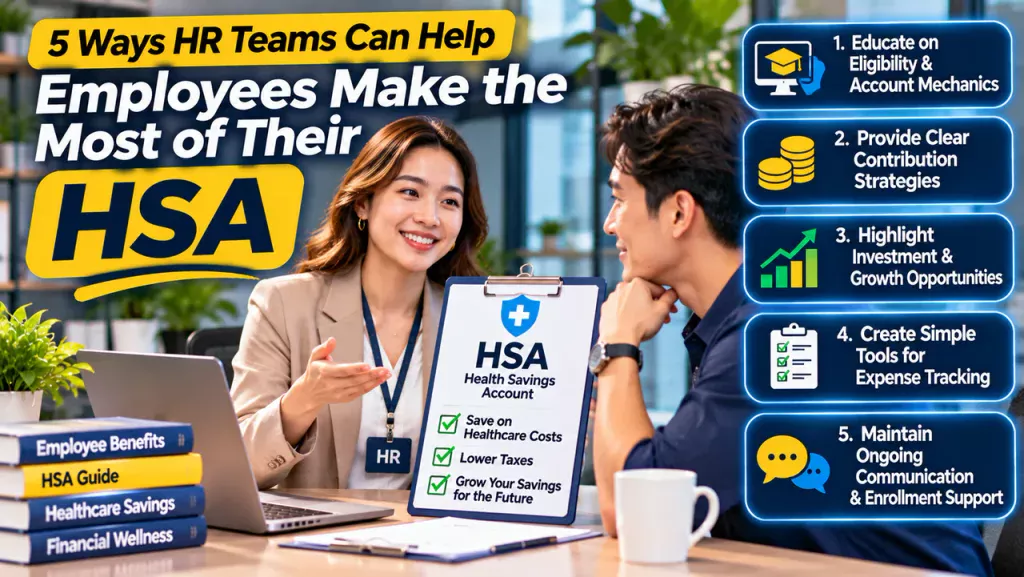
Health Savings Accounts offer employees a powerful way to manage healthcare costs while building savings for the future, yet many workers underutilize these benefits simply because they do not understand how they function. HR teams sit at the intersection of employee wellness and financial wellbeing, making them uniquely positioned to educate and guide staff through HSA strategy. When employees maximize their HSA contributions and investment options, they reduce taxable income, lower out-of-pocket expenses, and create a valuable safety net for medical needs. The challenge for most HR departments is finding effective ways to communicate these advantages in a clear, compelling manner that resonates with diverse employee populations.
1. Educate Employees on HSA Eligibility and Account Mechanics
Many employees do not realize they are eligible for an HSA or misunderstand the basic rules governing these accounts. HR teams should conduct comprehensive education sessions that explain what qualifies someone for an HSA, typically enrollment in a high-deductible health plan paired with HSA eligibility. During these sessions, HR can clarify the annual contribution limits, which the IRS adjusts each year for both individual and family coverage. Employees need to understand that HSAs operate differently from Flexible Spending Accounts, most importantly that HSA funds roll over indefinitely rather than disappearing at year’s end. By demystifying account mechanics and rules around eligible medical expenses, HR creates a foundation of knowledge that empowers better financial decisions throughout the year.
2. Provide Clear Communication About Contribution Strategies
HR teams should help employees develop contribution strategies that align with their individual financial situations and healthcare needs. Rather than suggesting a one-size-fits-all approach, HR can guide employees to consider their expected medical expenses, family health history, and long-term financial goals when deciding how much to contribute. Some employees may prioritize maximizing contributions to reduce taxes immediately, while others might take a more conservative approach and increase contributions gradually over time. HR can demonstrate scenarios showing how different contribution levels affect take-home pay and retirement readiness, making the connection between HSA savings and broader financial planning tangible and relevant. Offering personalized guidance during open enrollment ensures employees enter the plan year with intention rather than by default.
3. Highlight Investment and Growth Opportunities
A frequently overlooked feature of HSAs is the ability to invest account balances in stocks, bonds, and mutual funds once a minimum balance is reached. Many employees treat their HSA like a checking account and miss opportunities for long-term growth that could significantly increase their medical savings over decades. HR should explain that employees can allow their HSA to grow invested when they have adequate liquid funds for immediate medical needs, using the account as a supplemental retirement vehicle. This transforms the HSA from a simple savings account into a compound-growth investment tool, particularly valuable for younger employees with many working years ahead. HR teams can invite investment professionals to present during benefits meetings or provide written materials showing historical growth scenarios, helping employees understand the power of time and investment strategy.
4. Create Simple Tools and Resources for Expense Tracking
HR can reduce the administrative burden of HSA management by providing employees with resources that simplify expense tracking and documentation. Employees often worry about maintaining receipts for eligible medical expenses or understanding which purchases qualify, creating unnecessary stress and reluctance to use HSA funds. HR departments can develop or curate checklists of commonly eligible expenses such as prescriptions, copays, dental work, vision care, and medical equipment, along with guidance on ineligible items like cosmetic procedures or general wellness products. A common question employees raise is can you use hsa for supplements, and including a clear answer in these checklists helps staff confidently determine whether specific purchases qualify before spending their funds. Offering links to expense tracking apps or spreadsheet templates, combined with accessible documentation support, makes it easier for employees to monitor spending, stay organized throughout the year, and confidently use their HSA balances on qualifying expenses rather than letting funds sit unused out of uncertainty.
5. Maintain Ongoing Communication and Enrollment Support
A single benefits meeting or enrollment period is insufficient to ensure employees fully leverage their HSAs, particularly since financial situations and healthcare needs change over time. HR teams should implement a communication calendar that addresses HSA topics multiple times per year, covering contribution updates in January, investment tips in spring, year-end spending considerations in the fall, and retirement planning implications during year-end planning. Offering individual meetings or phone consultations during enrollment gives employees direct access to HR professionals who can answer specific questions and address concerns. New employee onboarding should include HSA education for those who qualify, and HR should make materials available in multiple formats such as video tutorials, printed guides, and interactive webinars. Consistent, varied communication keeps HSAs top-of-mind and signals to employees that HR views this benefit as central to their overall financial health.
Conclusion
Health Savings Accounts represent one of the most underutilized employee benefits, largely because comprehension and engagement require intentional education from HR teams. By taking on the role of HSA educator and advocate, HR professionals help employees move beyond basic awareness to active strategy and confident decision-making around these accounts. When HR provides clear information about eligibility, guides contribution decisions, highlights investment possibilities, simplifies expense tracking, and maintains ongoing communication, employees gain the knowledge and tools needed to maximize this dual-purpose benefit. The investment HR makes in HSA education directly translates to improved employee financial wellness, reduced healthcare stress, and stronger utilization of a benefit that can significantly impact both immediate and retirement finances. This focused attention on HSA guidance demonstrates that HR truly understands and prioritizes the financial security of the workforce it serves.