
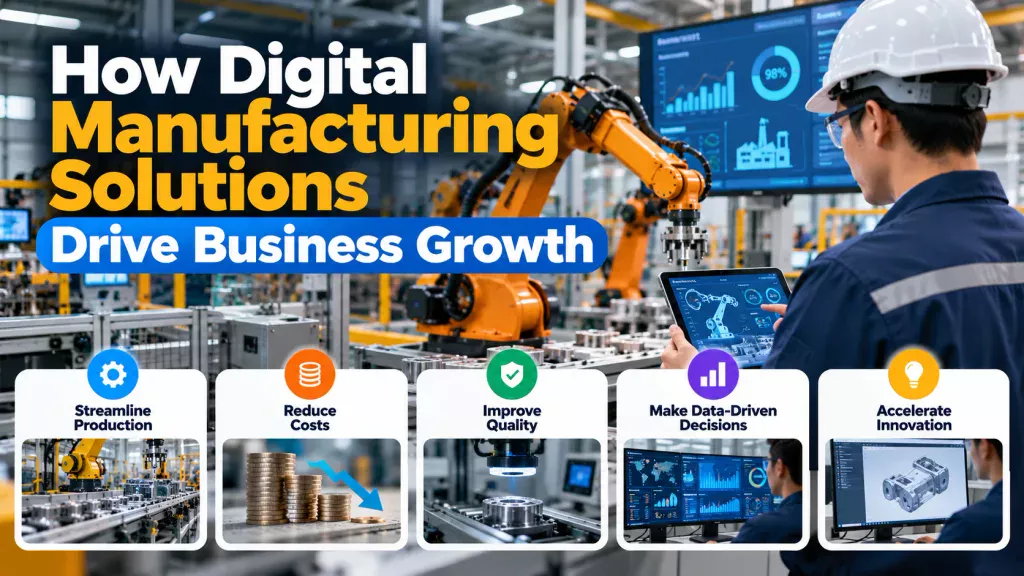
What happens when a manufacturing company integrates automation, data analytics, and cloud connectivity into its daily operations? The answer is measurable growth, operational efficiency, and a competitive edge that traditional manufacturing cannot match. Digital manufacturing solutions have become essential tools for companies looking to scale production, reduce costs, and respond faster to market demands. These technologies transform factories from static production environments into intelligent, adaptive systems that learn and improve continuously. Understanding how these solutions drive business growth requires examining both the operational improvements and the strategic advantages they create.
1. Streamlining Production Processes
Digital manufacturing solutions eliminate inefficiencies that plague traditional production methods. By implementing systems like computer-aided design (CAD) and computer-aided manufacturing (CAM), companies can design products more quickly and with fewer errors. These tools allow engineers to visualize complex components, test designs virtually, and catch problems before physical prototypes are created. The result is faster time to market and reduced waste from prototype iterations. For example, an automotive parts manufacturer might use digital design tools to reduce design cycles from several weeks to just days, allowing them to respond to customer specifications almost immediately.
Automation systems further enhance production efficiency by standardizing repetitive tasks and reducing human error. Robotic arms, conveyor systems, and precision machinery work around the clock without fatigue, maintaining consistent quality across every unit produced. When combined with real-time monitoring systems, manufacturers gain instant visibility into production bottlenecks and can address problems before they escalate into costly downtime. This level of operational precision translates directly to higher output with fewer defects, improving profit margins without necessarily increasing labor costs.
2. Reducing Operational Costs
The financial impact of digital manufacturing becomes evident when analyzing cost structures across production facilities. Energy consumption, material waste, and labor hours represent the largest expenses in traditional manufacturing. Digital solutions address each of these areas through optimization algorithms and precise resource allocation. Predictive maintenance systems, for instance, use sensor data and machine learning to identify when equipment needs servicing before failure occurs. This proactive approach prevents expensive emergency repairs and unplanned production shutdowns that can cost thousands of dollars per hour.
Material waste reduction represents another significant cost benefit. Advanced manufacturing systems calculate exact material requirements for each product, minimizing scrap and ensuring efficient use of raw materials. Some manufacturers report waste reductions of 20 percent or more after implementing digital solutions, directly improving their bottom line. Additionally, digital systems optimize energy consumption by running machinery only when needed and at optimal efficiency levels. A manufacturer producing consumer goods might reduce electricity costs substantially by using smart scheduling systems that coordinate machine operations to avoid peak-rate periods and distribute load evenly across the production day.
3. Enhancing Product Quality and Consistency
Digital manufacturing creates the conditions for exceptional product quality through precision, standardization, and continuous monitoring. Automated inspection systems using cameras and sensors examine every product made, identifying defects that human inspectors might miss and ensuring that quality standards are maintained consistently. This systematic approach eliminates variation between batches and protects brand reputation by ensuring every customer receives the same high-quality product. Companies that implement these systems often see substantial reductions in customer complaints and warranty claims, which translates to lower service costs and improved customer loyalty.
Real-time data collection throughout the manufacturing process provides manufacturers with complete visibility into how products are made. Facilities that deploy manufacturing execution system mes software gain the ability to track every stage of production in real time, ensuring that deviations in temperature, pressure, or timing are caught and corrected before they affect output quality. For example, a pharmaceutical manufacturer can use digital monitoring to ensure that every batch of medication meets exact potency requirements, building customer trust and satisfying regulatory compliance more reliably than manual processes allow. Consistent adherence to quality standards at this level also reduces the risk of costly product recalls that can damage both finances and reputation.
4. Enabling Data-Driven Decision Making
Digital manufacturing systems generate vast amounts of data that, when properly analyzed, reveal insights about production performance, market trends, and business opportunities. Advanced analytics platforms can identify patterns in production data that humans might overlook, such as subtle correlations between specific operating conditions and defect rates. Manufacturers can then adjust processes based on these insights, continuously improving efficiency and quality. This shift from intuition-based decisions to data-backed strategies represents a fundamental change in how modern manufacturers compete and innovate.
Business intelligence dashboards provide executives with real-time access to key performance indicators, allowing leadership to monitor production, costs, and output from anywhere in the world. This transparency supports faster decision-making and helps companies respond to market changes with agility. A manufacturer might use sales data combined with production capacity data to forecast demand more accurately and adjust manufacturing schedules accordingly, avoiding overproduction or stockouts. The ability to make informed decisions quickly gives digitally advanced manufacturers a meaningful advantage over competitors who rely on manual reporting and historical data analysis.
5. Accelerating Innovation and Customization
Modern consumers increasingly expect customized products, and digital manufacturing solutions make mass customization economically viable. Using flexible automation and programmable systems, manufacturers can produce small batches of varied products almost as efficiently as producing identical items. This capability opens new market opportunities and allows companies to command premium prices for tailored solutions. For example, a furniture manufacturer can use digital design and robotic fabrication to produce custom pieces with minimal setup time, allowing them to compete with mass producers on cost while offering individual customers the personalization they desire.
Innovation cycles accelerate when digital tools reduce the time and cost of experimentation. Engineers can simulate new designs, test variations virtually, and gather data on performance before committing to physical production. This rapid prototyping approach encourages creativity because failed experiments cost far less than they would in traditional manufacturing environments. Companies that embrace this innovation capacity stay ahead of market trends and can introduce new products faster than competitors, capturing customer attention and market share during the crucial early phases of product adoption.
Conclusion
Digital manufacturing solutions fundamentally reshape how companies operate, compete, and grow in an increasingly demanding marketplace. By streamlining production processes, reducing costs, enhancing quality, enabling data-driven decisions, and accelerating innovation, digital manufacturing creates multiple pathways to business growth. Companies that invest in these solutions today position themselves to capture market share, build customer loyalty, and maintain profitability as manufacturing continues to evolve. The question for manufacturing leaders is no longer whether to adopt digital solutions, but how quickly they can implement them to realize the competitive advantages these systems provide.