
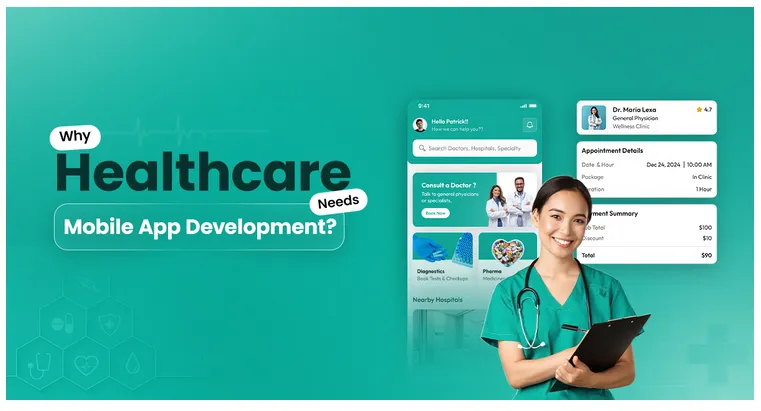
Can you tell me the last time you booked a doctor’s appointment? Generally, it’s like you have to wait on hold for several minutes, adjust your busy schedule to accommodate the clinic’s availability, or fill out paperwork that you’ve already done during your last visit. For patients, these hurdles seem to create much dissatisfaction. For providers, they are a waste of time, a revenue loss, and a compromise in the quality of care.
Healthcare seems to be the most crucial service in our lives, even though it is lagging behind other industries in terms of providing convenience & personalization. In the world of instant delivery, where we expect instant food delivery and ride-hailing at just a tap, patients naturally wonder, “Why isn’t healthcare so simple?” The truth is, it can be. With the aspect of mobile development in healthcare organizations, there are offerings for the tools that modernize patient experiences, streamline healthcare operations, and give improved results. These advancements are part of how the evolution of healthcare has extended life expectancy, bridging the gap within technology. So whether it is about video consulting, medication reminders, or removing the barriers between patients & service providers.
The problem is simply clear: an outdated & traditional approach can no longer match the expectations. So, investing in mobile app development in healthcare can be relevant, efficient, and trusted in a digital-first world. Let’s explore the key reasons why healthcare businesses should invest in mobile app development, what the best practices can be, and also the potential challenges that you can face.
Key Reasons to Invest in Mobile App Development for Healthcare Businesses
Some of the primary reasons why you should invest in mobile app development for healthcare businesses are:
Meeting Patients’ Expectations
Nowadays, patients expect to have health information, book appointments, request prescriptions, and be able to consult doctors when needed. In this case, a mobile app can centralize the features into a single interface, giving 24/7 engagement and also personalization.
Beyond the convenience for the patients, this also extends care beyond clinics through teleconsultations, chat-based support, and timely reminders. Aligning the healthcare app development services with the digital habits of patients, the useful apps foster higher satisfaction, reliability, and loyalty, turning the service providers into reliable healthcare partners.
Enhanced Efficiency & Reduced Cost
There are enormous amounts of administrative work that are mainly associated with patient interactions, starting from scheduling, billing, reducing paperwork, and also ensuring that there are accurate digital health records at the right time, which makes great accessibility to both patients and service providers, thus enhancing efficiency. Embracing the effective mobile app solutions, healthcare providers can significantly minimize the operational costs, while maintaining speed & quality.
Regulatory Standard Compliance
Trust is very important in the healthcare space, and it is not only built on mobile expertise but also on how responsibly and properly the data is maintained. With the standardizations like GDPR, HIPAA, and other regional standards, healthcare providers are under proper management to protect sensitive data. The mobile apps that are developed with secure frameworks and strong encryption help businesses maintain a proper balance, protecting privacy. Important features like multifactor authentication, consent management, & secure data sharing enable trust and risk the legal penalties. With the compliance standards in the mobile apps, the healthcare businesses meet the regulatory requirements, thus improving their business.
Real Time Health Data & Personalization
The real-time insights seem to be one of the most transformative effects in the aspect of healthcare apps. Connecting with wearable devices or capturing patient report data, healthcare mobile apps basically empower healthcare providers to monitor the health conditions and also intervene when necessary. This shift from periodic checkups to ongoing monitoring enables personalized treatment plans, reminders, & preventive care. As a result, this opens new doors of opportunity for the service providers and creates a sense of patient care beyond the clinic facility.
Let’s see some of the best approaches for maximizing the healthcare mobile app investment that turns out to be of higher productivity.
Best Practices To Maximize Healthcare App Investment
So, establishing a healthcare app is not only about a technology upgrade, but about enhancing patient experience while streamlining the service provider operations. Here are the best practices to boost the investment in the healthcare app.
Users First
You should involve patients and healthcare service providers in the testing process to ensure that your mobile app is accessible, reliable, and truly meets the gaps in real needs.
Core Features
Also, you should focus on the essential features like the appointments, medical records, and messaging that gradually reduce the risk and also help in gathering feedback.
Security & Privacy
Utilizing encryption, secured login systems, and also complying with the local healthcare laws and the standards helps in creating greater transparency & accountability.
Seamless Integration
Connecting with the EHRs (Electronic Health Records), labs, pharmacies, and insurance platforms in order to avoid any kind of silos and also accelerate the workflow.
Growth Build Strategy
This involves implementing a modular and scalable design in the work process. It involves assessing the analytics that help in understanding the user behavior and also improving the app.
Localization & Personalization
Includes customization of content, notifications, and local language for a specific group of patients and increases engagement.
Training & Support
This practice provides guides, FAQs, and staff training that ensure the mobile app is quite effective in the healthcare space.
Now that there is discussion about the best practices, let’s see the potential challenges and drawbacks.
- Higher Cost
Building robust healthcare apps demands higher upfront costs that increase the investment.
- User Adoption
There are lower user adoption rates, and patients & staff may hesitate to embrace new digital tools.
- Compliance Standards
Also, while navigating the healthcare laws and regulations, there is additional complexity.
- Data Security
The sensitive patient data often makes mobile apps, such as those in the case of healthcare ones, the primary targets for security breaches.
- Maintenance
Continuous updates and maintenance are another potential challenge that you can face while establishing a healthcare app for your business. The apps should evolve with changing devices, OS, and user requirements.
Conclusion
Healthcare is today shaped by convenience, personalization, and accessibility , and mobile apps all together bring all these aspects in one place. For the healthcare service providers, an app is more than just a tool; it is a bridge to enhance patient relationships and smoother operations and also improves the results. And also there are challenges as discussed above, but with thoughtful planning and strategy, the patient expectations continue to rise. So while investing in mobile app development, the healthcare businesses can further future-proof their services, empower the patients, and also deliver care that is quite effective and human-centered.