
The illusion of productivity is convincing, but costly.
Teams look busy. Calendars are full and hours keep stretching longer, yet projects still fall behind. In project management, this usually reflects how resources are planned rather than how hard people are working.
Overworked teams often fail to make real progress because resource planning breaks down as complexity grows. This article will outline the early warning signs, the hidden costs of poor resource planning, and how tools like TaskFord support more effective resource management in real project environments.
What Resource Planning Means
Resource planning is the process of aligning work with available capacity, skills, and time. It is a core part of resource management and project planning.
Effective resource planning considers several factors:
Who is available and for how long
What skills are required for specific tasks
How work is distributed across projects
Where dependencies and constraints exist
Resource planning is often confused with task assignment. Assigning tasks answers the question of who does what. Resource planning answers whether the team can realistically do the work within the given timeframe.
Early Signs of Poor Resource Planning
Poor resource planning rarely causes immediate failure. Instead, warning signs appear gradually and are often ignored.
Uneven workload distribution: Some team members are constantly overloaded while others wait for work. This usually happens when resource allocation is based on availability rather than capacity and skills.
Frequent priority changes: Work is reshuffled every week due to unexpected conflicts. This indicates limited visibility into resource usage across projects.
Missed deadlines despite extra effort: Teams work longer hours, but delivery dates still slip. This suggests planning issues rather than execution problems.
Limited cross project visibility: Managers struggle to see who is working on what across multiple initiatives. Decisions are made without understanding the full impact on resources.
The Hidden Costs of Poor Resource Planning
When resource planning is weak, the consequences extend beyond late projects. Many costs remain invisible in standard project reports.
Context switching and reduced focus
Team members are assigned to too many tasks across different projects. Frequent context switching increases cognitive load and reduces efficiency. Work takes longer and errors become more common.
Skill and task mismatch
Tasks are assigned to whoever is free instead of who is best suited. This leads to rework, lower quality, and slower progress.
Bottlenecks discovered too late
Dependencies and constraints are identified only after they block progress. At that point, options to adjust timelines are limited.
Direct financial costs
Poor resource planning increases costs in less visible ways. Rework consumes additional billable hours. Delays extend project timelines and increase labor costs. Last-minute adjustments often require overtime or additional resources, putting pressure on budgets.
Burnout without better results
Sustained overload leads to fatigue and disengagement. Performance declines even as effort increases. Over time, this affects retention, onboarding costs, and team stability.
What Effective Resource Planning Looks Like
Strong resource planning does not rely on heroic effort. It relies on realistic assumptions and visibility.
Planning based on real capacity
Effective project planning accounts for meetings, support work, and unexpected interruptions. Teams avoid committing all available time upfront, which leaves room to absorb change without disrupting delivery.
Aligning work with skills
Tasks are matched to expertise rather than availability alone. This reduces rework, improves quality, and helps teams deliver work more predictably.
Visibility across projects
Managers can see workloads, dependencies, and conflicts across all active projects. This visibility supports better prioritization and more informed decision making.
Understanding the limits of task lists
Task lists are useful for tracking work, but they cannot show capacity, trade offs, or future risk. As teams grow and projects overlap, task lists alone become insufficient for effective resource management.
Can Resource Planning Tools Fix These Problems?
As project complexity increases, manual planning becomes unreliable. Spreadsheets and simple task boards struggle to reflect real time changes in capacity and priorities.
Resource planning tools are designed to support resource management at scale. They help teams:
Reduce context switching and loss of focus
By visualizing workload across projects, teams can limit how many parallel tasks each person carries, reducing cognitive load and improving execution speed.
Improve skill-to-task alignment
Resource planning tools make skills and availability visible, helping managers assign work to the right people instead of whoever happens to be free.
Surface bottlenecks earlier
Dependencies and capacity constraints are identified during planning, not after work is already blocked, giving teams time to adjust schedules or scope.
Expose financial impact sooner
Better visibility into effort and capacity helps teams see where rework, delays, and overtime are likely to increase labor costs.
Prevent burnout before performance drops
Sustained overload becomes visible as a planning issue rather than a personal one, allowing teams to rebalance work before disengagement sets in.
However, most resource planning tools operate separately from day-to-day task execution. When planning and delivery live in different systems, updates become manual and decisions are often based on incomplete or outdated information.
This disconnect limits the value of planning, which is why teams need an integrated work delivery platform like TaskFord to keep planning and execution aligned.
How TaskFord Solves Poor Resource Planning
TaskFord, an integrated work delivery platform, connects task execution with resource planning to support more consistent delivery. Teams can manage work while maintaining visibility into capacity and priorities.
Here’s how TaskFord can help teams overcome the problems that usually get in their way:
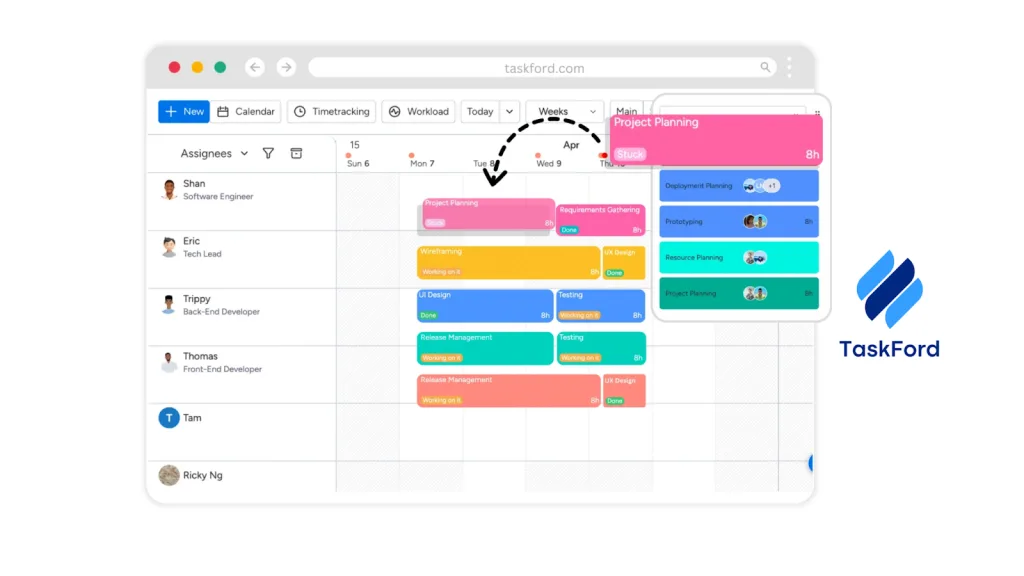
Resource Allocation: Tasks are assigned based on availability and workload, reducing the risk of individuals being overloaded with too many concurrent tasks across projects.
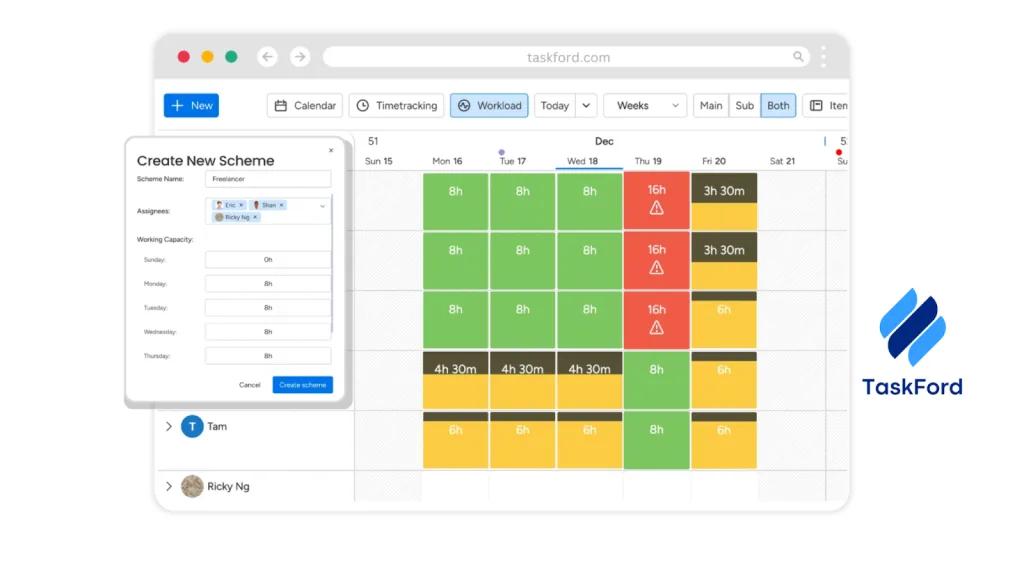
Workload View: Team capacity and task distribution are shown in one view, allowing overload and uneven work distribution to be identified before focus and efficiency decline.
Time Tracking: Compare planned effort with actual time spent on tasks, exposing rework, inefficiencies, and unplanned effort that increase labor costs.
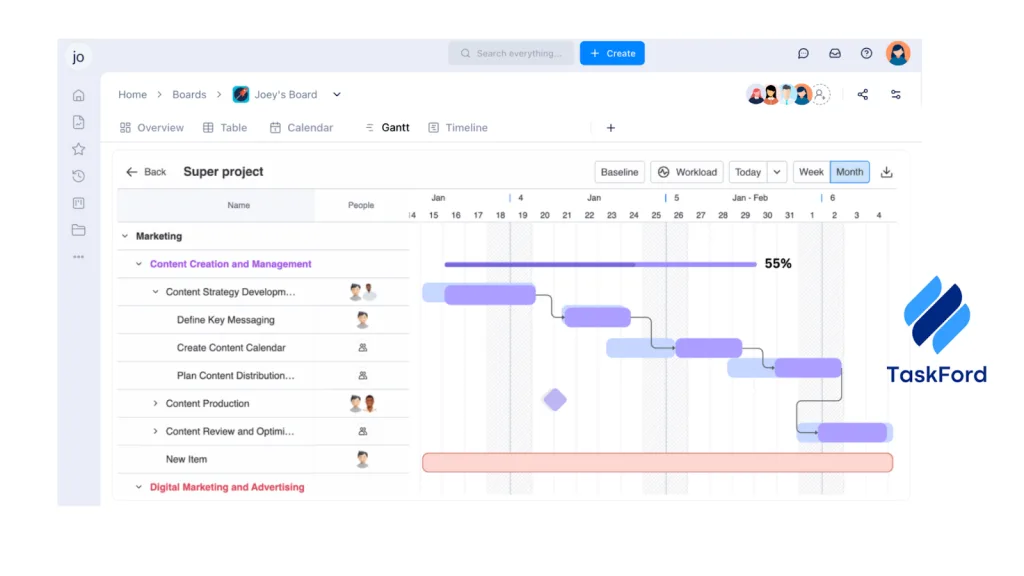
Gantt Charts: Visualize timelines, sequencing, and dependencies during planning, making bottlenecks and critical path risks visible early rather than after work is blocked. TaskFord also supports WBS Gantt charts
Reporting Dashboard: Teams can conclude the patterns that lead to delays, rising costs, and burnout, rather than treating each issue as an isolated problem.
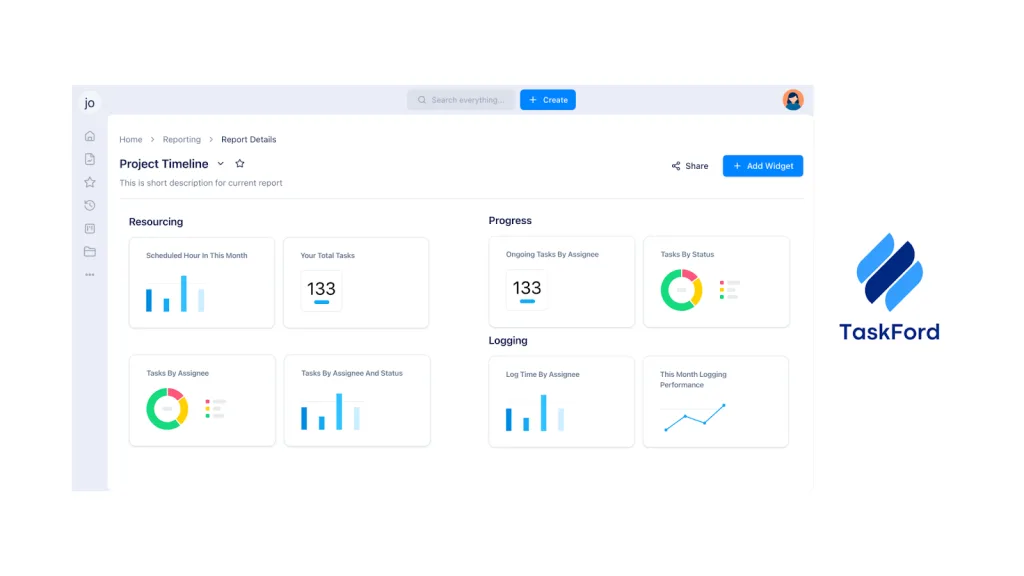
Unlike many resource planning tools that sit alongside project management software, TaskFord brings task execution and resource planning together in one system. This reduces handoffs between tools and supports more predictable delivery.
Conclusion
Overwork is often mistaken for a staffing or performance issue. More often, it is the result of weak resource planning and limited visibility across projects. When planning breaks down, teams absorb the cost through delays, rework, and fatigue long before problems appear in reports.
Improving delivery does not require working longer hours. It requires better resource management, clearer capacity planning, and systems that connect planning with execution. With an integrated work delivery platform like TaskFord, teams can move away from reactive scheduling and toward more predictable, sustainable delivery.