
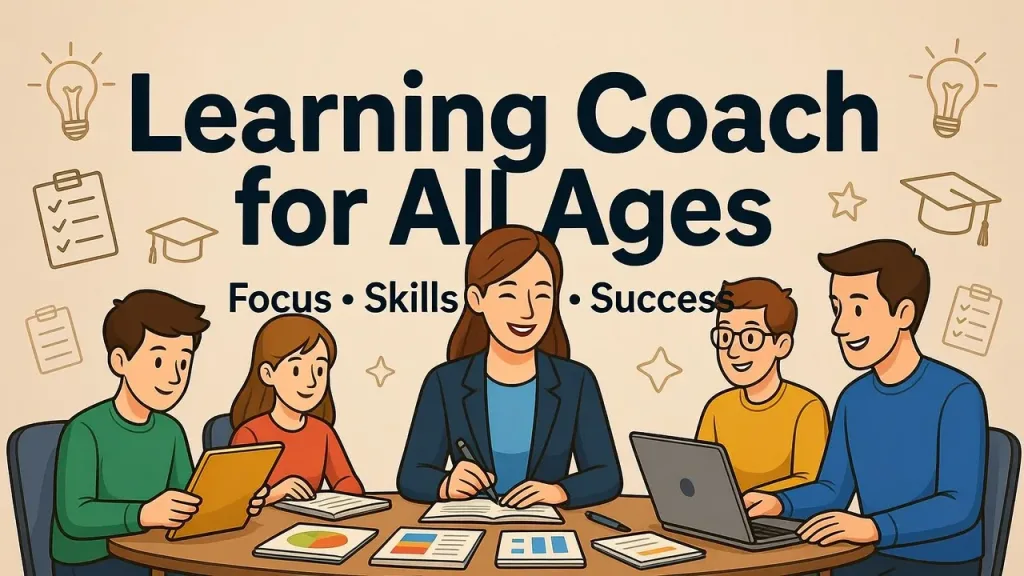
Learning is a journey that never truly ends. From children discovering the world around them, to teens navigating school and preparing for the future, and adults balancing work, family, and personal development—every learner faces unique challenges. These challenges can include difficulty staying focused, managing time effectively, organizing tasks, or applying knowledge in practical ways.
This is where a learning coach can make a real difference. Unlike tutors who focus solely on content, a learning coach provides personalized strategies, accountability, and skill-building techniques to help learners of all ages thrive academically, professionally, and personally.
In this article, we’ll explore what a learning coach is, how they work with children, teens, and adults, the proven benefits of learning coaching, and why this approach is gaining popularity in the United States.
What Is a Learning Coach?
A learning coach is a professional trained to help individuals develop effective learning strategies and executive function skills. While tutors and teachers often focus on “what” to learn, learning coaches focus on “how” to learn.
Learning coaching emphasizes:
- Time management and organization
- Goal setting and accountability
- Study skills and problem-solving strategies
- Confidence-building and motivation
This approach is flexible and adaptive, meaning it works for students struggling in school, adults seeking to improve work performance, and anyone wanting to enhance lifelong learning skills.
The coaching process is highly collaborative. A learning coach works alongside learners to identify strengths, recognize obstacles, and create personalized plans that make learning more manageable and effective.
Who Can Benefit From a Learning Coach?
One of the most remarkable aspects of learning coaching is its universal applicability. Whether you are a child, teenager, or adult, a learning coach can help you unlock your potential.
Children
Children often benefit from early intervention with a learning coach. Many kids struggle with focus, task completion, or organizing their schoolwork. A learning coach can:
- Teach foundational study habits
- Encourage positive learning behaviors
- Help children develop executive functioning skills, such as planning and prioritizing tasks
- Build confidence and resilience in academic and social settings
Teenagers
Teens face unique challenges, including academic pressure, time management, and social expectations. A learning coach helps teenagers:
- Develop structured routines for homework and study sessions
- Navigate college applications or career pathways
- Set realistic goals and milestones
- Improve self-regulation, motivation, and focus
By guiding teens through these critical years, learning coaches not only enhance academic performance but also support emotional and social growth, fostering independence and self-efficacy.
Adults
Learning doesn’t stop after school. Adults often juggle professional responsibilities, family commitments, and personal development goals. Learning coaches help adults:
- Enhance productivity and time management
- Master continuing education or professional certification programs
- Improve problem-solving and organizational skills
- Build confidence in lifelong learning and personal growth
Learning coaching provides adults with practical tools and strategies for success in both professional and personal life.
How a Learning Coach Works
The learning coaching process is tailored to the individual’s age, needs, and learning goals. While each plan is unique, most learning coaches follow a similar structure:
- Assessment of Needs
The first step involves understanding the learner’s challenges, strengths, and learning style. This might include reviewing school or work habits, assessing motivation levels, and identifying barriers to learning. - Goal Setting
Coaches work with the learner to define clear, achievable goals. Goals are specific, measurable, and aligned with the learner’s priorities—whether it’s improving grades, completing a project at work, or developing lifelong learning skills. - Strategy Development
Personalized strategies are crafted based on the learner’s needs. These may include time-blocking techniques, note-taking strategies, study routines, and organizational systems. - Skill Building
Coaches teach practical skills such as focus enhancement, memory techniques, and task prioritization. These skills are reinforced through consistent practice and real-life application. - Accountability and Support
Learning coaches provide ongoing support and accountability, ensuring learners stay on track and adjust strategies as needed. - Evaluation and Adaptation
Progress is regularly reviewed, and strategies are adapted to meet evolving needs. This ensures continuous improvement and sustainable growth.
The Benefits of Learning Coaching
Learning coaching offers tangible benefits for learners of all ages.
1. Improved Focus and Productivity
A common struggle for many learners is staying focused and completing tasks efficiently. Learning coaches provide techniques to minimize distractions, enhance concentration, and develop consistent study routines, resulting in better productivity.
2. Personalized Learning Strategies
Every learner is unique. Learning coaches create custom strategies that match individual strengths, learning styles, and goals. This personalized approach leads to more effective learning outcomes and long-term retention.
3. Goal Achievement and Accountability
Having a learning coach means having a partner who ensures you stick to your plans, meet deadlines, and track progress. Accountability is a major motivator for children, teens, and adults alike.
4. Enhanced Confidence and Motivation
Learning challenges can be frustrating, but coaches help learners build confidence through small wins. When learners see progress, motivation increases, creating a positive cycle of achievement.
5. Lifelong Learning Skills
Beyond immediate academic or professional goals, learning coaching equips learners with skills that last a lifetime, such as self-directed learning, critical thinking, and adaptability.
Learning Coaching Across Different Life Stages
Learning coaching is effective across all stages of life. Here’s how it can be applied:
- Early Childhood: Teaching attention skills, basic organization, and positive habits
- Middle School & High School: Developing study strategies, managing workloads, and preparing for standardized tests
- College & Young Adults: Enhancing executive functioning, balancing responsibilities, and preparing for career entry
- Professional Adults: Improving productivity, learning new skills, and managing continuing education or career transitions
- Lifelong Learners: Supporting personal growth, hobbies, and ongoing education
By adapting strategies to the learner’s developmental stage, learning coaching ensures age-appropriate support and meaningful progress.
Why Learning Coaching Works
Learning coaching works because it addresses the whole learner. Rather than simply providing answers, it develops skills and habits that enable learners to succeed independently.
Key Principles Behind Effective Learning Coaching:
- Active Learning: Learners are engaged in practical exercises, reflection, and application, which reinforces knowledge.
- Personalization: Strategies are tailored to the learner’s cognitive style, strengths, and preferences.
- Accountability: Regular check-ins and feedback create consistency and motivation.
- Executive Function Support: Time management, planning, and organizational skills are strengthened to overcome common learning obstacles.
- Confidence and Growth Mindset: Coaching nurtures a mindset that embraces challenges and views setbacks as learning opportunities.
Signs You Might Benefit From a Learning Coach
Learning coaching is helpful for anyone seeking improved performance, focus, and personal growth, but some specific signs include:
- Difficulty staying organized or managing time effectively
- Frustration with academic or professional progress
- Challenges with concentration or completing tasks
- Desire for structured support and accountability
- Interest in developing long-term learning skills
No matter your age or background, a learning coach can provide the tools and guidance to reach your goals.
How to Choose the Right Learning Coach
Selecting the right learning coach is crucial for success. Consider these factors:
- Credentials and Experience: Look for certified coaches with experience in your age group or field.
- Approach: Ensure the coach’s methodology aligns with your learning style and goals.
- Flexibility: A good coach can adapt strategies to suit changing needs.
- Communication: Clear, supportive, and constructive feedback is key.
- Track Record: Testimonials and success stories can provide insight into effectiveness.
Learning Coaching and Lifelong Growth
Learning coaching isn’t just about school or work. It’s about cultivating skills and habits that enable lifelong growth. By investing in a learning coach, you’re investing in your ability to:
- Learn efficiently and effectively
- Set and achieve meaningful goals
- Adapt to new challenges
- Build confidence and resilience
- Maintain motivation across life’s stages
The guidance, structure, and support offered by a learning coach can transform not just academic performance, but every aspect of life.
Conclusion
A learning coach can be a game-changer for learners of all ages—from young children forming foundational study habits, to teenagers managing academic pressures, to adults striving for professional and personal growth. By providing personalized strategies, accountability, and skill development, learning coaches help learners unlock their full potential.
If you’re looking to enhance focus, improve productivity, or build lifelong learning skills, a learning coach might be the partner you need to turn challenges into achievements.
No matter your stage in life, investing in a learning coach is investing in your ability to grow, succeed, and thrive.
Author Bio:
Emma Collins is a Certified Learning Coach with over 15 years of experience helping learners of all ages unlock their full potential. She specializes in personalized learning strategies, executive function support, and skill-building for children, teens, and adults. Passionate about education and lifelong growth, Emma combines practical tools, motivational guidance, and structured coaching to empower her clients to achieve academic, professional, and personal success.