
Vatican City — April 21, 2025 — Pope Francis, the 266th leader of the Roman Catholic Church and the first pontiff from Latin America, has passed away at the age of 88. He died peacefully at 7:35 a.m. in Vatican City after months of declining health. His death marks the end of one of the most transformative papacies in modern Church history.
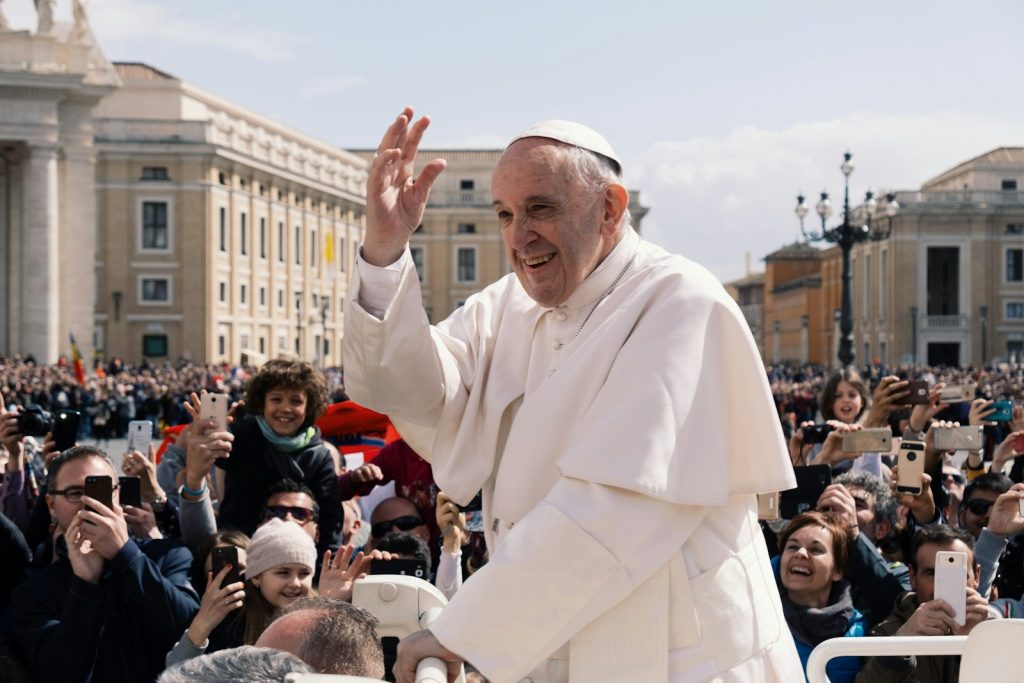
A Legacy of Firsts
Born Jorge Mario Bergoglio in Buenos Aires, Argentina, Pope Francis made history in 2013 when he was elected pope following the resignation of Pope Benedict XVI. He became the first Jesuit pope, the first from the Southern Hemisphere, and the first non-European pontiff in more than 1,200 years.
From the moment he stepped onto the balcony of St. Peter’s Basilica and asked the faithful to bless him before offering his own blessing, Francis set a new tone—one rooted in humility, compassion, and service. Throughout his papacy, he advocated for a Church that is inclusive, merciful, and active in addressing global crises.
Health and Final Days
Pope Francis had long dealt with health challenges, including issues with his lungs and knees. In early 2025, he was hospitalized with severe pneumonia. His condition grew increasingly serious during a 38-day hospital stay. Though he returned to the Apostolic Palace and continued working as much as possible, he remained physically fragile.
Despite his ailing health, Pope Francis delivered his Easter message on April 20, 2025—his final public address. The following morning, he passed away surrounded by close aides and Vatican officials.
The Road Ahead for the Church
With the passing of Pope Francis, the Vatican has entered a period known as Sede Vacante (the Seat Being Vacant), during which time the College of Cardinals will organize a conclave to elect a new pope. According to the Church’s tradition, the election of a new pontiff is expected within the next few weeks.
In anticipation of his death, Pope Francis approved revised papal funeral rites, which will now be followed. Millions of Catholics around the world are expected to mourn and pay tribute as his body lies in state at St. Peter’s Basilica.
A Pope of the People
Pope Francis will be remembered for more than just his historical firsts. He was a pope who called on the faithful to embrace mercy over judgment, inclusion over exclusion. He washed the feet of prisoners, welcomed refugees, and tirelessly championed the rights of the poor, the marginalized, and the forgotten.
He opened doors to conversations about climate change, economic inequality, LGBTQ inclusion, and interfaith dialogue. Though some of his views stirred controversy, his actions inspired deep admiration across cultures and religions.
Throughout his life and papacy, Francis lived by the words he often preached: “The name of God is mercy.” His legacy is one of compassion, reform, and relentless pursuit of a more human, more humble Church.
As the Catholic world now prepares to bid farewell to Pope Francis, many will carry forward his vision of a Church that listens, heals, and reaches out to the peripheries of society.
End of an Era. Beginning of a Legacy.