
World Trade Centers Association (WTCA) has identified Special Economic Zones (SEZs), such as ecozones under the Philippine Economic Zone Authority (PEZA) and local freeport zones, as essential catalysts for capturing the rapid influx of global Artificial Intelligence (AI) data center investments, an opportunity already in view for World Trade Center Metro Manila (WTCMM), which is set to mark a milestone year.
A Global Bottleneck Creates a Regional Opening
As primary Western markets experience growing regulatory hurdles, power grid strain, and physical land limits, economic zone regimes present a pre-industrialized solution to meet the explosive demand for digital infrastructure.
The global data center market currently operates around 10,000 facilities worldwide, with total capacity projected to double within the next five years. However, traditional tech hubs are reaching critical capacity caps.
In the United States, 30 states have passed measures restricting data center development due to public grid pushback and environmental considerations. Tier-1 regional hubs like Singapore have similarly faced physical and energy constraints, forcing global operators to seek alternative, high-growth destinations across the Asia Pacific region.
According to WTCA, this global supply bottleneck creates a direct opportunity for Philippine ecozone developers and operator hubs across key growth corridors like Cavite, Laguna, Bulacan, and Clark to capture high-value digital foreign direct investment (FDI).
With PEZA already hosting over 290 IT parks and specialized centers nationwide, the sector has emerged as a major economic pillar, attracting multi-billion-peso digital infrastructure pipelines from global hyperscalers. That footprint continues to grow. In July 2026, President Ferdinand Marcos Jr. signed Administrative Order 45, lifting a seven-year moratorium on new IT park and IT center applications in Metro Manila. Within days, five Metro Manila developments had applied for ecozone status, an early signal of how quickly developers are positioning themselves to capture the opportunity.
“Data centers make up essential infrastructure for artificial intelligence, cloud computing, digital commerce, and the broader digital economy,” said Scott Wang, WTCA Vice President, Asia Pacific. “They also represent a rapidly growing real estate and investment opportunity. Free Zones that can provide the right combination of infrastructure, incentives, and investment support are exceptionally well-positioned to attract this global industry.”
A Tri-Ecosystem Approach to De-Risking Investment
To bridge international capital with local sites, WTCA highlights a “tri-ecosystem” approach. By uniting the global access network and international credibility of the World Trade Center® (WTC®) brand with the fiscal incentives of economic zones and ready infrastructure, developers can de-risk hyperscale projects for international clients.
The three elements work together to sharpen returns as much as they reduce risk. The WTCA network connects developers directly to hyperscalers and capital sources, free zone incentives lower construction and equipment costs, and ready infrastructure shortens time to deployment. The WTC brand itself also carries a market premium, reflecting the added value international credibility brings to an investment.
The Highest-Value Real Estate Play
For Philippine property leaders and ecozone operators, this shift marks a significant evolution in industrial real estate. Beyond traditional IT-BPO office spaces and standard logistics warehouses, data centers offer developers the highest value-added return per square meter.
During the recent WTC Free Zones webinar “Unlocking Data Center Investment: The Role of the WTCA network in Connecting Free Zones and Developers,” speakers discussed how Free Zones can position themselves as investment-ready destinations for data center developers and operators, and how WTCA Members can play an active role as connectors, facilitators and partners in that investment journey.
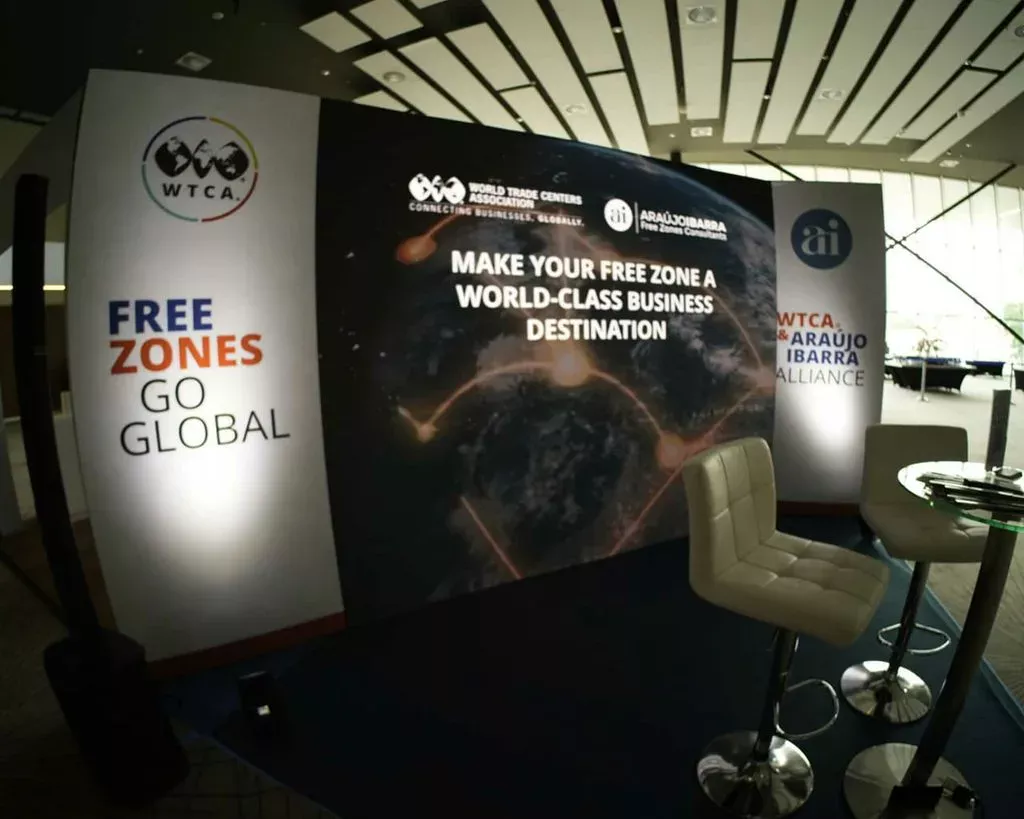
“In terms of return, a data center is fundamentally a real estate play,” said Martín Gustavo Ibarra, President and CEO of Araújo Ibarra International Business Consultants — WTCA’s partner organization behind the “Free Zones Go Global” initiative. “Data centers are a real estate business with the most concentrated value-added per square foot. When a city has a good data center system, it connects that city to the world and attracts high-value service industries like AI, fintech, cloud, and BPO.”
Built to Deploy at Scale
Modern AI workloads are driving facility requirements from legacy sizes to massive 200-megawatt and gigawatt-scale deployments, requiring immediate access to industrial land, pre-secured utility hookups, and underground fiber routes. Readiness varies by corridor, and power capacity in particular remains an active focus of government and private investment as Philippine zones compete for these larger, hyperscale-level deployments.
In the Philippines, World Trade Center Metro Manila (WTCMM) represents the local footprint of this global network. As WTCMM marks 30 years since opening in 1996, the organization is looking at how that network can extend beyond its Metro Manila home to support emerging economic zone opportunities.
“As WTCMM marks 30 years of connecting the Philippines to global trade, we’re keeping a close watch on how the WTCA network could support Philippine economic zones as this next wave of investment takes shape,” said Pamela D. Pascual, Chairman and CEO of WTCMM, and WTCA Board Director.
Through its global network spanning over 300 WTC locations in nearly 100 countries and territories, WTCA continues to facilitate cross-border partnerships, connecting international technology firms, hyperscale developers, and capital sources with qualified economic zones worldwide.