
Trading is one of the most powerful systems in Blox Fruits, allowing players to exchange fruits and build stronger inventories without relying on luck. However, success in trading depends on one key skill: understanding value.
In this guide, you’ll learn the latest value list, how trading works, and smart strategies to help you consistently get better deals.
Understanding Blox Fruit Trading Value
In trading, value is not just about rarity. It’s about what other players are willing to give for a fruit. Some fruits are rare but have low demand, while others are extremely popular and trade for much higher.
There are two main aspects of value. The first is actual value, which comes from a fruit’s power, rarity, and usefulness. The second is trading value, which is based on demand in the player market. The smartest traders always focus more on demand than just rarity.
Latest Blox Fruit Value List
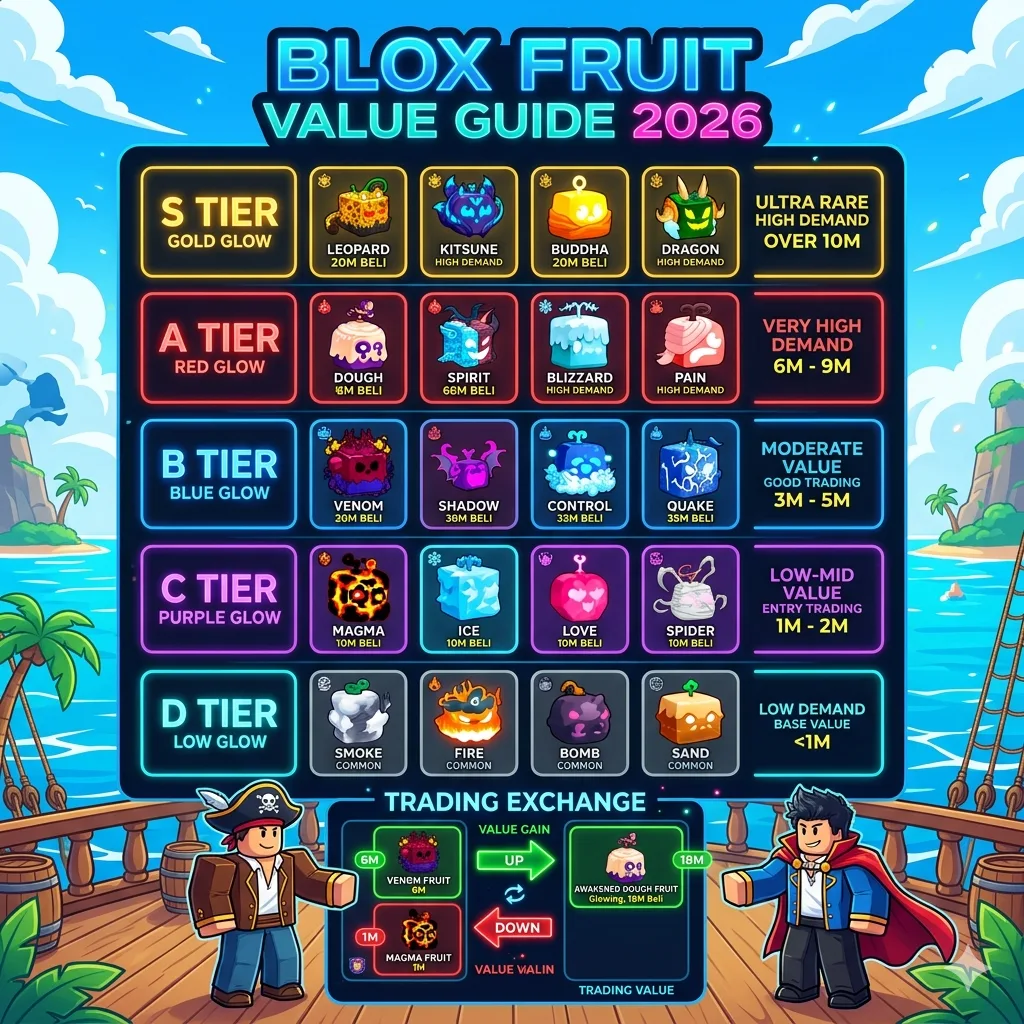
The trading market in blox fruit values can be divided into tiers based on demand and strength.
Top Tier (Highest Value)
Leopard, Dragon, Kitsune, and Dough dominate the market. These fruits are extremely rare and powerful, making them the most expensive in trades. Most high-level deals revolve around these fruits.
High Tier
Spirit, Venom, Control, and Shadow hold strong value. They are often used to support bigger trades or as main offers for mid-to-high deals.
Mid Tier
Blizzard, Rumble, Portal, and Buddha are balanced in both demand and usefulness. Buddha is especially popular because it helps players grind levels quickly, keeping its value stable.
Low Tier
Phoenix, Spider, Love, and Sound are less demanded but still useful in certain situations. These fruits are often used to balance trades.
Basic Tier
Light, Magma, Rubber, Chop, and Smoke are common and easy to obtain. Their value is low, and they are mainly used as fillers.
How Trading Works
Trading becomes available once you reach the Second Sea. Players can exchange up to four fruits at a time, but the system limits how unfair a trade can be.
This means you cannot trade a very low-value fruit for a top-tier fruit unless the values are balanced. Because of this, understanding value is essential for creating acceptable offers.
Permanent fruits are also part of trading and are extremely valuable since they stay unlocked forever.
Smart Trading Strategies
If you want to succeed in trading, you need more than just a good inventory. You need strategy.
One of the best approaches is trading for demand, not rarity. A fruit that players actively want will always be easier to trade and can often get overpaid.
Patience is another key factor. Many players rush trades and accept the first offer they get. Waiting for the right deal can significantly increase your profit.
Upgrading trades is also important. Instead of trying to jump straight to top-tier fruits, focus on slowly improving your inventory. Trade mid-tier fruits for slightly better ones, and repeat the process.
How to Spot a Good Trade
A good trade is one where you gain value, either immediately or in future potential.
If you receive fruits that are easier to trade or more in demand, the deal is often worth it even if the value looks equal. Trades that give you flexibility and more options are usually better in the long run.
You should also consider market trends. If a fruit is gaining popularity, it might be worth accepting before its value increases further.
Common Trading Mistakes
Many players struggle with trading because they make avoidable mistakes.
One major mistake is overpaying for hype. Just because a fruit is trending does not mean it is worth more. Hype can fade quickly, leaving you with a loss.
Another mistake is ignoring demand. A rare fruit with low demand can be harder to trade than a common but useful one.
Rushing trades is also a problem. Quick decisions often lead to regret, especially when you don’t fully evaluate the offer.
Example Smart Trades
To better understand trading, it helps to look at realistic examples.
Dough is often traded for a combination of Spirit and Venom. Leopard usually requires high-value fruits like Dragon plus additional adds. Buddha, despite being mid-tier, can sometimes trade higher because of its usefulness for grinding.
These examples show that value is flexible and depends on player demand.
Building a Strong Trading Inventory
A strong inventory is the foundation of successful trading.
Start by collecting mid-tier fruits that are easy to trade. These fruits give you flexibility and allow you to make frequent deals.
Gradually move toward higher-value fruits by making smart upgrades. Instead of focusing on one big trade, build your way up step by step.
Keeping a variety of fruits is also important. A diverse inventory helps you adapt to different trade offers and increases your chances of success.
The Role of Updates in Value Changes
Game updates can significantly impact fruit values in Blox Fruits. When a fruit gets buffed or reworked, its demand can increase overnight.
Smart traders pay attention to updates and act quickly. Getting a fruit before it becomes popular can lead to huge profits later.
Final Thoughts
Trading in Blox Fruits is all about understanding value and making smart decisions. The players who succeed are not always the luckiest, but the ones who know the market best.
Focus on demand, be patient, and always think before accepting a trade. Over time, you will improve your skills and build an inventory that allows you to trade for even the rarest fruits.