
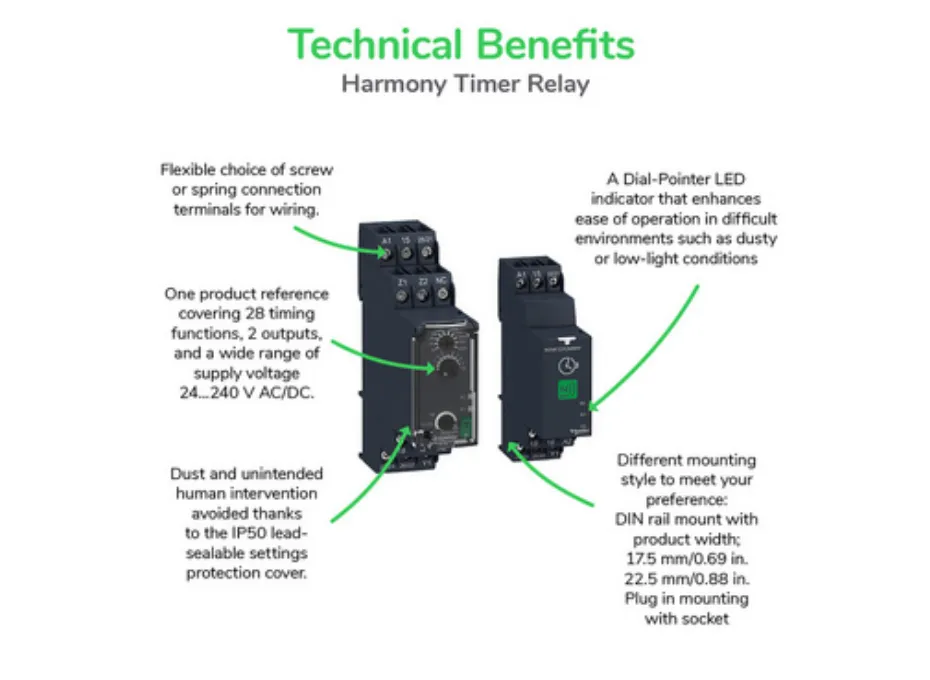
Modern industries depend on precise control, efficient operations, and dependable safety mechanisms. As manufacturing plants, commercial facilities, and automation systems continue to advance, electrical instruments and control devices must keep pace.
One technology that plays a critical role in improving workflow reliability is the timer relay. Using an industrial timer relay for automation helps streamline sequences, reduce manual intervention, and maintain consistent electrical control across interconnected equipment and systems. Whether used in conveyors, HVAC operations, lighting control, or protective interlocking, this device enhances both productivity and workplace safety through its advanced timing functionalities.
Let us explore how timer relay solutions enhance automation performance, safety, and operational consistency across industrial applications.
How Timer Relays Improve Operational Precision
A key reason industries incorporate a timer relay into their systems is the ability to control delays, intervals, and switching cycles with high consistency. This helps maintain predictable operations across electrical equipment, especially in environments where timing accuracy prevents disruptions.
Timer relays allow manufacturers to deploy automated sequences, such as gradual motor starts, delayed shutdowns, or controlled switching between circuits. These functions protect sensitive electrical devices from sudden surges and mechanical stress. Over time, this precision reduces wear, improves machine longevity, and ensures consistent production cycles.
In many applications, a programmable timer relay also reduces the need for manual monitoring. Operators no longer need to perform repetitive actions, thereby reducing the risk of human error and improving operational flow.
Enhancing Workplace Safety with Reliable Timing Control
Safety is a core priority in industrial and commercial environments. A well-configured timer relay enhances this by managing the timing of electrical loads and protective equipment. For example, it can delay energizing certain circuits until conditions are stable or ensure that devices shut down in a controlled sequence during emergencies.
In automated facilities, timer relays support safety interlocks that prevent workers from entering hazardous zones until the machinery has completely stopped. They can also stagger equipment startup to minimize sudden current draw, reducing the risk of electrical faults and overheating.
By employing precise timing in these safety processes, organizations create safer environments where downtime, accidents, and equipment strain are significantly reduced.
Versatile Applications Across Modern Industries
The versatility of a timer relay makes it valuable in multiple sectors. Industrial automation systems use these devices to maintain rhythm and synchronicity across conveyors, mixers, pumps, and robotic stations. In building management, they regulate lighting, ventilation, elevators, and backup power systems.
Agricultural operations deploy timer relays to automate irrigation cycles, feeding systems, and greenhouse climate controls. In energy and utility environments, these relays help coordinate switching operations and load management across critical equipment.
Timer relay devices are also employed in consumer-facing applications, such as escalators, public lighting, HVAC timers, and automatic gate operations, ensuring smooth function without continuous supervision.
Choosing the Right Type of Timer Relay
Modern timer relay solutions come in several variations, each suited for different workflows. ON-delay and OFF-delay relays support basic switching logic. Interval and cyclic relays help automate repetitive patterns. Multi-function relays incorporate several timing modes to meet complex control requirements.
When selecting a timer relay, organizations must consider factors such as:
- Required Timing Range
- Voltage Compatibility
- Load Characteristics
- Environmental Conditions
- Panel Space and Wiring Layout
Choosing the correct relay ensures compatibility with existing electrical equipment and prevents unexpected failures.
Improving Efficiency Through Integration and Automation
Integrating a timer relay into existing electrical systems helps optimize efficiency by reducing unnecessary power consumption, ensuring proper sequencing, and automating essential functions. With programmable timing features, organizations can deploy customized control logic that aligns with operational goals.
Automation becomes more reliable when timing is precise. The relay supports smooth process transitions, maintains equipment health, and reduces reliance on manual overrides. As industries increasingly employ intelligent devices, incorporating advanced relays strengthens overall system performance.
Why Partnering with a Reputed Electrical Brand Matters
As industries modernize, choosing high-quality electrical instruments becomes essential. Collaborating with a reputed electrical brand ensures access to reliable timer relay solutions that meet international safety standards, have consistent manufacturing quality, and offer long-term support.
Reputed brands also offer better engineering guidance, durable components, and dependable after-sales assistance, helping organizations maintain safety, efficiency, and uninterrupted operations.