
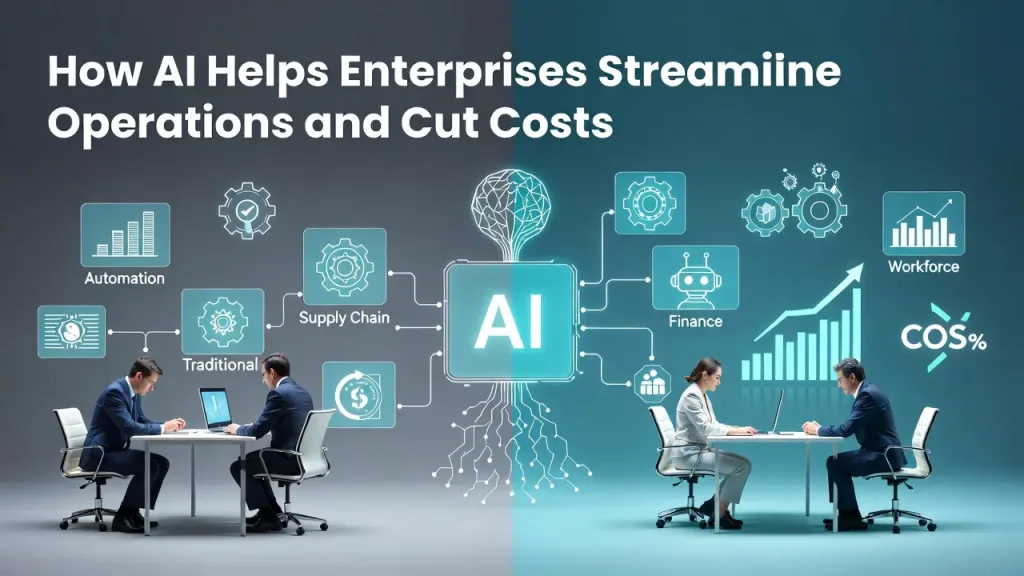
Enterprise operations are under steady pressure to do greater with much less. Rising fees, complex deliver chains, personnel challenges, and growing purchaser expectancies have made performance a top priority. This is wherein AI in operations is proving to be a game-changer. No longer confined to experimentation or innovation labs, AI is now deeply embedded in day-to-day employer operations, streamlining workflows, decreasing waste, and unlocking measurable fee financial savings.
From predictive preservation and clever automation to AI-driven deliver chain optimization, organisations are the use of artificial intelligence to make operations quicker, smarter, and extra resilient. This article explores how AI development services allows organizations streamline operations and reduce expenses, with sensible examples, actual-international use cases, and strategic insights. By the stop, you’ll understand where AI can provide the very best operational ROI and the way businesses can adopt it without disrupting existing systems.
AI-Powered Process Automation for Operational Efficiency
One of the maximum impactful uses of AI in operations is system automation. While traditional automation follows fixed policies, AI-powered automation learns from information, adapts to alternate, and improves over time. This makes it ideal for complicated agency environments.
In huge corporations, operational processes that include order processing, bill management, payroll validation, and compliance reporting regularly contain thousands of repetitive steps. AI combined with robotic manner automation (RPA) permits companies to automate those workflows quit-to-stop. Machine mastering fashions can read files, classify records, come across anomalies, and trigger moves without human intervention.
For example, companies using intelligent automation in financial operations have reduced invoice processing time from days to minutes while significantly reducing error rates. In HR operations, AI automates resume screening, onboarding workflows and employee data updates – reducing administrative costs and accelerating hiring cycles.
Most businesses fail to unlock full value because they automate isolated tasks. The real cost savings come when AI is used across the entire operational workflow, connecting finance, HR, procurement and compliance into a unified automation layer.
AI in Supply Chain and Logistics Optimization
Supply chains are one of the most price-intensive components of employer operations. AI in operations is reworking deliver chains with the aid of enhancing visibility, forecasting demand, and reducing inefficiencies throughout procurement, inventory, and logistics.
AI-driven call for forecasting analyzes historic statistics, seasonality, marketplace developments, and outside indicators to expect call for extra appropriately. This allows companies to reduce extra inventory, avoid stockouts, and optimize warehouse utilization. In logistics, AI-powered direction optimization lowers gasoline fees and transport times through dynamically adjusting routes based on visitors, weather, and demand styles.
Predictive analytics additionally helps organisations become aware of deliver chain dangers early, which include supplier delays or geopolitical disruptions, that allows you to take corrective action before costs increase.
Predictive Maintenance and Asset Optimization
For asset-heavy industries like production, energy, transportation, and utilities, maintenance charges are a main operational price. AI in operations enables predictive protection—one of the maximum direct methods organisations cut prices.
By reading sensor data, device logs, and ancient performance, AI fashions predict while device is likely to fail. This lets in protection teams to intervene earlier than breakdowns arise, keeping off pricey downtime and emergency upkeep. Compared to scheduled preservation, predictive preservation reduces unnecessary servicing whilst extending asset lifespan.
Enterprises enforcing AI-pushed preservation strategies have visible discounts in renovation prices and good sized enhancements in device uptime. This immediately impacts productivity and operational continuity.
Workforce Optimization and Intelligent Resource Planning
Labor is one of the highest operational fees for organizations. AI in operations helps optimize personnel planning, scheduling, and productivity—without reducing workforce excellence.
AI-powered personnel analytics analyzes workload styles, talent availability, and demand fluctuations to create smarter staffing plans. In customer operations, AI predicts call volumes and adjusts staffing levels. In production and logistics, AI aligns hard work allocation with production and shipping needs.
AI also complements employee productivity by way of acting as a virtual assistant—automating reporting, answering internal queries, and guiding employees via complex strategies. This reduces time spent on non-center duties and improves typical performance.
AI-Driven Cost Control and Financial Operations
Cost leakage is often hidden in the company’s financial operations, duplicate payments, unapproved expenses, inefficient procurement and inaccurate forecasting. AI in Operations brings intelligence to financial workflows, making cost control possible in real time.
AI models analyze consumption patterns to discover anomalies, pick out financial savings opportunities and routinely put into effect compliance. In procurement, AI evaluates provider overall performance, charge tendencies and agreement phrases to advocate cost-powerful procurement strategies.
Businesses are also using AI for cash flow forecasting, scenario planning and budgeting. By simulating multiple operating scenarios, managers can make informed decisions that balance growth and cost efficiency.
The advantage of AI-driven financial operations lies in proactive cost management. Instead of reacting to exceedances, companies prevent them before they occur.
Operational Decision-Making with AI and Advanced Analytics
Beyond automation, AI in operations strengthens decision-making throughout the organisation. Advanced analytics structures flip huge operational facts into actionable insights—quicker and more correctly than conventional reporting.
AI-pushed dashboards offer actual-time visibility into KPIs, inclusive of operational fees, throughput, efficiency, and hazard. Machine gaining knowledge of models understand styles human beings might probable omit, permitting leaders to reply to issues in advance than they amplify.
For example, AI can highlight which operational bottlenecks are driving cost overruns or which system changes will deliver the best ROI. This statistics-pushed approach replaces instinct with evidence.
AI shifts corporations from reactive operations to predictive and prescriptive operations, in which decisions are guided by way of destiny results as opposed to beyond performance.
Conclusion
AI is no longer an experimental generation; This is a demonstrated operational advantage. As groups face growing price pressures and operational complexity, operational AI offers a practical direction to performance, flexibility, and scalability. From wise automation and predictive protection to supply chain optimization and economic fee manage, AI grants measurable financial savings even as improving overall performance.
The key to fulfillment lies in strategic adoption. Companies that start with excessive-effect use cases, integrate AI into existing workflows, and attention on long-term cost consistently outperform those that deal with AI as a standalone tool. By combining human expertise with device intelligence, corporations can function better and reap sustainable fee reductions.
If you’re thinking about how you may streamline your operations and cut expenses, now could be the time to keep in mind in which AI could have the most important impact. Start small, degree results and scale up with confidence.