
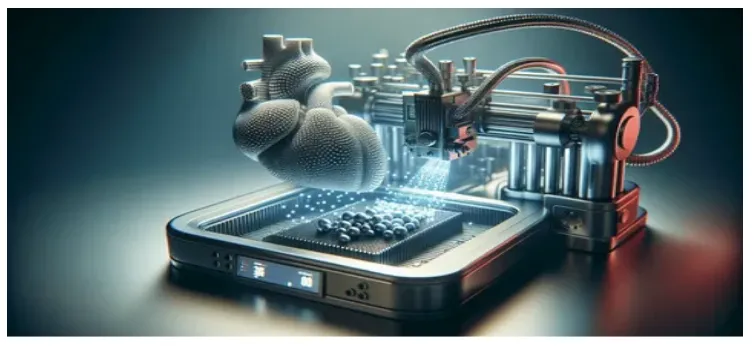
Alright, strap in. We’re not just gawking at a couple of flashy gadgets here—this is an all-out tech upheaval, the kind that’ll leave you cross-eyed if you try to keep up. Fintech, Biotech, and 3D Printing (and, come on, who actually calls it “Additive Manufacturing” outside a boardroom?)—these aren’t just random jargon some dude drops at a startup mixer. These are the heavy hitters, bulldozing the rulebook for banking, medicine, and making, well, literally everything.
Let’s be honest: this isn’t slow, polite progress inching forward—this is a full-force tsunami of transformation. Industries like Fintech, Biotech, and 3D Printing aren’t just adding tweaks; they’re bulldozing old systems and rebuilding the future from scratch. Money is being reinvented. Healthcare is becoming hyper-personalized, almost gene-level—straight out of an X-Men plot. Manufacturing? We’re way past assembly lines; people can now create everything from custom shoes to 3D sign letters right in their living rooms. Wild times, man.
1. Fintech: Democratizing the Financial Landscape
Fintech’s basically the tech world crashing the finance party—apps, data, internet, the whole shebang—making money stuff way quicker, cheaper, and honestly, fairer for regular folks. Instead of bowing down to the old-school banking overlords, people have way more control now. You want to split rent, invest in some weird crypto coin, or just keep your latte budget in check? There’s an app for that, and you don’t need to sit in a fluorescent-lit bank branch to get it done.
Now, about blockchain and DeFi—those are the rockstars of the Fintech scene right now. Blockchain’s this un-hackable digital ledger thing, shared across a whole crowd of computers. No single greedy middleman, no funny business. It’s all out in the open (well, as open as nerdy code gets), so you don’t have to trust some faceless suit.
And smart contracts? Oh man, those are wild. Imagine a legal agreement, but instead of lawyers and piles of paperwork, it’s all code. Stuff happens automatically—like, you hit the milestones, the money moves, no one’s waiting weeks for someone to stamp a form. Property, insurance, whatever—it’s just click, done.
DeFi is where it gets really spicy. No banks, no gatekeepers. Just you and the internet, swapping, lending, borrowing, all peer-to-peer. Suddenly, people who couldn’t even open a bank account can play the same money games as Wall Street suits. That’s pretty damn cool.
And global payments—don’t even get me started. Used to take days and a chunk of your cash just to send money overseas. Now? Blockchain and stablecoins have it flying around the world in minutes, and you barely notice the fees. Migrant workers, small businesses, international hustlers—they’re all winning.
Honestly, it’s like the financial system finally got dragged kicking and screaming into the 21st century. About time.
AI and Hyper-Personalization in Fintech
AI in Fintech is basically the brains behind the whole operation. It’s not just some fancy add-on; it’s the reason your banking app seems to “know” you better than your own family.
Let’s talk about lending for a sec. Remember the old days when your credit score was everything? Yeah, not anymore. Now, AI’s nosy little algorithms dig into all your habits, from how often you Venmo your friends for pizza to weird stuff like how you shop online at 3 a.m. The result? Way more accurate insights on whether you’ll pay that loan back. Honestly, it’s almost creepy—but hey, at least people with non-traditional backgrounds don’t get shafted as much.
Now, robo-advisors—man, these things are wild. Instead of forking over cash to some suit who claims to know the stock market, you get this digital brain that shuffles your investments around, chasing opportunities and dodging disasters in real time. And it costs, like, way less than a human ever would. Plus, you don’t have to fake understanding what “diversified portfolio” means at brunch.
Security? AI’s got its eye on every single transaction, like a hawk on Red Bull. The second something looks off—bam, it’s flagged. No more waiting for Steve from Fraud Prevention to clock in next Tuesday. The AI’s already on it, probably before you even notice. That’s how you keep people actually trusting these digital banks with their cash.
Bottom line? All this AI jazz in Fintech is trying to make money stuff way less of a headache for everyone. Less paperwork, more personalization, and, let’s be real, a lot less human error. Who wouldn’t want that?
2. Biotechnology: Rewriting the Code of Life
Fintech technology is altering the way we manage money, but Biotechnology is radically altering our biology and health. The paradigm is no longer a generalized approach of a single size fits all, but rather the Personalized Medicine, where treatments are created to fit in a person with his or her unique genetic makeup. The very nature and potential of Biotechnology make it a frontier of breakthrough.
Precision of CRISPR-Cas9 in Biotechnology.
The CRISPR-Cas9 system is perhaps the greatest life science discovery made in decades. It can serve as molecular scissors to enable scientists to edit DNA with more precision than ever before, which is a fundamental feature of modern Biotechnology.
Treating Genetic Diseases: CRISPR is a potential solution to permanently treat one-gene diseases, like sickle cell disease, by removing the defective piece of DNA and putting in a healthy one. This takes treatment to the next level of management of the symptoms to actual curing of inherited diseases all through Biotechnology.
CAR T-Cell Therapy: In cancer therapy, Biotechnology can be used to remove T- T-cells of a patient, genetically modify them in a laboratory to be more effective in recognizing and destroying cancer cells, and then put them back. This is an effective, personalized treatment of cancer.
Bio-Manufacturing and Synthetic Biology: Researchers are writing programs to program microorganisms (such as yeast or bacteria) to make miniature factories. The biological systems can be programmed to yield complex molecules, sustainable fuels or particular, high-value pharmaceutical components more effectively and efficiently than traditional chemistry can, and can be stretched far beyond the medical profession.
Genomics and Data-Driven Health in Biotechnology
Genome sequencing in human beings has fallen extremely, and there has been an explosion in Genomics that is generating personalized health, which is just one of the things that is happening to Biotechnology.
Pharmacogenomics: The topic is interested in the activity of the genes of an individual in the predetermination of their responsiveness to drugs. This type of analysis would help the doctors to prescribe the most efficient drug with the correct dosage to be taken, which will reduce the side effects of these drugs and will also eliminate the old system of prescription through trial and error.
Early Disease Detection: modern diagnostic technologies, typically with the help of AI-based algorithms based on large volumes of genomic data, have the capacity to uncover biomarkers in blood or tissues that reflect the occurrence of diseases (cancer or Alzheimer’s, etc.) many years before they manifest themselves. It helps in good, proactive intervention in Biotechnology.
Non-Invasive Diagnostics (Liquid Biopsies): There are kinds of blood tests currently under development that will help detect tumour DNA fragments in the blood. This will make it easy to screen for early cancer and monitor treatment efficacy without necessarily subjecting the tissue biopsies to invasive procedures.
Biotechnology is turning healthcare into a proactive and preventive rather than a reactive one (treatment of sickness).
3. 3D Printing: Localizing and Customizing Manufacturing
Additive Manufacturing or 3D Printing technology is transforming the world in terms of the construction of physical objects. The 3D Printers also provide complexity at no additional cost by forming objects layer after layer instead of subtractive (cutting away). The technology offers a much-needed physical connection to the digital world that will be a turning point in the process of creating goods.
The Supply Chain Revolution with 3D printing.
The localised aspect of 3D printing is essentially threatening the conventional global supply chain model.
Digital Inventory and On-Demand Production: With the digital design files, companies can keep the files in warehouses rather than spending a lot of money on costly physical inventory. Local printing of parts can be done on demand whenever needed anywhere. This will significantly lower the freight expenses, decrease the lead times, and enhance the resistance to global supply chain crises with the help of 3D Printing.
Waste Reduction and Sustainability: 3D Printing is by far a highly sustainable manufacturing process since it uses only the material necessary to print the object, which is much lower than the materials wasted by subtractive manufacturing processes.
Mass Customization: The technology enables the production of unique one-off products at an economical level. This potential to create products precisely to the consumer (a customized protective equipment, a fashion accessory, a consumer-designed electronic device) gives smaller companies an advantage and promotes innovation with the help of 3D Printing.
Critical Applications in Medicine via 3D Printing
- The accuracy and personalization, which are provided by 3D Printing, have the strongest influence in the medical field.
- Custom Prosthetics and Orthotics: 3D Printing technology has enabled the creation of cheap, light, and anatomically correct prosthetic limbs, which are easily custom-printed and designed to fit specific patients, instead of costly, generic, and poorly-fitting devices.
- Surgical Training Models: Surgeons have printed out accurate patient-specific models of complicated organs or tumours using MRI or CT enhancing. They can practice with these models and thus perfect their approach by the time the actual surgery becomes a reality and many more successes are met.
- Bioprinting ( The Convergence Point): This is the combination point of 3D Printing and Biotechnology. Researchers can print living tissue scaffolds, vascular structures and crude organ models in special bio-inks using live cells. Although the development of fully functional, complex organs is still a far-off wish, Bioprinting has the final chance of resolving the current organ donor shortage experienced in the globe.
4. The Powerful Synergy: The Interconnected Future
These technologies will not bring the most significant changes, but rather their synergistic cooperation. The real disruptive force is at the crossroads of Fintech, Biotechnology, and 3D Printing.
Technology 1
Interacts With…
Example of Combined Impact
Detailed Explanation
Fintech
Biotechnology
Trialization of IP/Clinical Trials.
The blockchain technology of Fintech can be deployed in tokenizing (fractionalizing ownership of) costly clinical trials or intellectual property (IP) by biotechnology companies. This enables thousands of smaller, worldwide investors to directly finance medical research and democratize the R&D funding and breakthroughs.
3D Printing
Biotechnology
Localized Drug Production & Lab Equipment.
The application of 3D Printing by researchers involves the fabrication of very customized and complex microfluidic chips, bioreactors or laboratory tools at the location. These machinery Biotech tools are then used to produce new and personalized drugs or test compounds at a very fast pace, accelerating the process of drug discovery.
Fintech
3D Printing
Computerized Digital Royalty Payments.
A designer adds his or her file of a 3D printing model on a blockchain. A Smart Contract (Fintech) is a concept that guarantees the designer automatic payments in a small royalty each time the file is downloaded or printed anywhere in the world (3D Printing).
All Three
Customized Healthcare Offering.
A Medical Ecosystem Closed Loop.
Biotechnology identifies the pharmacogenomic requirements of a specific patient. 3D Printing is a technique that creates a custom dosage pill or device of a particular patient. The supply chain of the drug is monitored on a blockchain ledger by Fintech and ensures that a drug shipment is authentic and the whole transaction and patient information are safe and open to audit.
It is this convergence that has led to disruptive vertically integrated businesses that dominate the whole value chain, from design (digital) to payment (Fintech) to physical creation (3D Printing).
5. Challenges and Ethical Roadblocks
These technologies present unprecedented opportunities, and they also present large-scale ethical, regulatory, and security issues that should be handled with responsibility, particularly within the sectors of Fintech, Biotechnology, and 3D Printing.
A. Fintech Challenges
Regulatory Friction: DeFi and crypto are often moving faster than government regulators can establish any meaningful consumer protection systems and anti-money laundering systems, causing an instability and risk phase to Fintech users.
Systemic Risk: The high level of interconnectedness that centralized Fintech platforms trigger and the possibility of cascading failures in decentralized protocols create new systemic risks to the global economy.
B. Biotechnology Challenges
The Ethical Line of Gene Editing: The most pressing is the possibility of abuse of CRISPR to non-therapeutic improvements. This brings serious issues of social equity, human evolution, and the place of science in Biotechnology.
Data Privacy and Ownership, Genomic data is the most sensitive type of data. Insurance companies or employers should not use this information against individuals and the most important thing is to make sure that individuals have ownership and control over their genetic information and ensure that they are used in responsible ways.
C. 3D Printing Challenges
Intellectual Property (IP) Theft: The digital design files are easily copied and shared. The complex legal issue that 3D Printing is confronted with is safeguarding the designers and manufacturers against digital piracy when the production tool is spread throughout the world.
Material Quality and Standardization: It is important that 3D Printed parts can be of the same quality, strength, and safety across all the machines and materials because in such critical industries as aerospace and medical devices, this is vital.
Final Thought:
The change that is being initiated by Fintech, Biotechnology, and 3D Printing is non-negotiable and irreversible. These three pillars are a radical change to a more decentralized (Fintech), personalized (Biotechnology), and localized (3D Printing) world.
The challenge to the leaders is not to observe these trends, but to find the points of convergence where they intersect to bring forth completely new business models. With the adoption of the secure transaction models in Fintech, precision in Biotechnology, and the ability to produce tailored products and services in 3D Printing, companies can stop making small changes and start creating the disruptive services and products that will characterize the remainder of this century. The preparation phase is passed, the integration phase is here.