
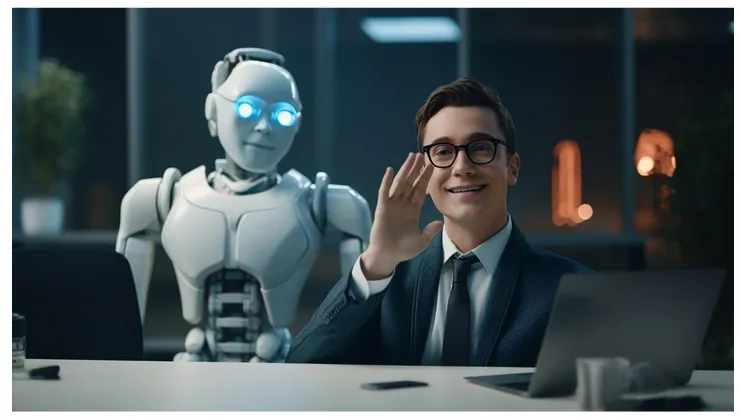
Manufacturing floors are noisy, chaotic, and relentless. Think of it as a rock concert, but instead of guitars, you get conveyor belts, machines that never sleep, and a production schedule that’s tighter than your jeans after a buffet.
In this fast-paced mess, line supervisors are the rockstars. They keep things moving, spot problems before they explode, and make sure no one installs a car door where an engine should be.
But even rockstars need a good manager.
Enter smart assistants powered by GenAI. These aren’t your average voice bots that struggle to play your favorite playlist. These are next-gen, factory-trained, caffeine-free assistants designed to keep your floor humming and your supervisors two steps ahead of disaster.
Behind these innovations, a generative AI development company plays a crucial role—building intelligent solutions that are tailored for manufacturing environments and helping supervisors stay ahead in high-pressure production lines.
Meet the Smart Assistant – Your Supervisor’s New Best Friend
Imagine a supervisor juggling quality issues, machine hiccups, absenteeism, and a never-ending stack of spreadsheets. Then picture them talking to a smart assistant:
“Hey, Genie, what’s the OEE for Line 3?”
“Overall Equipment Effectiveness for Line 3 is 84%. Minor drop due to maintenance delay at Station 5. Want me to notify maintenance?”
Boom. Actionable insight without lifting a finger or thumbing through a dozen dashboards.
This is what AI in Manufacturing looks like now. It listens, learns, predicts, and—best of all—responds fast.
The smart assistant doesn’t just answer questions. It connects dots across systems, highlights risk, and suggests action. It’s like having a production analyst, planner, and therapist rolled into one—minus the awkward small talk.
Real Talk: Supervisors Don’t Have Time to Think
Let’s face it. Line supervisors aren’t exactly lounging with lattes. They’re constantly walking the floor, putting out fires, solving issues that popped up five minutes ago, and getting yelled at because someone’s barcode scanner decided to die again.
They don’t have time to open ten apps or dig through three Excel sheets just to know why Line 2 is producing boxes instead of bottles.
Smart assistants fix that. They answer questions as they come. They flag anomalies before they become headline-worthy disasters. They even suggest optimizations that a human might miss.
It’s not about replacing supervisors. It’s about giving them some digital muscle so they can think faster, act faster, and maybe—just maybe—get a lunch break.
The Sarcastic Genius Behind GenAI
The best part? These assistants get smarter the more you use them. Ask enough questions, and they start offering insights before you even ask.
It’s like that coworker who finishes your sentences. But this one doesn’t take your parking spot or microwave fish.
For example:
“Genie, why is packaging behind schedule?”
“Because the carton feeder jammed for 18 minutes. Suggest cleaning schedule increase. Also, Brian used duct tape again. Want me to flag him for retraining?”
Now, that’s AI with personality. Not exactly Siri. Not quite HAL. Somewhere in between, but with less murder and more productivity.
Less Dashboard, More Decisions
A lot of smart factories already have sensors. Tons of them. They measure pressure, temperature, vibration, uptime, downtime, uptime pretending to be downtime—you name it.
But the data alone isn’t helpful if no one knows what to do with it.
GenAI-based assistants turn that data into real, usable info. Instead of dashboards filled with blinking numbers, you get:
- “Machine 42 is likely to fail in 3 hours.”
- “Shift C productivity dropped by 12% yesterday. Correlates with material batch X.”
- “You’re about to hit the scrap rate threshold for regulatory compliance. Recommend halting Line 1.”
It’s like having a snarky spreadsheet that actually makes sense.
The Surprise Benefit: Supervisors Stop Guessing
Before smart assistants, half the job was detective work. Why’s there a bottleneck? Why are defect rates up? Who turned off the compressor? Was it Brian again?
The supervisors guessed. Then they made decisions based on half-facts and gut feelings.
That worked. Sort of. Until it didn’t.
Now? They just ask. The assistant pulls data from MES, ERP, and your favorite plant gossip source (probably not the last one) and spits out the answer. No guesswork. No hunches. Just informed decisions that don’t feel like a coin toss.
AI in Manufacturing Isn’t Just Buzz – It’s the Cheat Code
Manufacturers don’t care about buzzwords. They care about meeting targets, avoiding downtime, and making sure Friday doesn’t end in overtime.
AI in Manufacturing is earning its keep. It’s helping line supervisors cut reaction time. It’s spotting issues faster than seasoned engineers. And it’s nudging teams into action before KPIs go south.
A supervisor with a GenAI assistant can:
- Detecting inefficiencies across shifts.
- Compare performance across lines instantly.
- Auto-flag safety risks based on past incidents.
- Predict when machines are due for a tantrum.
Basically, it turns a reactive job into a proactive one. Less firefighting. More decision-making. Less stress. More control. And yes, possibly fewer “surprise” audits.
Who Gets to Be the Smart One Now?
Let’s flip the script. It used to be that only the most experienced supervisors could spot issues before they happened. Now, even newer ones can look like seasoned pros—because their assistant’s whispering all the right moves in their ear.
Training time shrinks. Mistakes drop. Teams get better. And Brian? He finally stops duct-taping things because the assistant reminds him of the last three times it failed.
So… Should You Be Worried About AI Taking Over?
Short answer: No.
Long answer: Also no, but with more sarcasm.
Smart assistants aren’t here to take jobs. They’re here to make jobs suck less. They don’t clock in. They don’t know how to run the floor. They just feed line supervisors what they need to stay sane and effective.
You still need people. You just don’t need them buried in reports trying to predict why the label printer suddenly thinks it’s Picasso.
Final Thoughts: Let AI Do the Boring Stuff
Line supervisors didn’t sign up for admin work. They didn’t dream of a life filled with data entry and guessing games.
They signed up to run things, fix things, and keep the factory humming.
Smart assistants powered by GenAI? They’re here to take the boring stuff off their plate. The lag. The guesswork. The “I think it’s fine but not sure” moments.
And honestly, if AI can make even one day go smoother on a noisy, busy floor, that’s a win worth bragging about.Maybe not to your boss. But definitely to Brian.