
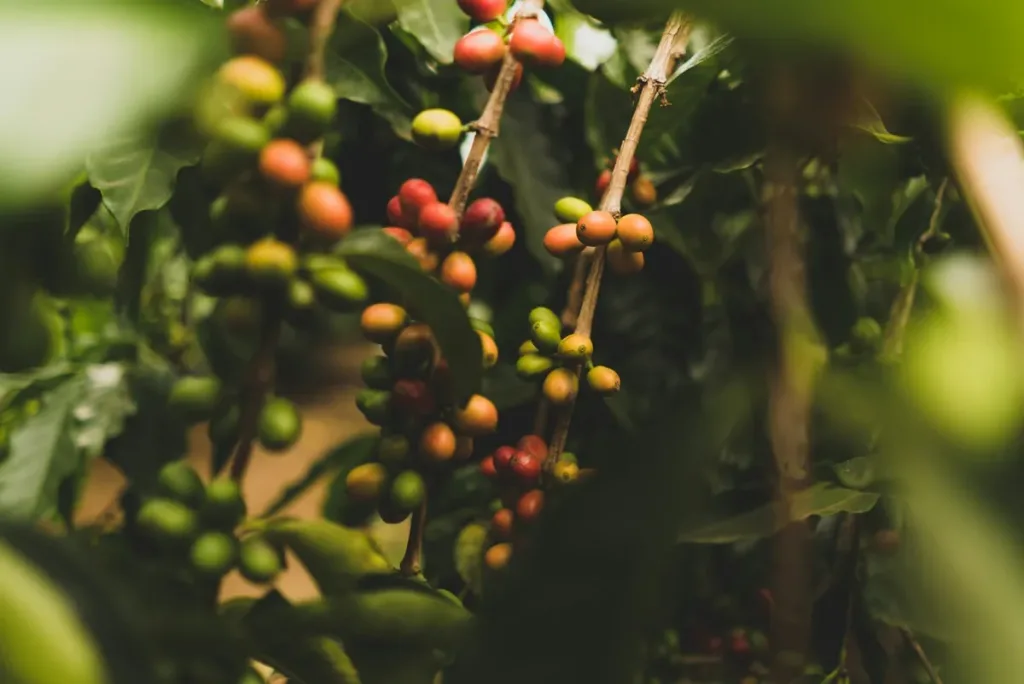
Introduction: Why Coffee Farming Matters Now
Coffee remains one of the world’s most traded agricultural commodities, supporting livelihoods in over 70 countries. In the Philippines, renewed interest in coffee farming and specialty production has flourished, particularly with programs supporting sustainable coffee production. As global demand for high-quality beans rises, farmers who adopt best practices can capture premium markets.
This guide compiles practical, field-proven methods—augmented with up-to-date data—to help smallholders, cooperatives, and agripreneurs succeed in modern coffee production.
1. Choosing Coffee Varieties: Arabica, Robusta, Liberica, and More
The first major decision is which coffee variety suits your land and market. The two primary species are Arabica and Robusta:
- Arabica (Coffea arabica): Grown typically between 800 and 2,000 meters above sea level, Arabica produces delicate, flavor-forward beans. It is more susceptible to pests and climate variability, but command a higher price in specialty markets.
- Robusta (Coffea canephora): Thrives at lower altitudes, withstands warmer climates, and delivers higher yields. It has a stronger, more bitter flavor profile.
- Liberica / Excelsa: Niche varieties that offer unique flavor notes and local value. In the Philippines, Barako (Liberica) has deep cultural roots and can be part of a value niche market.
Choosing the right variety means aligning coffee production with your altitude, climate, and target buyers.
2. Site Selection & Soil: The Foundation of Healthy Coffee
Selecting the right site is critical in coffee cultivation. Key factors include:
- Altitude & climate: For Arabica, aim for cooler, higher-elevation zones (≥ 1,000 m). Robusta tolerates elevations under 1,000 m.
- Soil properties: Well-drained loamy soil with pH 5.5 to 6.5 is ideal.
- Water availability: Year-round rainfall between 1,200 and 2,000 mm is preferred; irrigation helps buffer dry spells.
- Shade and biodiversity: Integrating native shade trees improves bean quality, reduces heat stress, and supports sustainable coffee farming.
Before planting, conduct soil tests and amend the soil with organic matter or lime as needed.
3. Planting & Propagation Methods
There are two main propagation strategies in coffee farming:
- Seed propagation: Used widely for both Arabica and Robusta. Seeds are pre-germinated in a nursery and later transplanted.
- Vegetative propagation (cuttings/grafting): Used to replicate desired traits like disease resistance or flavor consistency.
In the nursery stage, seedlings should be hardened and acclimatized over several weeks before transplanting. Spacing depends on variety and management strategy: 2.0m x 2.0m is common; intensive farms may go denser, while agroforestry systems may space wider.
4. Farm Management: Nutrition, Pruning, and Pest Control
To maximize yield and quality, consistent farm management is essential:
- Fertilizer management: Use soil tests to guide nutrient application. A balanced N-P-K formula with micronutrients is commonly applied in split doses. Microbial or organic fertilizers can support soil health.
- Pruning & canopy management: Periodic pruning enhances airflow and light penetration, which helps reduce fungal disease and supports bean maturity.
- Pest & disease control: The biggest threats include coffee leaf rust (Hemileia vastatrix) and the coffee berry borer (Hypothenemus hampei). Implement Integrated Pest Management (IPM): monitoring, biological control, resistant varieties, and targeted chemical use only when necessary.
Adopting sustainable coffee farming practices helps reduce reliance on synthetic chemicals and improves long-term soil resilience.
5. Harvesting Practices & Timing
Correct coffee harvesting ensures better quality and market value:
- Selective picking (only ripe cherries) is preferred for premium beans; multiple passes every 7 to 14 days help maintain quality.
- Strip harvesting (picking all cherries at once) is faster but risks lower cup quality.
In the Philippines, Arabica harvest typically occurs from October to February, while Robusta peaks from April to June, depending on the region.
6. Coffee Processing Methods: Washed, Natural, and Honey
What you do after harvest strongly influences cup flavor. The main coffee processing methods include:
- Washed (Wet) processing: Cherries are pulped, fermented to remove mucilage, then washed. This method tends to produce bright, clean flavor profiles.
- Natural (Dry) processing: Whole cherries are dried before hulling. This method emphasizes fruity, wine-like flavors but introduces greater risk of defects.
- Honey (Semi-washed) processing: Partial mucilage remains during drying, balancing the character between washed and natural styles.
After processing, beans are dried to 10–12% moisture, hulled, graded, and stored under stable conditions. Proper moisture control and storage prevent spoilage and quality loss.
7. Milling, Grading & Quality Control
To prepare green coffee for export or roasting:
- Hulling/parchment removal transforms beans into ‘green coffee.’
- Grading & sorting removes defects, using size and density separation.
- Cupping & quality evaluation: Professional cuppers taste and score bean lots, guiding pricing and marketing.
Consistent quality control through every step maintains trust with buyers and supports premium pricing.
8. Yield Expectations & Economics
Yields vary depending on species, tree age, and farm practices:
- Arabica yields: typically 800–1,200 kg/ha of green beans
- Robusta yields: often 1,500–2,500 kg/ha
According to recent Philippine estimates, a well-managed coffee farm might generate gross revenue of ₱150,000 to ₱250,000 per hectare per year, depending on yield and bean price. Net profits hinge on input cost, processing efficiency, and market access.
Value-adding—such as roasting, packaging, and direct selling—can significantly boost farmer income.
9. Market Access, Traceability & Certifications
Modern buyers increasingly demand traceability, direct trade, and sustainable practices. Coffee that can prove its origin, farmer relationships, and environmental credentials commands higher premium.
Certifications like Rainforest Alliance, Fairtrade, and Organic involve additional costs but can open specialty markets. Meanwhile, evolving regulatory frameworks—like the EU’s due diligence on deforestation—mean traceability may become mandatory for many exporters.
Philippine efforts, such as the Coffee Industry Roadmap (2023–2027), aim to increase domestic production, reduce import dependence, and improve farmer income through enhanced support and infrastructure.
10. Climate Adaptation & Long-Term Resilience
Coffee farming must adapt to shifting climates. Strategies for resilience include:
- Shade-grown systems to buffer temperature extremes
- Agroforestry to diversify income and reduce risk
- Water harvesting and micro-irrigation
- Climate-resilient varieties developed through research
Partnerships with institutions like World Coffee Research and local universities help farmers obtain improved germplasm and best practices in climate-smart coffee.
Final Thoughts & Call-to-Action
Coffee farming is a blend of art and science. From careful selection of coffee varieties, to precise post-harvest processing methods, to cultivating market relationships, every step matters. Farmers who emphasize quality, traceability, and sustainability stand to gain in today’s competitive coffee landscape.
If you’re managing a farm, cooperative, or agribusiness team, start by applying one improved method—such as selective harvesting or better drying—and compare results. Use cooperative networks, extension services, or agricultural NGOs for training and technical support.
The time is ripe for Philippine coffee to shine. Your next cup could be the gateway to global markets—and a sustainable livelihood for your community.
References & Further Reading
- International Coffee Organization – Annual Review & Coffee Report
https://www.ico.org/annual-review/
(Also: the 2023/24 version: https://www.ico.org/documents/cy2024-25/annual-review-2023-2024-e.pdf) - FAO – Post-harvest Processing of Coffee
https://www.fao.org/4/x6939e/X6939e01.htm - USDA – Coffee: World Markets and Trade
https://apps.fas.usda.gov/psdonline/circulars/coffee.pdf - Our World in Data – Coffee Yield Per Hectare
https://ourworldindata.org/grapher/coffee-yields - Philippine Coffee Industry Roadmap (DA / PH Coffee Board)
https://pcaf.da.gov.ph/wp-content/uploads/2022/06/Philippine-Coffee-Industry-Roadmap-2021-2025.pdf and https://pcaf.da.gov.ph/index.php/cir-coffee/ - World Coffee Research – Climate & Coffee
https://www.worldcoffeeresearch.org/