
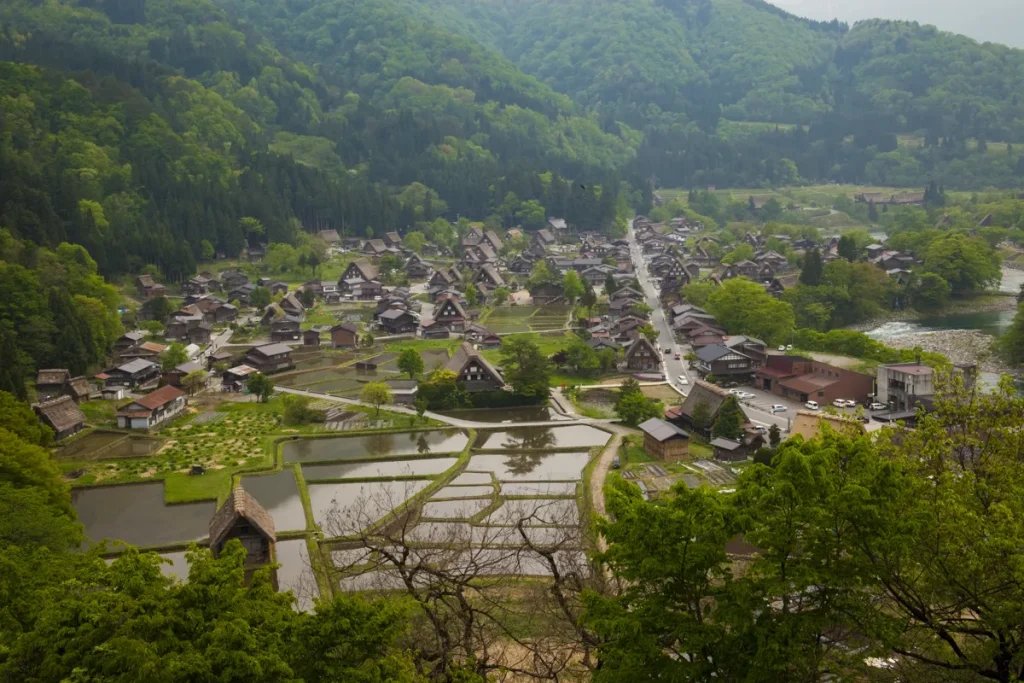
Japan’s picturesque thatched-roof settlement Shirakawago, located in Gifu Prefecture, has been ranked among the 50 most beautiful villages in the world, receiving the top spot in Asia and placing ninth worldwide in a global list curated by Unforgettable Travel Company and Forbes.
A Fairytale Village in the Japanese Alps
Recognized as a UNESCO World Heritage Site, Shirakawago is described as a place of “alpine silence,” where steep thatched roofs rise gracefully against forested mountains. Forbes highlighted its enchanting winter illuminations, when lanterns and lights create a golden glow across snow-covered farmhouses, likening it to “stars fallen gently to earth.”
Other Asian villages recognized in the rankings include Ban Rak Thai in Thailand, Hahoe Folk Village in South Korea, and Ghandruk in Nepal. However, European destinations dominated the global list, with Bibury in England taking first place, followed by Hallstatt in Austria and Reine in Norway.
Cultural Heritage and Timeless Architecture
Shirakawago is best known for its gasshō-zukuri farmhouses, some of which are centuries old. The term gasshō-zukuri, meaning “constructed like hands in prayer,” refers to the steep, slanted roofs designed to endure heavy snowfall. Built without nails, these farmhouses use interlocking beams, reflecting traditional Japanese craftsmanship and resilience.
Situated at the foot of Mount Haku (2,702 meters) and around 50 kilometers from the Sea of Japan, the village developed a unique way of life due to its geographical isolation. This limited outside interaction fostered distinct cultural practices and traditions that remain preserved to this day.
Balancing Tourism and Preservation
While Shirakawago attracts millions of visitors annually, its population has declined to about 1,500 residents, many of them elderly. Local officials are now faced with balancing economic opportunities from tourism with the challenges of overtourism.
To preserve its cultural and environmental integrity, the village of Shirakawa in Gifu Prefecture has released an official tourist guidebook, reminding visitors to respect local manners — such as refraining from entering private homes for photos and smoking only in designated areas.
With its timeless architecture, cultural richness, and stunning alpine scenery, Shirakawago continues to be one of Japan’s most enchanting destinations, offering a glimpse into the country’s heritage while captivating travelers from across the globe.
Travel Guide: Visiting Shirakawago
Location: Shirakawa Village, Gifu Prefecture, Japan
How to Get There:
- From Tokyo: Take the Hokuriku Shinkansen to Kanazawa, then transfer to a bus (approx. 1.5 hours).
- From Nagoya: Take the JR Hida Express to Takayama, then a bus to Shirakawago (approx. 50 minutes).
Best Time to Visit:
- Winter (Dec–Feb): Famous for snow-covered thatched houses and the Winter Illumination Festival.
- Spring (Mar–May): Cherry blossoms and pleasant weather.
- Autumn (Oct–Nov): Vibrant fall foliage.
Things to Do in Shirakawago:
- Visit Wada House, the largest gasshō-zukuri farmhouse open to the public.
- Explore the Shirakawa-go Open-Air Museum.
- Take in panoramic views from the Shiroyama Viewpoint.
- Join guided tours to learn about traditional farming and crafts.
Travel Tips:
- Book accommodations early during winter as it’s peak season.
- Respect local rules on photography and avoid entering private homes without permission.
- Try local specialties such as Hoba miso (grilled miso paste on magnolia leaves).
This guide is incredibly helpful for planning a visit to Shirakawago! The detailed information about the gassh?-zukuri architecture and cultural tips makes me feel prepared and excited to explore this enchanting village.