
Often hailed as the “King of Fruits,” durian is a prized tropical fruit crop in the Philippines, known for its rich flavor, creamy texture, and distinctive aroma. With the right cultivation methods, durian farming can provide substantial income for both smallholder farmers and commercial growers. Its strong market demand—both local and international—makes it one of the most lucrative fruit farming ventures in Southeast Asia.
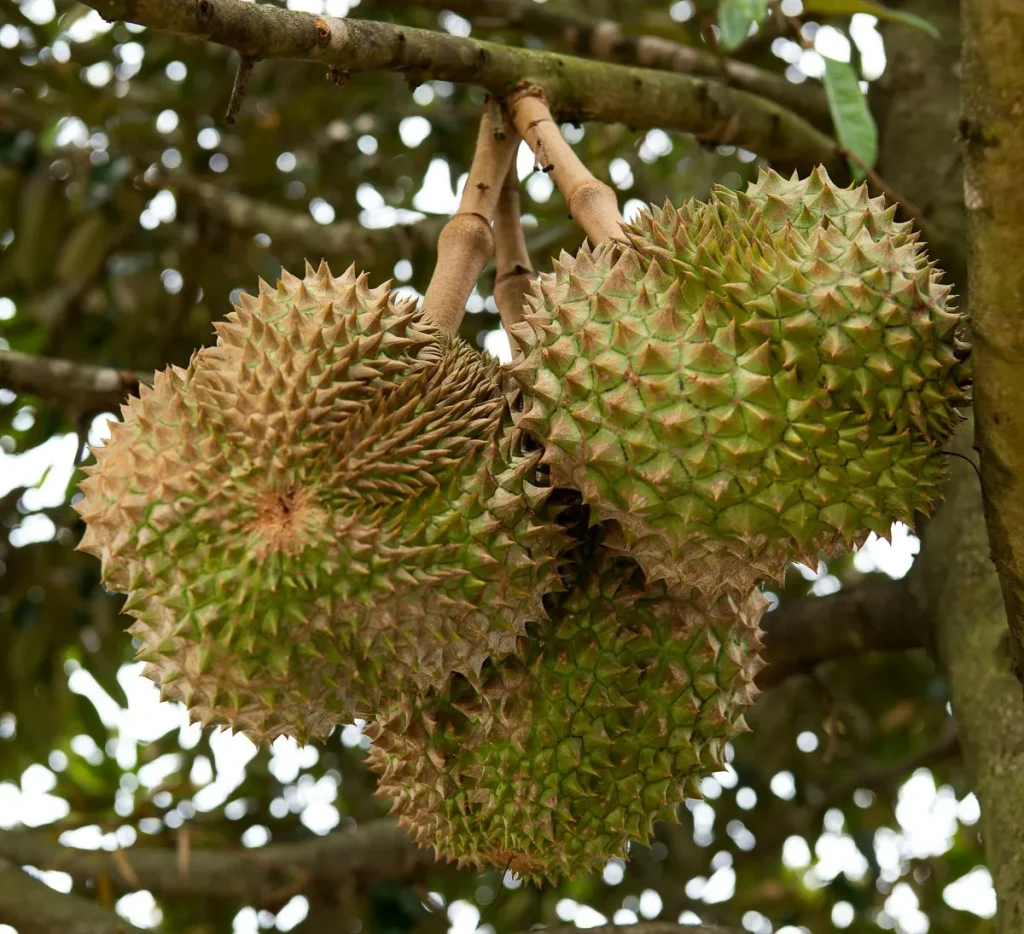
Top Durian Varieties Grown in the Philippines
Selecting the right variety is key to maximizing yield, marketability, and consumer appeal. Each durian cultivar differs in texture, flavor, productivity, and resistance to pests. Here are the most popular varieties cultivated across the country:
| Variety | Description | Yield | Sweetness Level | Notes |
|---|---|---|---|---|
| Chanee | Thick, golden flesh; mild aroma | High | Sweet | Good for commercial scale |
| Monthong | Large pods; minimal odor | Very High | Mildly Sweet | Ideal for export |
| Arancillo | Creamy texture; strong aroma | Moderate to High | Very Sweet | Popular among locals |
| Puyat | Bright yellow flesh; buttery sweetness | Very High | Very Sweet | Top choice for market and export |
| Duyaya | Extra-large fruits; thick pulp | High | Very Sweet | Preferred for premium markets |
| Cob | Early fruiting; smaller pods | Moderate | Mildly Sweet | Good for backyard durian farming |
Best Variety for Commercial Durian Farming:
Puyat stands out due to its high yield, early fruiting habit, and bright, sweet flesh. Its excellent shelf life and visual appeal make it ideal for both local sales and export trade.
Ideal Climate and Growing Conditions for Durian
Durian trees thrive in tropical climates with well-distributed rainfall. The Philippines, with its humid and warm environment, offers ideal durian growing conditions for sustained productivity.
- Elevation: 300–800 meters above sea level
- Rainfall: 1,500–2,500 mm annually
- Temperature Range: 24°C–32°C
- Humidity: 75%–90%
- Wind Protection: Use trees or hedges as natural windbreaks to reduce stress on trees
Understanding the climate for durian trees helps farmers plan long-term orchard management. Excess wind or dry periods can negatively affect flowering and fruit set, so site selection is crucial in tropical fruit farming systems.
Soil Requirements for Durian Trees
Healthy durian trees begin with the right soil foundation. These deep-rooted trees need nutrient-rich and well-aerated soils to anchor growth.
- Soil Type: Deep loamy to clay loam; well-drained
- Soil pH: Slightly acidic to neutral (6.0–6.5)
- Soil Depth: At least 1 meter
- Tip: Mix in compost, rice hulls, or aged manure during land preparation to enhance soil fertility and structure
Avoid low-lying areas prone to flooding, as stagnant water can cause root diseases.
Propagation Methods for Durian
For consistent fruit quality, asexual propagation is the best option. This ensures that trees are genetically identical to their parent plants.
Common Propagation Techniques:
- Cleft Grafting: Most widely used in nurseries
- Approach Grafting: Suitable for home and small-scale growers
- Budding: Less common but still effective
Grafted seedlings flower earlier (within 4–6 years) compared to seed-grown trees, making them a better choice for commercial durian production.
Planting and Spacing for Durian Orchards
Proper spacing ensures good sunlight penetration and air circulation—both essential for healthy canopy growth and disease prevention.
- Spacing: 8–10 meters between trees
- Hole Size: 60 x 60 x 60 cm
- Planting Season: Early rainy season (June–August)
- Tip: Mix compost and 200g of complete fertilizer (14-14-14) into each planting hole
Correct spacing also simplifies orchard maintenance, irrigation, and harvest operations.
Fertilizer and Nutrient Management
Balanced nutrition promotes rapid tree development and fruit quality. Nutrient needs vary by tree age:
| Tree Age | Fertilizer Plan | Frequency |
|---|---|---|
| 1–2 years | 100–200g 14-14-14 + compost | Every 3 months |
| 3–5 years | 300–500g 16-20-0 or 12-24-12 | Three times/year |
| 6+ years (bearing) | 1–2 kg complete fertilizer + 1 kg manure | Before/after fruiting |
Micronutrients: Apply foliar sprays with boron, calcium, and magnesium for improved flowering and fruit set.
Organic Options: Vermicast, fermented fruit juice (FFJ), and compost tea can be integrated into feeding schedules.
Water and Irrigation Management
Water availability is vital, especially during dry months and reproductive phases.
- Young Trees: Weekly watering or as needed
- Mature Trees: Deep watering every 10–14 days
- Irrigation System: Drip irrigation ensures efficient moisture delivery and water conservation
Avoid waterlogging as it can lead to diseases like Phytophthora root rot.
Pruning and Canopy Management
Effective canopy management improves fruit yield and reduces disease risks.
- Maintain a central leader structure
- Remove dead, crossing, or low-hanging branches
- Encourage open, dome-shaped canopy for better airflow and sunlight
Proper pruning also aids in efficient pesticide application and fruit harvesting.
Common Pests and Diseases in Durian Orchards
Major Pests:
- Fruit Borer: Causes boreholes in fruits; use pheromone traps or fruit bagging
- Aphids and Mealybugs: Damage shoots and young leaves; use neem oil or insecticidal soap
- Stem Borers: Bore into bark; remove affected parts and seal wounds
Common Diseases:
- Phytophthora Root Rot: From poor drainage; improve soil and apply fungicides
- Anthracnose: Black spots on leaves/fruits; use copper-based fungicides
- Sooty Mold: Fungal infection linked to sap-sucking pests
Implement integrated pest management (IPM) to reduce pesticide use and enhance ecosystem health.
Flowering and Fruiting Cycle
- Grafted Trees: Start fruiting in 4–6 years
- Seedlings: 8–10 years
- Flowering Season: February–May
- Fruiting Season: July–October
Pollination is mainly done by bats and insects. For large-scale durian fruit production, manual pollination can improve fruit set.
Harvesting Durian Fruits
Signs of ripeness:
- Natural drop from tree (ideal for local consumption)
- Strong aroma and cracking near the stalk
- Swelling of fruit seams
Clip fruits before they fall to preserve quality for high-end or export markets.
Post-Harvest Handling Tips:
- Store in a cool, shaded place
- Sort fruits by size and aroma
- Bag fruits 1–2 weeks before harvest to reduce pest damage and bruising
Durian Marketing Strategies
Direct-to-Consumer:
- Sell at local wet markets, roadside stalls, or farmgate
- Use platforms like Facebook Marketplace or Shopee
Export Market:
- High demand for Monthong and Puyat varieties
- Comply with Department of Agriculture (DA) standards for quality and packaging
Value-Added Products:
- Durian jam, pastillas, candies, chips, ice cream
- Vacuum-sealed or frozen durian extends shelf life
Agri-Tourism and Promotions:
- Offer tasting tours, pick-and-pay experiences
- Join festivals like Davao’s Kadayawan Festival
- Participate in DA or LGU-sponsored agri fairs
Profitability and ROI
Durian farming is a long-term investment with high earning potential.
- Initial Investment: ₱100,000–₱250,000 per hectare
- Annual Income (bearing years): ₱300,000–₱700,000 per hectare or more
- Break-Even Point: 4–6 years (grafted trees)
Returns vary depending on variety selection, orchard management, and market access.
Frequently Asked Questions About Durian Farming
1. What is the best durian variety for commercial farming in the Philippines?
Puyat is currently the top choice due to its early bearing, high yield, strong aroma, and bright yellow flesh—ideal for both local and export markets.
2. How many years before a durian tree bears fruit?
Grafted trees can bear fruit in 4–6 years, while trees grown from seeds may take 8–10 years.
3. What pests and diseases commonly affect durian?
Durian trees are prone to root rot (Phytophthora), fruit borers, aphids, and stem borers. Regular pruning, proper drainage, and integrated pest management (IPM) are essential.
4. When is the best time to harvest durian?
Durian is typically harvested from July to October. For quality markets, harvest fruits just before they naturally fall.
5. Is durian farming profitable?
Yes. With proper management and good market access, durian farming can yield ₱300,000–₱700,000 or more per hectare annually.
Conclusion
Durian farming in the Philippines offers vast potential, especially with increasing global demand for exotic and high-value fruits. By choosing the right varieties, optimizing site conditions, and applying sustainable orchard practices, farmers can tap into the full profitability of tropical fruit farming and position themselves for long-term success.